How Much N Does Your Maize Crop Really Need?
Over the past few weeks, I’ve had several conversations about nitrogen (N) management in maize crops for the coming planting season.
 increase font size
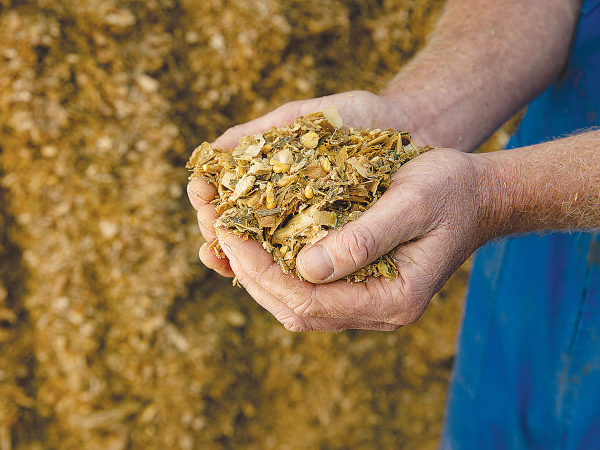 More farmers are now carrying stored maize silage to fill early summer feed deficits prior to the next maize harvest.
Since the mid-nineties maize silage use on dairy farms has steadily increased, with some farmers now feeding as much as 2 tDM/cow within a season.
Initially, maize silage was mainly fed in autumn to increase lactation length, achieve body condition score (BCS) and pasture cover targets. The next progression was to carry maize silage over to the following season to support higher stocking rates, earlier calving and to feed cows better in early lactation. Finally, with greater summer pasture growth rate variability, more farmers are now carrying stored maize silage to fill early summer feed deficits prior to the next maize harvest. So, how do you get the best bang for your buck when feeding cows maize silage in summer?
Feeding Rates
Ideally, start feeding maize silage before you experience your summer feed pinch. Feeding 2-3 kgDM/cow for a longer period will help maintain a longer grazing rotation (>30 days), prevent over grazing and maintain your average pasture cover for longer. It will also reduce the likelihood of having to supplement with additional protein. During mid-late lactation cows require 14-16% crude protein in their diet. So, feeding 2-3 kgDM/cow of maize silage with a mix of pasture, grass silage and/ or other summer crops is likely to provide sufficient protein to meet cow requirements.
If you intend to feed more than 3 kgDM/cow, calculate the crude protein content of the diet using DairyNZ Feed Checker (or an equivalent feed program). You may be able to manipulate the quantities of other feeds to meet minimum protein requirements.
For more information on protein requirements in summer, check out Episode 3 of Pioneer’s Feed for thought Podcast Podcast - Pioneer
Mineral Supplementation
Maize silage has low concentrations of magnesium, calcium, sodium, and phosphorus. If maize silage makes up 25% of the summer diet or more, deficiencies in these macro minerals become more likely. However, these deficiencies are relatively easy and inexpensive to rectify (Table 1).
Table 1: Typical amount of each mineral supplement to supply with maize silage*
| Maize fed | Limeflour | Causmag | AgSalt | Dicalcium |
| 3.5 kgDM/cow | 60g | 40g | 15g | 20g |
*Laboratory testing to determine the mineral content of all feeds in the diet (including pasture) is the most accurate way to determine actual cow mineral requirements.
Minimising Wastage
Good feed-out management of maize silage is always important as losses can range from 5-40%. This difference between good and poor feed management will significantly impact your economic response to feeding maize silage. So, how do you minimise maize silage wastage?
At The Stack
Keep the face as tight as possible by only shaving or chipping enough feed for the day.
Clean up any loose material left on the ground when you’ve finished removing feed from the face.
Don’t hit the face with too much force as this can allow air to penetrate the stack and cause secondary fermentation.
Try to remove feed from across the entire face of the stack each day.
If birds are a problem, cover the face with shade cloth.
When Feeding Out
Don’t overfill bins.
Feed silage on mature grass along fence lines or in piles.
Don’t feed out more than 8 hours in advance unless your maize silage has been treated with an inoculant containing Lactobacillusbuchneri.
If you would like more information on your summer feed plan, get in touch with one of our Farm Systems specialists (visit pioneer.nz).
Wade Bell is Genetic Technologies farm systems manager. Contact him at This email address is being protected from spambots. You need JavaScript enabled to view it.
Over the past few weeks, I’ve had several conversations about nitrogen (N) management in maize crops for the coming planting season.
Walking around the Fieldays this year, expected most of the conversations to be about machinery purchases and farm infrastructure upgrades. Instead, one topic seemed to keep cropping up more frequently with farmers – the price of PKE.
The transition period (typically defined as the three weeks prior to and the three weeks immediately after calving) sets the biological and productive trajectory for the entire lactation by determining how well the cow adapts from pregnancy to peak milk production.
As spring calving cows head into dry-off, the priority shifts to one thing: setting cows up to calve at the target body condition score (BCS).
Early December marks a key transition for many dairy farmers, as weaned replacement heifers head off-farm to grazing.

Groundswell is welcoming the resignation of Rob Hewett as Farmlands chair, saying the agribusiness leader has made the right call.

Farmlands shareholder directors are urging farmers and growers to vote ahead of the Farmlands AGM 2026, with the deadline to appoint a proxy at 6.30pm this Sunday 22 November.
Lamb survival has always been a key driver of sheep farm performance.
For the second time in three weeks, Fonterra has lifted its farmgate milk price, on the back of soaring milk powder prices.
The 2027 East Coast Farming Expo will continue a decade long tradition in bringing the latest innovation, intriguing speakers, industry leaders and more.
Halter has launched Mav, an AI farming assistant that lets dairy farmers ask questions about their herd and pasture and get answers drawn from the data the company’s collars already collect.