Ballance Farm Environment Awards Launch on West Coast
The Ballance Farm Environment Awards are coming to the West Coast of the South Island.
 increase font size
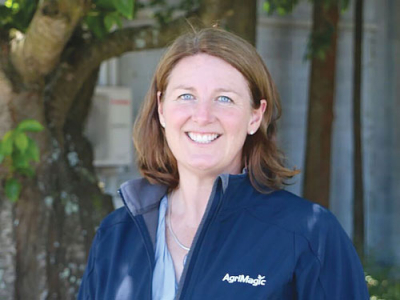 Charlotte Glass, founding director of Agri Magic, Canterbury. Photo: Supplied.
ECan has approved a farm environment plan (FEP) template for use by farmers under the new Canterbury Land & Water Regional Plan.
The plan is the work of the Canterbury farm consultancy Agri Magic.
Under the LWRP, all farms requiring land use consent to farm must produce an environmental plan to support it.
ECan chief executive Bill Bayfield says the Agri Magic template met the criteria of the LWRP, as modified by the Nutrient Management and Waitaki Plan Change (Plan Change 5) which took effect on February 1.
“I was impressed with the explanation setting out how the template could be used as part of a package helping Agri Magic clients navigate and comply with their environmental obligations,” Bayfield says.
“The template... ensures clients are clear on risks and priorities for action.”
Agri Magic director Charlotte Glass says the template was developed to help farmers identify things they already do and identify areas where they could improve.
“Then we support them to develop practical, long-term onfarm solutions,” she says. “We guide them to focus on practical changes that will result in resource-use efficiency first, and then look at different practices and technology that will be right for them.”
Glass set up Agri Magic, at Templeton, 3.5 years ago and it now has 10 full-time-equivalent staff.
Many other templates are available, she says, but Agri Magic is different in having staff from a farm systems background.
“Many other businesses have just focussed on environment and then they are tying that to farm businesses,” Glass told Rural News. “Farmers enjoy the fact that we understand what they want to achieve as farmers. “That’s why we [promote]: ‘supporting your farming future’.”
Glass believes that a lot of “the noise in the media” over farm environmental concerns arose from misunderstanding of the issues.
“I understand that some aspects of the environment are under more pressure than others, but… the farmers we work with – and I can only comment on our customers – definitely have stewardship values at the heart of themselves and their businesses.”
The LWRP is fundamental to the Canterbury Water Management Strategy.
Bayfield says ECan encourages all farmers to prepare farm environment plans, regardless of whether they’re needed by regulation.
“International markets are increasingly demanding proven sustainability and farm environment plans are one way to demonstrate this.”
Under Schedule 7 of the LWRP, FEPs can be prepared either by landowners themselves using guidance in the LWRP or via industry-prepared templates and guidance material.
A minimum content is required, and all FEPs must include an assessment of the risks associated with the farming activities and how those risks will be managed. This includes irrigation, application of nutrients, effluent management, stock exclusion from waterways, offal pits and farm rubbish pits.
FEPs must be regularly audited by ECan-approved auditors.
The Ballance Farm Environment Awards are coming to the West Coast of the South Island.
There's been widespread support from the primary sector for the Government's announcement on changes to freshwater farm plans that come under the Natural Environment Bill, which is now set to replace the existing RMA.
The chair of the country's environmental regulator, the Environmental Protection Authority (EPA), says changes are already under way to improve the performance of the agency to better meet the needs of those who interface with them.
New Zealand's Emissions Trading Scheme (NZ ETS) encourages afforestation while not achieving climate goals, says a new report released by the Parliamentary Commissioner for the Environment, Simon Upton.
Retiring MP and dairy farmer Mark Cameron is blasting the Green Party for proposing to ban the use of synthetic fertiliser and cutting cow numbers.



Now in its fourth year, the 2026 Fencing Industry Awards, formed part of the proceedings of the FCANZ Conference, held in Nelson during August.
DairyNZ deputy chair Cameron Henderson has been re-appointed unopposed for another term.
OPINION: The stats speak for themselves.
Farms across the upper North Island are trialling different pasture mixes as part of a research programme that aims to build greater resilience into farming systems.
Election years are always a concerning time for farmers, according to DairyNZ chair Tracy Brown.
The Ballance Farm Environment Awards are coming to the West Coast of the South Island.