
Canterbury Boosts Wallaby Control With $2M Funding Push
Wallaby control efforts in Canterbury have received a major boost, with Canterbury Regional Council releasing $2 million from its Pest Management Reserve.
 increase font size
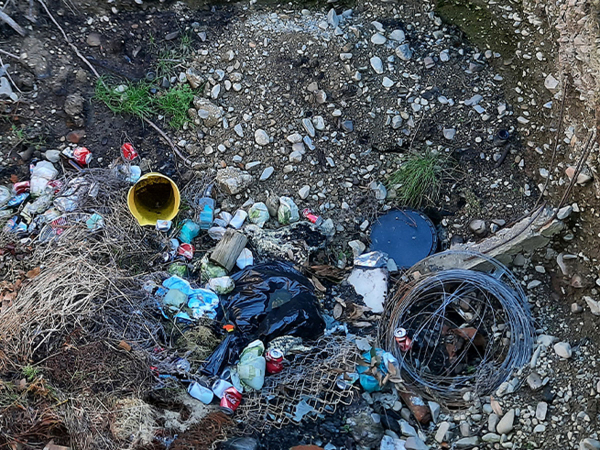 The pits are normally between one and four metres deep, with soil placed on top of the contaminated material to cover it. Photo Credit: Environment Canterbury
Owners of lifestyle blocks are being reminded of the rules around buried waste, as an increasing number of illegal rubbish pits are discovered.
Environment Canterbury compliance teams say it’s a growing problem across the region, with at least seven discovered in 2022 alone.
The pits are normally between one and four metres deep, with soil placed on top of the contaminated material to cover it.
James Tricker, Environment Canterbury regional leader of compliance, says there will be more cases that haven’t come to light.
“What we’re dealing with is probably just the tip of the iceberg. Some people will be doing it out of genuine ignorance, but others will know they’re breaking the law,” he says.
Offenders may face enforcement action, including written warnings, abatement notices, infringement notices or prosecution. There is also a recovery cost to cover staff time.
The landowner will also need to remove the waste, dispose of it correctly, and provide proof of doing so.
In some cases, soil testing may be carried out for evidence of contamination. If contamination is confirmed, it could be listed against the property on the Listed Land Use Register (LLUR).
On properties larger than 20ha, certain types of rubbish pits are permitted – with conditions. For example, a refuse disposal pit must be less than 50m2 in volume. It also needs to be designed in a way that prevents adverse effects on water and soil quality, to help protect groundwater that neighbours drink. The waste must be free of hazardous substances, agrichemicals and agrichemical containers – and been produced on the property. Pits can only be used if there is no kerbside or local authority refuse collection available.
Offal pits must also be smaller than 50m2 and are restricted to one pit per 100ha of property per year.
Wallaby control efforts in Canterbury have received a major boost, with Canterbury Regional Council releasing $2 million from its Pest Management Reserve.

Newly released data from Environment Canterbury (ECan) Farm Environment Plan (FEP) audits are showing a dramatic lift in environmental performance across the region.
Buying or building a rural or semi-rural property? Make sure you know where the wastewater goes, says Environment Canterbury.
OPINION: Canterbury grows most of the country's wheat, barley and oat crops. But persistently low wheat prices, coupled with a high milk payout, are believed to be driving farmers out of the industry in the hunt for the dairy dollar, according to media reports.
Environment Canterbury, alongside industry partners and a group of farmers, is encouraging farmers to consider composting as an environmentally friendly alternative to offal pits.



An Auckland gelato shop and an established New Zealand ice cream maker have both been named Supreme Champions at the NZ Ice Cream & Gelato Awards 2026.

As the cost-of-living crisis continues to put pressure on household grocery budgets, new figures show pork remains one of the most affordable fresh meat options for New Zealand families.
OPINION: In politics, credibility is and should be big. It must surely rank higher than charisma, which is quite trite and superficial. Yet, voters nowadays are often wooed and influenced by how someone looks or talks at a superficial level. TV plays a huge role in this.
Farmers can spend less time on paperwork, thanks to a new data sharing agreement between DairyNZ’s DairyBase and LIC’s MINDA software.
Kaikōura families affected by July's severe storm have found a practical solution to a problem that's kept some children away from regular schooling for weeks: a washed-out section of Inland Kaikōura Road, which has stopped the local school bus from running its usual route.
Rural New Zealand is welcoming the Government’s recent package of rural healthcare initiatives.