Massey Uses Portable Analyser to Measure Pasture Soil GHGs
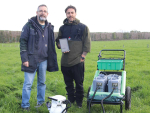
Researchers at Massey University are using a special piece of scientific equipment to improve the measurement of greenhouse gas emissions from pasture soils.
 increase font size
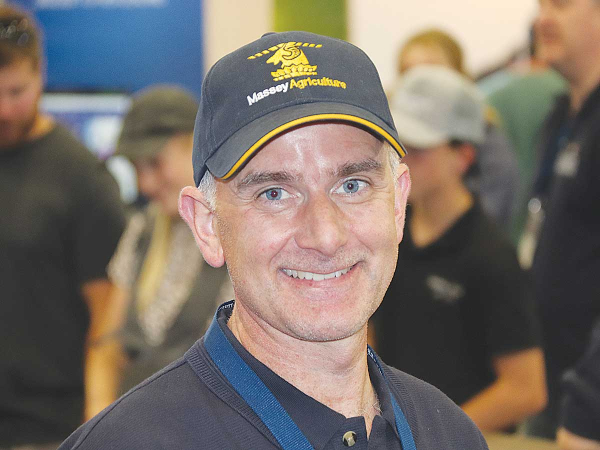 Professor Chris Anderson, Massey University.
A key element in Massey University’s research programme is its Farmed Landscapes Research Centre (FLRC).
The centre has a core mission to build nation-wide capability and capacity that helps achieve improved freshwater quality outcomes in rural catchments across New Zealand.
An example of this work is the Catchment Solutions Project (CSP) funded through the Ministry for Environment (Essential Freshwater Fund), in collaboration with cofunding from Hawke’s Bay Regional Council (HBRC) and in-kind contributions from DairyNZ and Hawke’s Bay Regional Council.
The head of the FLRC and professor in environmental science is Professor Chris Anderson, who says the project is working with case study catchment groups to co-learn and map key water quality contaminants and their critical flow pathways from farm-to-catchment-scale.
He says co-design of a series of water quality testing events, catchment workshops, field days and professional training (master classes) with the broader farming community, iwi/hapu and rural support providers is sharing valuable community perspectives around freshwater outcomes.
CSP has now completed three woodchip bioreactors, two Detainment Bunds PS120 and one constructed wetland. Construction has also begun on a twin basin design woodchip bioreactor within the Waingongoro catchment (Taranaki).
Anderson says the CSP team recently held four successful master classes: Constructed Wetlands for Diffuse Agricultural Run-off; Innovative Farm Drainage Management Technologies; and Mapping, Design and Implementation of Detainment BundsPS120 (DB). All three master classes involved in-person training and on-farm site visits to learn more about the mapping and design of mitigation structures for freshwater contaminants.
“We plan to run a second round of all four master classes before the end of June 2025. These new courses complement FLRC’s existing courses around sustainable nutrient management, GHG emissions and freshwater farm planning,” he says.
Anderson says interest in the new courses has been impressive, particularly for the Constructed Wetlands Masterclass, run by NIWA scientists Dr Chris Tanner and Dr Brandon Goeller; over 80 people registered interest in the first Constructed Wetland course, and over 120 for the second course, scheduled for 27 and 28 February. Both courses are limited to a maximum of 25 spaces.
“Participants in the master classes have been very satisfied with the quality of the content and the effectiveness of the presentations, with one participant noting ‘I felt engaged throughout the entire course; it was well-structured and informative’. The field visits were also highly rated, with one participant reporting “the field visit was the highlight of the course; it allowed us to see real-world applications of what we learned.”
The website also holds information about each of the six catchments the team has been working with: https://catchmentsolutions.co.nz/case-studycatchments/
Researchers at Massey University are using a special piece of scientific equipment to improve the measurement of greenhouse gas emissions from pasture soils.

Interest in agritech and production animal systems has prompted Massey University's School of Agriculture and the Environment to new majors to its popular animal science degree.
The industry is crying out for graduates with agricultural related degrees.
A four year trial has reaffirmed that mixing plantain into dairy pastures can help reduce nitrogen losses to freshwater while maintaining milk production and profitability, say researchers.
Special courses for secondary school teachers to help excite kids about agriculture and horticulture are now being run at Massey University.

Farmer-owned fertiliser company, Ballance Agri Nutrients is welcoming National’s plan to negotiate security agreements with key supplier countries to protect New Zealand-bound products from export restrictions and greater supply chain certainty.
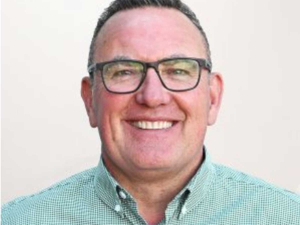
Carrfields has announced the appointment of Stu Hall to the newly created role of chief operating officer, Carrfields Ltd, reflecting the continued growth of their agribusinesses and the need to ensure the company has the leadership capacity and support in place as it pursues the emerging opportunities ahead.
New Zealand's role is not to compete with Indian growers, according to NZ Apples and Pears.
The potato industry is celebrating the success of two rising stars - James Blair, the 2026 Young Grower of the Year and runner-up and innovation award winner, Amber Davy.
Twenty-eight emerging leaders from across the horticulture sector spent two days last month learning valuable skills and connecting with industry experts.
There are five entrants in this year’s Young Horticulturist of the Year, competing in a series of technical, practical, business and leadership challenges.