
Regional councils welcome certainty around RMA
Regional councils are welcoming the certainty for councils in today’s Resource Management Act (RMA) announcement by the Government.
 increase font size
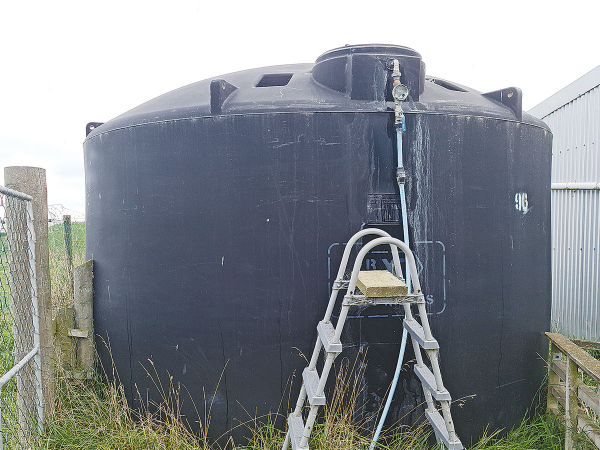 LGNZ says it’s clear that one size does not fit all when it comes to water reforms in our rural communities.
OPINION: Local Government NZ (LGNZ) has long advocated for privately owned rural water supplies to stay in community ownership - as part of the Three Waters Reform.
The Rural Supplies Working Group (RSWG) recommendations - recently released by the Department of Internal Affairs - confirms that private supplies won't transfer to new entities.
This is a real win for our rural communities. There are tens of thousands of privately owned rural supplies, compared with only about 100 council-owned ones.
It's only council-owned schemes that are affected by Three Waters reform.
It's clear that one size does not fit all when it comes to water reforms in our rural communities. In these communities, water is used for stock and irrigation as well as household drinking water. This creates unique issues for rural users
For example, lack of water supply in summer can quickly become an animal welfare issue.
Some rural water schemes have complex histories, including management and maintenance by their communities. We've heard time and time again that there's a strong sense of ownership.
That's why it was so important to see the RSWG recommend a process where council-owned schemes that are mostly used as stock or irrigation schemes could go back to community ownership.
There's currently a lot of confusion about the difference between three waters reform and the new regulatory regime. All suppliers, including the privately owned ones, will need to meet the regulatory standards, though there will be some time to put this in place.
Taumata Arowai is the new regulator responsible for drinking water quality and making sure water suppliers meet standards.
Rural, small supplies must be registered by 15 November 2025 and be compliant by November 2028. It's not happening tomorrow - there's plenty of time.
The local government sector strongly supports the new water regulator upholding public safety standards.
Misinformation has been behind much of the confusion in our rural communities. The recommendations announced will come as welcome relief for people living in some of our most remote parts of the country.
LGNZ wants the Minister for Local Government, Nanaia Mahuta, to be getting out there and meeting our rural communities. She needs to reassure them that private supplies aren't being transferred to the new entities and answer any questions these communities may have.
Stuart Crosby is president of Local Government NZ.
Regional councils are welcoming the certainty for councils in today’s Resource Management Act (RMA) announcement by the Government.

The Government needs to give more detail on its Three Waters policy reset.
The late expansion of Three Waters to Five by Minister Nanaia Mahuta seems to have caught her own Cabinet colleagues out, with even the Prime Minister's office taking a while to get its spin straight on this one.
An assessment of Clutha District’s rural water supplies is currently underway.
Local Government New Zealand (LGNZ) is seeking to increase voter participation this local election campaign.


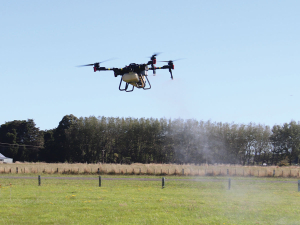
OPINION: David Seymour and James Meager's plan to make it easier for farmers and orchardists to operate drones can best be described a 'courageous' move.

New Zealand wool is reaching new heights as air filtration companies move away from synthetic products to biodegradable alternatives.
Opuha Dam's ability to protect South Canterbury communities from major flooding has taken a significant step forward, with Opuha Water Limited (OWL) successfully commissioning a new outlet valve capable of releasing record volumes of water from the dam ahead of a weather event.
There's been widespread support from the primary sector for the Government's announcement on changes to freshwater farm plans that come under the Natural Environment Bill, which is now set to replace the existing RMA.
A partnership between state-owned enterprise Pāmu (Landcorp Farming Limited) and charity Meet the Need is putting more than quality New Zealand beef into food bank parcels this year.
The Opportunity Party has faced criticism during the election campaign that its policies are too urban-focused and offer little for rural communities.