New Rural Recycling Scheme to Replace Voluntary Farm Plastics Programmes by 2027
Environment Minister Nicola Grigg has announced details of a new rural plastics recycling scheme.
 increase font size
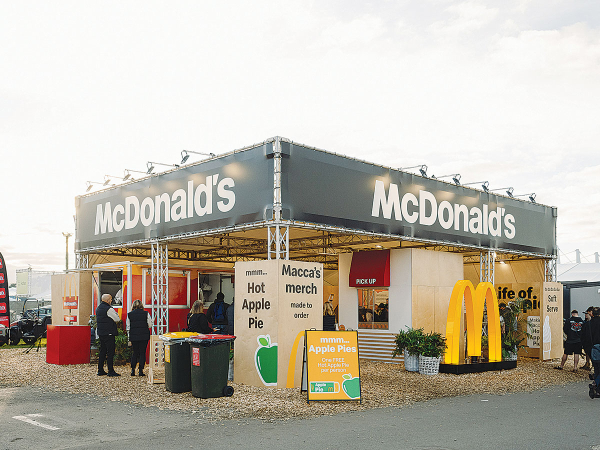 Aside from serving free soft serves and apple pies, McDonald’s hosted a panel at the Fieldays to discuss the future productivity, profitability and resiliency of the beef sector.
OPINION: Recently I spent a couple of days on the Macca's site at Fieldays.
A few years ago, our first appearance at the southern hemisphere's biggest agri-business event was novel, and a bit misunderstood. Was Macca's there to sell some burgers? Why would one of the world's biggest food services companies want a site alongside a stock gate seller, and just down the road from the possum trap stand?
Aside from the free soft serve and apple pies, this year we hosted the New Zealand Roundtable for Sustainable Beef (NZRSB) at the Fieldays Pavilion, with a group representing the full value chain of the beef sector. We're a founding member, and our job is to provide insight into the consumer end of that value chain. With global brands like McDonald's making commitments around climate change, we're wanting the beef sector to accelerate its positive change, So, on a panel of subject matter experts, I was there to provide a mix of Macca’s global perspective, and what our local customers are telling us.
When you’ve got a target to be able to get a drive-thru customer from the point of order through to collecting their order in a matter of minutes, it can be hard to get them to think about where the ingredients that went into their food came from. Generally, they care more about the price, quality, convenience, and experience. That’s a key part of the success of the McDonald’s business model.
The good news for us is that around 90% of the produce we use across our menu is sourced in New Zealand. Aotearoa is a great producer of quality produce. In fact, we’re so good that the McDonald’s world wants our produce. Last year 37,000 tonnes of beef was exported to other McDonald’s markets. That’s around 10% of New Zealand’s total beef exports.
So, while we’re a minnow in the McDonald’s world in terms of restaurants, we’re a strategically important country in a supply chain that feeds around 70 million people around the world each day.
With that strategic importance comes responsibility. 99% of McDonald’s global emissions come from scope 3 sources. Beef farming is the single biggest contributor to McDonald’s greenhouse gas emissions. As a top 10 beef export market to McDonald’s, that explains why we’ve been working with the beef sector for over a decade to look at ways to further reduce methane emissions.
Another part of my day job is meeting with people across our supply chain. Recently I’ve attended the Zanda McDonald Summit and the NZRSB conference. As much as we talk about the macro issues of climate change and what more the New Zealand beef sector can do to play its part in reducing emissions, some of the best insight I can provide the room is what our customers are after.
With that in mind, we did some customer research. The super summary is that in the current economic climate, Kiwis priorities are very pragmatic. What they care most when they visit Macca’s is that they get a quality, tasty product. One that fills them up and represents good value. Across the board, considerations like sustainability and climate change rank much lower. But, when prompted, New Zealanders prioritise factors such as local sourcing and animal welfare much higher than the more technical topics like climate change.
The reality for McDonald’s, and those who will gather for the NZRSB panel discussion, is that Macca’s customers won’t be rushing to buy a more sustainable Big Mac right now. But - and it’s an important but – they really hope the sector is getting on with making New Zealand beef as sustainably sourced as possible.
The Fieldays panel discussed the future productivity, profitability and resiliency of the beef sector, and how it relies on a cross-sector approach to continuously improve. Relative to other parts of the world, we have a big advantage due to our farming systems. We know we need good data, used well, to inform good decisions. It’s always positive to get a range of people together and providing insight from their parts of the value-chain. I always learn a lot listening to people who want to keep New Zealand at the global forefront.
Simon Kenny is head of impact and communications at McDonald’s NZ
Environment Minister Nicola Grigg has announced details of a new rural plastics recycling scheme.

Almond hulls sourced from Australian orchards may have the potential to help New Zealand cows reduce emissions, boost milk yield and lower input costs.
The Government is introducing a new nationwide rural recycling scheme that will significantly increase the recovery of farm plastics from March next year, Minister for the Environment Nicola Grigg announced today.
Climate, nature and animal wellbeing make up Fonterra's refreshed sustainability roadmap released last week.
Developed in Australia and launched in 2021, John Deere’s See & Spray Select System uses camera-based green-on-brown technology to identify living green plant matter in fallow paddocks and apply herbicide only where it is needed.


New Zealand's citrus growers were challenged to build their future on the value embedded in their fruit rather than the volume they produce, at Citrus New Zealand's annual gathering in Gisborne on 17 September.
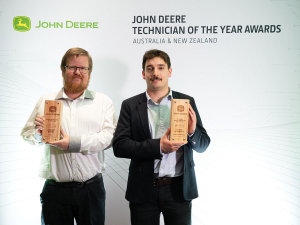
Leading John Deere technicians and apprentices from New Zealand and Australians were recognised at the recent sixth annual JD Technician of the Year Awards, held in Brisbane.
In Dacre, near Invercargill in New Zealand’s South Island, Bruce Dinnington is running a dairy operation unlike any other.
A free online platform aggregating governance vacancies across rural and regional New Zealand has been launched.
Environment Minister Nicola Grigg has announced details of a new rural plastics recycling scheme.
Agricultural drone operators say that a government decision to allow lower-risk drone work without certification won’t lower standards but drive innovation and efficiency.




