Diplomatic Incident
OPINION: Your old mate hears an international incident is threatening to blow up the long-standing Anzac alliance as Kiwis and Aussies argue over who wants new Australian resident and former NZ Prime Minister Jacinda Ardern.
 increase font size
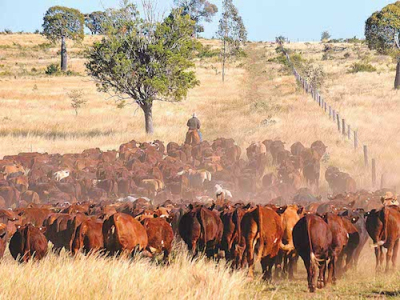 For the first time in 3 years Australian cattle prices are now lower than year-ago levels.
Cattle prices in Australia have ended their three-year golden run, says Meat & Livestock Australia (MLA).
For the first time in three years, Australian cattle prices are now lower than year-ago levels and production is higher, all expected to depress the market to the year's end.
In its mid-year cattle industry update, MLA says the revision in cattle prices is based on a poor July-to-September rainfall outlook for southern Australia following the dry autumn, 20-year low female slaughter and volatile global market activity.
MLA’s manager of market information Ben Thomas says the turning point for Australian beef came in June when eastern states’ slaughter consistently tracked higher than year-ago levels for the first time since 2014, while cattle prices dropped below year-ago levels, also for the first time in three years.
“These trends are likely to remain in place for the remainder of 2017 and [depress] price and production expectations.
“It has been a good run for prices for three years: producers selling at the same time each year have received more for their cattle than the year before. That’s now changed, though we’ll remain well above that five-year average for the foreseeable future.”
Despite a softening in the market, Australian cattle prices are unlikely to drop back to pre-2013 levels, given continuing restocker activity as pasture conditions improve, an Australian dollar that is unlikely to strengthen and reducing tariff regimes into Japan, Korea and China.
Record low female cattle slaughter as a result of the ongoing national herd rebuild had impacted many parts of the industry.
“After the first four months of 2017, female cattle slaughter was just 973,000 head – the lowest since 1995 and representing 45% of the overall adult kill, three percentage points below the 10-year average of 48%,” Thomas says.
The adult cattle kill was 13% below 2016 levels at 2.16 million head after the first four months of the year, also the lowest since 1995. However, numbers processed in the eastern states recovered in June and are expected to remain above year-ago levels for the rest of 2017.
The result is a small revision to the annual total, to be steady with 2016 at 7.25m head, compared to April estimates of 7.1m head. Momentum is expected to continue through to 2018, when 7.6m head are expected to be processed.
A big effect of the low female cattle slaughter, combined with record high numbers of cattle on feed is that average carcase weights for the year-to-date were 296.3kg/head – a staggering 7.8kg (3%) increase on the previous record set in 2012, says Thomas.
“As a result of the increase in cattle slaughter, combined with heavier carcase weights, 2017 beef and veal production is now estimated to be 2.17m tonnes carcase weight, up 2% year-on-year.”
Despite significant shifts in global beef markets, the forecast 2% year-on-year rise in Australian beef production for 2017 should see exports match the 1.02m tonnes shipped weight shipped in 2016, giving the fifth consecutive year above one million tonnes exported.
Key points:
- Australian cattle prices now lower than year-ago levels, and production higher
- Record carcase weights expected to boost production by 2%
- Exports forecast to exceed one million tonnes shipped weight.
OPINION: Your old mate hears an international incident is threatening to blow up the long-standing Anzac alliance as Kiwis and Aussies argue over who wants new Australian resident and former NZ Prime Minister Jacinda Ardern.

OPINION: Your old mate hears that at a recent China Business Summit, PM Christopher Luxon delivered a none-too-subtle "could try harder" report card on the red meat industry regarding its exports to China - particularly when compared to Australia.
More Australian states are embracing virtual fencing technology, opening growth opportunities for Kiwi companies like Halter.
Fonterra says its ongoing legal battle with Australian processor Bega Cheese won’t change its divestment plans.
Farmers in the Australian state of New South Wales will soon be able to use virtual fencing and herding technology to boost farm productivity.


National’s pledge to introduce 19 new national standards shows the party is serious about getting Wellington out of farming, Federated Farmers says.
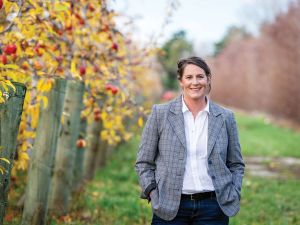
The National Party’s policies to make it easier to grow fresh vegetables, secure reliable water and energy and simplify farm planning are practical changes that will give growers the confidence to invest, according to Horticulture New Zealand (HortNZ).
Fonterra Co-operative Group chief financial officer Andrew Murray has resigned to take up a role outside the dairy giant.
A major move is about to get underway to improve the quality and viability of dairy beef and cattle in NZ.
Veterinarians say changes to the code of welfare for dairy cattle provides a positive foundation for improved cattle welfare across the country.
Today, 15 October, is the International Day of Rural Women, which recognises rural women’s contribution to farming, communities and the environment.