EU Strengthens NZ Partnerships and Trade Presence at Fieldays
The European Union ramped up its presence at this year's Fieldays.
 increase font size
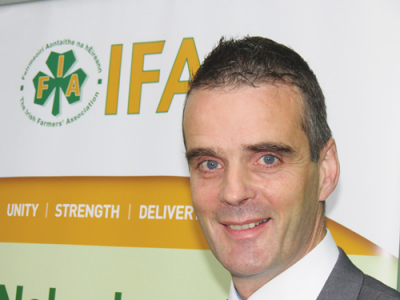 Irish Farmers Association president Joe Healy.
Brexit has thrown up huge uncertainty for farmers within and outside the European Union (EU), says the president of the Irish Farmers Association (IFA), Joe Healy.
A dairy farmer from country Galway, with a strong New Zealand connection, Healy is regarded as a plain speaker and an excellent commentator on farming issues.
He told Rural News, in Ireland, that discussion on Brexit takes place in a vacuum of uncertainty because no one knows what the terms of Britain’s exit from the EU will be.
In Ireland this has created huge uncertainty in the beef sector, he says.
“We have also seen processors take advantage of the Brexit and the move in currency; they are trying to drop prices way below what could be justified,” he explains.
“The beef market for Ireland is very important. We have also seen an increase in dairy cow numbers, and as the use of sexed semen increases. As farmers move for the latter animals in their herd – towards Angus, Hereford or Limousine sires – that will increase the number of beef cattle in Ireland. So getting markets for those will be a critical issue.”
Healy says the British market is critical to Ireland. He notes that 90% of all beef in Ireland is exported and Britain, with its 60 million population, buys at least half this, bringing in $1.8 billion dollars a year.
Hence the anxiety about Brexit.
“Some people hope there may be another referendum. Here in Ireland, if we don’t get the result we want, the government keeps coming back to us with another referendum till we give the result they want or Europe wants,” Healy said.
“But to me this seems unlikely. The fear I have is that the EU will try to play hardball and put in place laws that discourage other countries getting ideas about following the UK.”
For many years NZ lamb exports drew harsh criticism from Irish farmers who considered the cheaper frozen lamb was driving down prices and taking the place of Irish lamb on supermarket shelves in the UK in particular.
But criticism of NZ has largely waned, says Healy, mainly because NZ does not fill its quota to the EU. But this may soon change.
“A lot of our lamb goes into France, which is a very important market for us. We shift as much lamb as possible early in the year so we are not in competition with the UK because when they come on-stream it puts a lot of downward pressure on price.
“From a European and especially an Irish perspective, international trade deals are critical. And within these we cannot afford to have agriculture as the sacrificial lamb.”
The European Union ramped up its presence at this year's Fieldays.
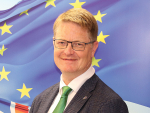
New Zealand and the European Union are closer than ever.
A European Union regulation ensuring that the products its citizens consume do not contribute to deforestation or forest degradation worldwide threatens $200m of New Zealand beef and leather exports.
European dairy co-operative Arla Foods is forecasting a total revenue of nearly $25 billion this year.
According to numbers sourced from national authorities, 151,800 tractors were registered across Europe in 2023, of which 26,200 tractors (17%) were 37kW (50 hp) and under and 131,900 (83%) were 38kW and above.


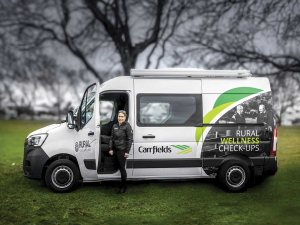
Celebrating 50 years in the rural landscape of Central Canterbury and beyond, Ashburton-based Carrfields, has been the exemplar for all aspects of modern agriculture via its extensive range of services including supply, growing, agronomic advice and marketing.
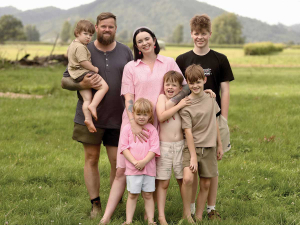
For Taupiri dairy farmers Logan and Sian Dawson, their involvement in the NZ Dairy Industry Awards has been a key catalyst in the growth of their business - the experience helping shape how they approach the farm ownership pathway they are pursuing today.
West Otago dairy farmer Luke Kane has been awarded the 2026 Rabobank Dr John Morris Business Development Prize.
OPINION: As the general election approaches, political parties are churning out policies in the hope of attracting more votes.
An LIC bull, Tronnoco AR Sadio-ET S3F, bred by Tony and Keri O'Connor of Tronnoco Farming Co Ltd near Timaru, has won the 2026 Mahoe Trophy.
With forecasters advising El Niño conditions will develop through winter and strengthen into spring and summer, Ballance Agri-Nutrients is encouraging farmers and growers to think ahead about nutrient planning and be prepared to work around challenging weather conditions.