Beef + Lamb New Zealand Awards 2026 Winners Announced in Christchurch
Last night saw the winners of the 2026 Beef + Lamb New Zealand (B+LNZ) Awards named at a gala dinner at Te Pae Christchurch Convention Centre.




 increase font size
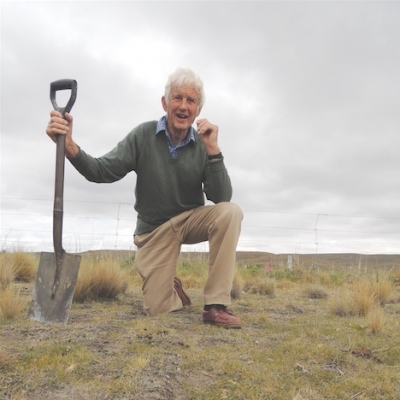 Tekapo scientist David Scott.
Research on lupin in New Zealand is dominated by one man’s work: Tekapo resident and former Agresearch scientist David Scott.
His relationship with the colourful legume spans eight decades, starting when his mother, among others, spread seed along a roadside in the Mackenzie Basin in the 1940s.
“I was just going back to boarding school. It can’t have been more than a few hundred yards because we were walking,” he recalls.
The roads were all shingle in those days and over the years graders spread the species across the basin. Meanwhile Scott studied botany at university and, after a couple of years farming and doing a PhD in the US, he went into research with the Department of Agriculture and Grassland where he was asked to take on the high country programme.
A problem with pasture and crop trials at the time was that they were never big enough to incorporate grazing animals, he says, so in 1981 a site was established at the foot of Mt John with “twenty-seven species sown in one glorious mix with different fertility levels and grazing management applied.”
He says it was “purely by chance” lupin was included but now “the rest is history” as over the years the crop came to dominate the low and medium fertility plots which had 50 or 100kg/ha/year of superphosphate (ie P and sulphur) applied. With grasses between the lupins benefitting from nitrogen fixed, average stock carrying capacity was more than trebled, from 0.8 stock units/ha/year to 2.6-3.1 stock units/ha/year*.
Meanwhile the high fertility (500kg/ha/year super) plots which were also irrigated became dominated by grasses and increased mean carrying capacity ten-fold, but the considerable cost of such inputs meant the low input lupin approach is likely the most economic, particularly as subsequent research shows that once established, about 50kg/ha of elemental sulphur applied every five years is all that’s needed to maintain productivity of lupin dominated stands.
“Once established it has it’s own means of getting phosphate.”
Asked why the crop is only now starting to gain traction with farmers in the high country, Scott says it is normal for a new crop to take years, if not decades, for farmers to become convinced of its benefits. He believes it could transform productivity off not only New Zealand’s low fertility pastoral land, but worldwide.
It seems likely swathes of the South Island’s high country will become a whole lot more colourful in years to come.
* Proceedings of the New Zealand Grassland Association 70 (2008).
Last night saw the winners of the 2026 Beef + Lamb New Zealand (B+LNZ) Awards named at a gala dinner at Te Pae Christchurch Convention Centre.
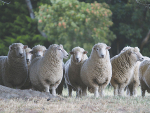
A significant breakthrough in understanding facial eczema (FE) in livestock brings New Zealand closer to reducing the disease’s devastating impact on farmers, animals, and rural communities.
A breakthrough in the understanding of Facial Eczema (FE) in livestock could bring New Zealand closer to reducing the disease’s impact.
An innovative idea for transforming mechanically deboned meat (MDM) into a meat flake for seasoning has taken top honours in the Meat Industry Association’s (MIA) first-ever Dragon’s Den competition.
The Government's plan to merge the seven crown institutes presents exciting possibilities for plant technology company Grasslanz Technology, says chief executive Megan Skiffington.



Now in its fourth year, the 2026 Fencing Industry Awards, formed part of the proceedings of the FCANZ Conference, held in Nelson during August.
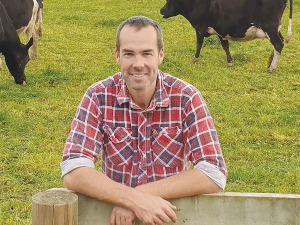
DairyNZ deputy chair Cameron Henderson has been re-appointed unopposed for another term.
OPINION: The stats speak for themselves.
Farms across the upper North Island are trialling different pasture mixes as part of a research programme that aims to build greater resilience into farming systems.
Election years are always a concerning time for farmers, according to DairyNZ chair Tracy Brown.
The Ballance Farm Environment Awards are coming to the West Coast of the South Island.




OPINION: The same mainstream media muppets that brought you Jacindamania in 2017 have been flat out pimping for the Opportunities…
OPINION: Your old mate reckons the atrocious way farmers in the UK are treated by their lords and masters in…