How Kereru Farm Turned Around Triple Drench Resistance
When Simon Hales discovered triple drench resistance on his Weber farm, it was a catalyst to fast-track farm system change.




 increase font size
 Bart and Nuku Hadfield.
At least 170 people turned out for the field day at Mangaroa Station, about an hour’s drive inland from Wairoa, on the North Island East Coast in mid-April.
Field days are held on the properties of each of the three finalists in the competition and are the second part of the judging process. The judges meet with the finalists the day before, and on the following day farmers and others in agribusiness attend the onfarm field days to see first-hand the nature of the properties and why they are selected as finalists.
Mangaroa Station is a 1506ha (1250 effective ) sheep and beef property in the Ruakituri Valley, owned by Nuku and Bart Hadfield. The land is rolling to steep hill country with no flat area, rising to 620m above sea level. The property winters 12,665 SU, with a 62/38 sheep to cattle ratio.
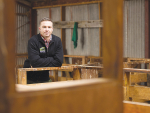
The field day started with a powhiri at the nearby Erepeti marae and then visitors drove a couple of kilometres up to the main woolshed on the property; for a presentation by the owners, Nuku and Bart Hadfield. Their impressive story on how they and their whanau acquired Mangaroa Station and used this as a stepping stone for other members to buy their own properties drew much praise from the attendees.
After lunch came a tour of the property and a first-hand look at how the Hadfields and their family have developed this hill country property.
The judges who selected Mangaroa as a finalist said they were impressed with the clear vision and core planning the Hadfields displayed to achieve their costs. They were also impressed by Mangaroa performing above average for this type of hill country farm and that its lambing percentage – 141% – is high for a property of this type.
Bart Hadfield says the field day exceeded expectations. He admitted to being nervous at the start. “But Nuku came out and got our story across brilliantly and we were well received by the crowd. That made us feel much more comfortable and it turned out to be an enjoyable day.”
She admits, initially, that the idea of speaking to a large group was quite daunting. “But once you get up and start speaking for a minute or two – and you clear your throat and stuff like that – it started rolling along nicely and I felt quite comfortable.”
Bart says it was a mind blowing experience and they learned a lot and enjoyed the process. They are attending the field days of the other finalists and all will gather in Whanganui for the announcement of the winner on May 29.
When Simon Hales discovered triple drench resistance on his Weber farm, it was a catalyst to fast-track farm system change.

Ravensdown has reported a net profit before tax and rebate of $50.1 million for the year ended 31 May 2026.
OPINION: Could beef cows play an increasingly important role in improving profitability and resilience on hill country farms?
Building a strong team is one of the biggest drivers of a successful sheep and beef business, but it can also be one of the tougher parts to get right.
State farmer Pāmu is opening its farm gates this summer in an effort to give the rural sector the opportunity to see how large-scale, multi-system farming is delivering productivity and profitability across New Zealand.


Alliance Group's $16 million programme to install innovative heat pump systems at its Otago and Southland processing plants wins a New Zealand Energy Excellence Award after cutting annual emissions by more than 24,000 tonnes of CO₂e.
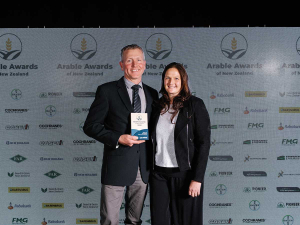
The arable sector losing good people and land is a major concern for the 2026 Arable Farmers of the Year, Mid Canterbury seed growers John and Mel McCaw.
The terrible floods that hit the Wairarapa may have subsided, but the danger to farmers still exists, according to local Federated Farmers president Rob Hickson.
New Zealand's Emissions Trading Scheme (NZ ETS) encourages afforestation while not achieving climate goals, says a new report released by the Parliamentary Commissioner for the Environment, Simon Upton.
Are you ready for El Nino? That’s the question asked by Beef+Lamb NZ’s Ian Tarbotton who leads B+LNZ’s farm extension service.
Bigger, bolder salads packed with colour, crunch and flavour are making headlines overseas — and the arrival of fresh spring vegetables means New Zealanders can now get chopping too, creating their own Great Kiwi Spring Salad.

OPINION: The same mainstream media muppets that brought you Jacindamania in 2017 have been flat out pimping for the Opportunities…
OPINION: Your old mate reckons the atrocious way farmers in the UK are treated by their lords and masters in…