fbpx
Print this page
Thursday, 27 September 2018 07:55

Better deal on farm rail crossings

Written by 
Farmers are happy KiwiRail is setting out to make a formal, legal record of all rail crossings. Farmers are happy KiwiRail is setting out to make a formal, legal record of all rail crossings.

Farmers are happy with KiwiRail’s new policy on private rail crossings.

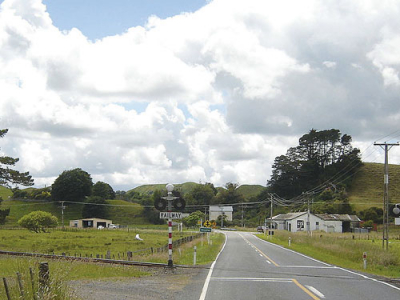
The state-owned company is setting out to make a formal, legal record of all rail crossings; about 1300 private crossings exist along train tracks in New Zealand, with about 700 either undocumented or unauthorised.

KiwiRail spokesman David Gordon says it wants to help the public and its employees get home safe each day.

“So we need to know where people are crossing our tracks and ensure they are doing it safely.

“That requires a formal, legal record of all crossings, and we need to know they are up to standard in the approach, sight lines, signs and formation.”

Gordon says the policy follows talks with Federated Farmers and others.

He says KiwiRail is seeking only to recover its costs in this project. No set annual fee will be charged, as was proposed two years ago. Instead, most farmers will be charged only the cost of inspecting crossings on their land -- estimated at $50 to $100 per crossing, with inspections every two years.

Farmers will be responsible for the cost of any work needed make sure the crossing is safe to use. This generally includes removing vegetation to give adequate views, paying to maintain the road/track surface, and any other work required to meet safety standards and prevent damage to the track, says Gordon. 

“The costs for this work will vary.

“We’ve worked hard to develop a policy that is fair, and which is also safe.”

Feds president Katie Milne says it appreciates that KiwiRail has listened to its views before setting the charges.

“However, there is a concern that some informal rail crossings will be closed because the safety concerns are considered too great. That’s going to be difficult for farmers if that was their only route for accessing parts of their farm,” Milne says.

More like this

CODC Sludge-to-Lauder Plan Slammed by Federated Farmers

Federated Farmers has called on Central Otago District Council (CODC) to drop or vote down a plan to truck sludge from Alexandra and Cromwell to farmland near Lauder, warning it would compound an "outrageous" situation created by a separate council's decision weeks earlier.

Federated Farmers Welcomes RMA Replacement Passing

Federated Farmers says new legislation replacing the Resource Management Act will cut red tape, unlock investment and help grow New Zealand's export-led economy, after the Planning Bill and Natural Environment Bill passed their third reading in Parliament yesterday.

Arable ROI Crisis: Why Canterbury Farmers Are Moving On

Mid Canterbury Federated Farmers arable chair, Bevan Lill, said Beef + Lamb NZ data indicated that for the last six years, the average arable return on investment was about 0.8% while inflation ran about 4% - so the average arable farm was going backwards at about 3% a year.

Featured

GP Rural: New Pathway Proposed to Fix Rural GP Shortage

The Royal New Zealand College of General Practitioners (the College) and Hauora Taiwhenua Rural Health Network are calling for investment in a proposed new training pathway for rural GPs, warning that many rural practices are struggling to recruit while a large share of the existing workforce nears retirement.

CODC Sludge-to-Lauder Plan Slammed by Federated Farmers

Federated Farmers has called on Central Otago District Council (CODC) to drop or vote down a plan to truck sludge from Alexandra and Cromwell to farmland near Lauder, warning it would compound an "outrageous" situation created by a separate council's decision weeks earlier.

Southland Farmers Face Wet Weather Toll, Support Available

Farmers across parts of Southland and South Otago are continuing to deal with difficult conditions after a prolonged run of wet weather, with pressure building around feed supply, stock management, pasture damage, farm infrastructure and everyday workloads.

National

Machinery & Products