Fonterra FY26 Results: $9.69 Milk Price, $3.4bn Profit
Fonterra has unveiled its annual results for the 2026 financial year, posting $27 billion in revenue and close to $20 billion returned to New Zealand farmer owners and unit holders.
 increase font size

FONTERRA PREDICTS 70-80% of New Zealand schools may sign up to the Milk for School scheme, says managing director corporate affairs Todd Muller.
But it does not plan to merge the scheme with the breakfast in schools programme, Kick Start, because they are distinctly separate, he told Dairy News.
One is to help the most vulnerable children, the other is to increase milk consumption and make sure dairy is part of children’s nutrition.
The last week of May was a big week for both schemes: the Government announced $1.9m a year for the Kick Start scheme; and Milk for Schools reached Christchurch during its South Island rollout which started in Invercargill a few weeks ago.
Muller says although Fonterra envisages Milk for Schools will eventually reach 70-80% of schools, “ultimately it is up to the boards of trustees of primary schools to decide if it is a programme they want to be part of. But the feedback is hugely positive”.
Sixty per cent of Canterbury schools are signed up, more than that in Southland and Otago, and in Northland it is at least 80%. Fonterra aims to have Milk for Schools through the whole country by the end of term one 2014.
The scheme has two main drivers, says Muller. “It was really important to reverse the declining trend in milk consumption in New Zealand and particularly the sharply declining trend in milk consumption by younger people. The younger generation were drinking less milk than their parents’ and grandparents’ generations. We thought milk should be a regular part of New Zealanders’ diet, particularly children’s diet, because it is a particular part of what they need to grow up healthy.
“In the feedback we got from the Northland trial, the teachers saw a noticeable difference in the performance in the class – the kids have more energy, they were more attentive. I appreciate this is qualitative – this was feedback we got directly from them. And we also got milk consumption growing in that region.
“It is a good result for the co-op… and it is a good thing for New Zealand because the young people are getting a good nutritional dose of dairy every day.”
Milk for Schools and Kick Start are not likely to ever be merged. “The Kick Start programme is now in its fifth year. We have partnered with Sanitarium to assist children who are most vulnerable and most in need with breakfasts in their school. In a nutshell Sanitarium is providing Weet Bix and we are providing the milk on top.
“But it has worked really well in 600 schools that have taken up this programme. The Government has looked at the success of the Kick Start breakfast and has decided to… ensure it is available initially for lower decile schools five days a week (now 2 days a week).”
Muller says Fonterra must spend a bit more to support the expansion to five days a week in schools currently using the programme, but the cost is largely picked up by government. More cash may be needed if the programme expands to other schools.
Fonterra has unveiled its annual results for the 2026 financial year, posting $27 billion in revenue and close to $20 billion returned to New Zealand farmer owners and unit holders.
Fonterra Co-operative Group has confirmed the independently assessed candidates standing for election to its board in 2026.
Fonterra has revised its Farmgate Milk Price forecast for the 2026/27 season, lifting the midpoint and narrowing the range on the back of improving global dairy commodity prices.
Outgoing Fonterra Co-operative Council chair John Stevenson says that it has been a privilege to represent the co-op's farmer shareholders.
OPINION: It seems Canterbury processor Synlait is still in the doldrums.



Federated Farmers says it welcomes Labour's commitment to reviewing the Sharemilking Agreements Act, calling on other major parties to do the same.
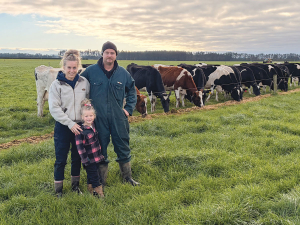
For Canterbury dairy farmers Sian Meijer and Rick Wobben, wearable technology has become one of their most valuable on-farm tools - helping manage 1850 cows across an expansive, high-performing dairy operation while improving efficiency, mating outcomes and day-to-day decision making.
Fonterra has unveiled its annual results for the 2026 financial year, posting $27 billion in revenue and close to $20 billion returned to New Zealand farmer owners and unit holders.
The first major update to the Dairy Cattle Code of Welfare in more than a decade has been released, marking what DairyNZ describes as an important step in ensuring animal welfare standards continue to evolve alongside scientific evidence and on-farm realities.
Ravensdown shareholders have elected Jane Montgomery and Kate Acland to the Ravensdown Board for three-year terms, following a closely contested director election.
Federated Farmers says new legislation replacing the Resource Management Act will cut red tape, unlock investment and help grow New Zealand's export-led economy, after the Planning Bill and Natural Environment Bill passed their third reading in Parliament yesterday.