Fonterra CFO Andrew Murray Resigns
Fonterra Co-operative Group chief financial officer Andrew Murray has resigned to take up a role outside the dairy giant.
 increase font size
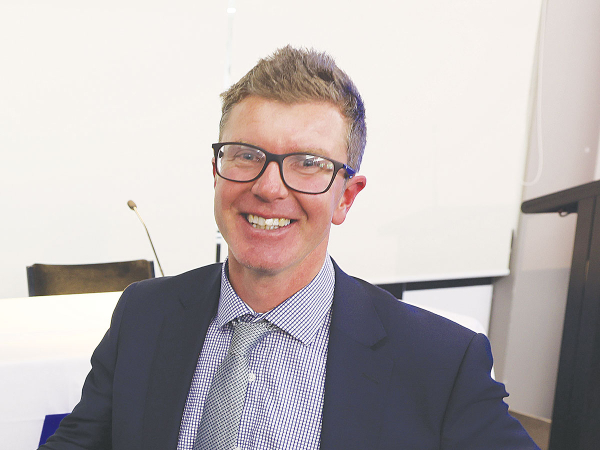 LIC chairman Corrigan Sowman says many farmers are investing in quality, efficient pastoral genetics which will put them in good stead to reduce their emissions intensity.
Genetics may be one of the tools Fonterra farmers can tap into to reduce on farm emissions, according to LIC.
LIC says its genetic research is leading to cows that produce less methane, are more tolerant of hotter climates, produce more kgMS of liveweight and are all-round more efficient.
LIC chairman Corrigan Sowman says many farmers are investing in quality, efficient pastoral genetics which will put them in good stead to reduce their emissions intensity, and LIC will continue to support them to do that.
Long-term users of LIC genetics have almost doubled the rate of genetic gain in their herds over the last 10 years – these gains are cumulative and permanent, delivering long-term benefits into the future, he says.
Last month, Fonterra announced they’re targeting a 30% intensity reduction in on-farm emissions by 2030 (from a 2018 baseline). LIC is well placed to support farmers to meet this target as 7% of the target is to be achieved through farming best practice with the themes of herd improvement and cow efficiency set to be influential, says Sowman.
“That’s where we come in. This announcement gives us a clear mandate to provide solutions to farmers to reduce their emissions intensity. LIC has known the challenges for some time and has been focused on supporting farmers to be profitable and sustainable in the future through cow efficiency,” he says.
“Targeting a reduction in emissions intensity cements our focus on cow efficiency as a sustainable solution for the dairy sector, and the good news is, we have the cows that will get us there – we just need more of those highly efficient cows.
“We will continue the strong focus on longevity and minimising wastage as positive gains in this area will also significantly enhance on farm profitability and enable an improved emissions profile at a herd and farm level.”
Across the national herd, the top 25% of 4–8 year-old herd tested cows are producing an average of 539 kgMS which is +166 kgMS more than the bottom 25%. The top 25% are also more efficient cows – producing an average of 1.05 kgMS per kg of liveweight (kgLWT), whereas the bottom 25% are 0.73 kgMS/kgLWT.
“We know the efficiencies that can be achieved on farm through herd improvement, and we are confident we can support farmers to reduce their emissions intensity,” says Sowman.
“My key message to farmers is – we have your backs. An emissions target that centres on intensity reduction is a positive step forward and there are many solutions out there to support you. LIC genetics is one of those solutions and we are ready to do our bit to support farmers to meet these targets.”
Each year LIC invests around $18 million into R&D (7% of revenue), making us one of the largest private investors in R&D for the primary sector. These investments are primarily focused on improving the production efficiency of the national herd for the profitability of New Zealand’s dairy sector.
Fonterra Co-operative Group chief financial officer Andrew Murray has resigned to take up a role outside the dairy giant.

Four candidates have been confirmed for two director positions on Fonterra’s board.
A record farmgate milk price and strong global demand is laying the foundation for continued growth of organic dairy farming in New Zealand.
Waikato milk processor Tatua has again declared a record milk payout to farmer shareholders, leaving other processors in the dust.
LIC shareholders have elected a new North Island representative to the co-operative's Board, along with five representatives to its Shareholder Reference Group (SRG), following the company's Annual Meeting held in Invercargill.



Fonterra Co-operative Group chief financial officer Andrew Murray has resigned to take up a role outside the dairy giant.
A major move is about to get underway to improve the quality and viability of dairy beef and cattle in NZ.
Veterinarians say changes to the code of welfare for dairy cattle provides a positive foundation for improved cattle welfare across the country.
Today, 15 October, is the International Day of Rural Women, which recognises rural women’s contribution to farming, communities and the environment.
Global dairy giant Lactalis has integrated its Australian operations with the Mainland Dairy consumer business it acquired from Fonterra earlier this year.
High country stations, mixed sheep and beef farms, Māori-owned farms, corporates and family operations are among the nine commercial farms taking part in the Livestock Innovation Farming Transformation programme, known as LIFT.