Rabobank Launches HortPathways for Emerging Hort Leaders
Twenty-eight emerging leaders from across the horticulture sector spent two days last month learning valuable skills and connecting with industry experts.
 increase font size
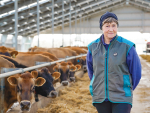
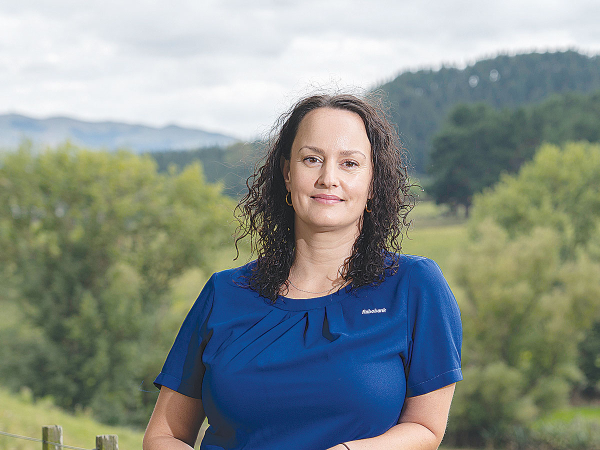 RaboResearch senior analyst Emma Higgins says outlooks are shifting.
While global dairy commodity prices continue to climb in most key exporting countries, the second half of the year is expected to bring increased downside risks.
That's according to Rabobank's latest Global Dairy Quarterly report, which says modest production growth in the first few months of 2025 has underpinned firm dairy commodity prices, with output from the 'Big-7' dairy exporting regions (New Zealand, Australia, the EU, Argentina, Uruguay, Brazil, and the US) expanding 0.5% year-on-year (YOY) in Q1.
Report co-author RaboResearch senior analyst Emma Higgins says while this modest increase aligns with recent price strength, outlooks are shifting.
"Growth is projected at 1.1% in Q2 and 1.4% in Q3, marking the strongest quarterly increase since Q1 2021. The US and EU are expected to contribute to this growth with additional support from South America - granted, against weak prior-year comparisons."
However, signs of stress are emerging on the dairy demand side, including near record-low consumer confidence in the US, indicators of economic struggles in China and declining sales data from restaurants and consumer packaged goods companies across many regions.
Meanwhile, global trade conflicts remain elevated, with volatility and rapidly changing tariffs influencing dairy trade flows.
Nevertheless, Higgins says dairy product prices have surged to multi-year highs, with a $10.00/kgMS forecast Fonterra price for the 2025/26 season, positive signs at the Global Dairy Trade Auction and US dairy commodities showing bullish trends and strong Q1 exports, albeit prior to the implementation of retaliatory tariffs by China and Canada.
Higgins explained while Rabobank does anticipate risks emerging in the second half of the year due to expanding supply and demand uncertainty; this was expected to be a "recalibration" rather than a sharp downturn.
"[This is] a natural correction following a period of strong performance. Fonterra's highest on-record milk price forecast positions farmers for a likely second consecutive season of double-digit payouts and sustained profitability."
However, uncertainty around the macroeconomic backdrop to the 2025/26 season remains. Fonterra's forecast ranging from $8.00-$11.00/kgMS highlights potential market volatility, with similar ranges in other dairy companies potentially cause for concern.
Higgins explains that while RaboResearch sees the $9.50-$10.00/kgMS range as sensible to kick off a new production season, firm dairy markets and weaker currency over a sustained period could see a higher figure, whilst winter volatility and commodity price shocks could bring it down.
New Zealand dairy export volumes for Q1 rose 5% year-on-year, with shipments to China up 10% and increased demand also seen from Indonesia, Korea, and Sri Lanka.
This was driven by a weaker New Zealand dollar and stronger commodity prices, contributing an additional $1.5 billion in export value over the same period.
The report says New Zealand dairy farmer confidence remains high, with dairy production for next season expected to rise.
Sentiment was particularly elevated in the South Island, where land conversions to dairy are being discussed.
Higgins said while the scale of new conversions remains uncertain, any resulting milk growth is likely to materialise from the 2026/27 season onward.
Twenty-eight emerging leaders from across the horticulture sector spent two days last month learning valuable skills and connecting with industry experts.

A 'tsunami' of milk from key exporting countries is winding down and this may be good news for New Zealand dairy farmers.
Chinese beef trade quotas and a looming suspension of Brazilian beef imports into the European Union are expected to reshape global beef trade flows over the remainder of 2026, with implications for New Zealand exporters, according to Rabobank's Q3 Global Beef Quarterly report.
New Zealand consumers are paying more for beef mince than ever before, with the average retail price now sitting above $24 per kilogram, according to Rabobank.
West Otago dairy farmer Luke Kane has been awarded the 2026 Rabobank Dr John Morris Business Development Prize.


Farmer-owned fertiliser company, Ballance Agri Nutrients is welcoming National’s plan to negotiate security agreements with key supplier countries to protect New Zealand-bound products from export restrictions and greater supply chain certainty.

Carrfields has announced the appointment of Stu Hall to the newly created role of chief operating officer, Carrfields Ltd, reflecting the continued growth of their agribusinesses and the need to ensure the company has the leadership capacity and support in place as it pursues the emerging opportunities ahead.
New Zealand's role is not to compete with Indian growers, according to NZ Apples and Pears.
The potato industry is celebrating the success of two rising stars - James Blair, the 2026 Young Grower of the Year and runner-up and innovation award winner, Amber Davy.
Twenty-eight emerging leaders from across the horticulture sector spent two days last month learning valuable skills and connecting with industry experts.
There are five entrants in this year’s Young Horticulturist of the Year, competing in a series of technical, practical, business and leadership challenges.