BVD Control Begins Long Before You See A Problem
Bovine Viral Diarrhoea (BVD) is sometimes viewed as a dairy industry issue, but the reality is that the disease can have serious consequences for beef breeding herds as well.
 increase font size
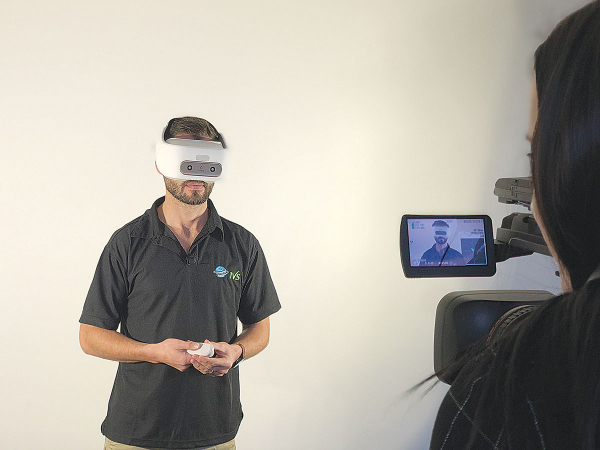 ECO FRIENDLY: Reuben Turner inspects biosecurity training provider IVS’s new virtual shipping container.
Cutting edge technology designed to simulate biosecurity threats has emerged from the collaboration of two Hamilton companies.
A pioneering virtual reality shipping container packed with simulated biosecurity risk scenarios is helping preserve New Zealand’s ecosystem and way of living.
Independent Verification Services (IVS) in Hamilton has launched a new virtual reality (VR) simulation built by Hamilton software specialist Company-X. The Ministry of Primary Industries has approved the technology to be used in biosecurity refresher training.
The project was led by Company-X augmented and virtual reality specialist Lance Bauerfeind, with project manager Dilan Prasad and augmented and virtual reality generalist Wonkee Kim.
Using virtual reality to assess frontline staff dealing with imported goods was a New Zealand first, said IVS chief executive Peter Webb.
“It’s the first training course that is not undertaken in a classroom, using a written examination-style assessment. Instead, it offers an online course with a virtual reality assessment that lets trainees demonstrate their practical knowledge and skills.”
The technology provides trainees with a realistic environment to properly assess their abilities to detect and respond to biosecurity threats such as foreign insects and vegetation.
A wireless virtual reality headset allows the person to walk around the simulated container externally and internally, in the same way that they would in the real world.
“The virtual reality tool is the closest and more realistic assessment of skills,” Webb said. “It replicates real-life situations that may be encountered on the job.
“We randomise all the different things that can happen, like poisonous spiders,” Bauerfeind said.
“We can trick head movements so we know where they are looking.”
“We chose to work with the team at Company-X due to their experience and capability. The fact that they are based here in the Waikato, was also a bonus,” Webb said.
The project, Webb said, was the first step in what could be a transformational journey for the biosecurity industry in New Zealand. It uses virtual reality to train staff dealing with biosecurity contamination immediately post-border in the most realistic way.
“This technology has the potential to be used to educate all New Zealanders to identify and respond to biosecurity risks,” he said.
“IVS believes virtual reality could be instrumental to achieving a biosecurity team of 4.7 million, where all New Zealanders are aware of the importance of biosecurity and involved in pest and disease management, as set out in the Government’s Biosecurity 2025 strategy.
Bovine Viral Diarrhoea (BVD) is sometimes viewed as a dairy industry issue, but the reality is that the disease can have serious consequences for beef breeding herds as well.
Election years are always a concerning time for farmers, according to DairyNZ chair Tracy Brown.
New Zealand wool is reaching new heights as air filtration companies move away from synthetic products to biodegradable alternatives.
Testing confirms H5 bird flu in a single northern giant petrel, found dead on a remote Cape Palliser beach in the Wairarapa, says Dr Mary van Andel, the Ministry for Primary Industries' (MPI) Chief Veterinary Officer.
Bovine Viral Diarrhoea (BVD) is sometimes viewed as a dairy industry issue, but the reality is that the disease can have serious consequences for beef breeding herds as well.


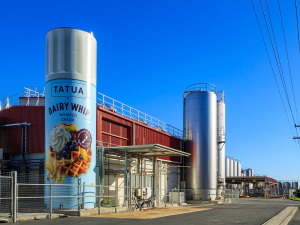
Waikato milk processor Tatua has again declared a record milk payout to farmer shareholders, leaving other processors in the dust.
A Labour-led Government won’t be bringing back the controversial freshwater rules of 2020.
National’s much-touted free trade deal with India featured in the Rural Issues Debate at Mystery Creek, Hamilton on Wednesday night.
New Zealand's 2026-27 freshwater fishing season has opened, with anglers encouraged to head to rivers and lakes over the coming days as conditions look favourable across much of the country.
Central Otago District Council (CODC) has voted against a plan to spread treated sewage sludge from Cromwell and Alexandra on farmland near Lauder, a decision Federated Farmers says reflects strong opposition from rural residents.
Pāmu has released its FY26 Integrated Annual Report, reporting a Net Operating Profit of $113 million, more than double the $49 million recorded in FY25.