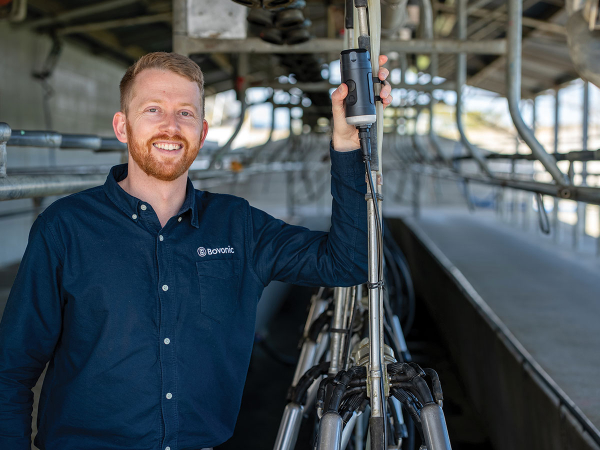
Bovonic says a return on investment study has found its automated mastitis detection technology, QuadSense, is delivering financial, labour, and animal-health benefits on New Zealand dairy farms worth an estimated $29,547 per season.
The 2025 study analysed outcomes from 33 New Zealand dairy farms that had used QuadSense for at least six months.
Based on an average installation of 29 units at $500 each (total investment $14,500), the company says the estimated annual benefit of $29,547 equates to a payback period of around six months.
According to Bovonic founder Liam Kampshof, the study was commissioned to move beyond anecdotal feedback and better understand the impact farmers were seeing on farm.
"We knew QuadSense was delivering value, but we wanted a more analytical understanding of its impact," says Kampshof. "The results back up what farmers have been telling us and giving everyone confidence that the technology is delivering consistent, repeatable value where it matters."
Kampshof says studies like this are also important for farmers weighing up where to invest.
"Farmers are spoilt for choice when it comes to technology, and that can make it difficult to know where to invest," he says. "Access to credible information and feedback from other farmers helps them assess new technology more clearly and decide what's right for their own system."
Read More:
What the study found
The biggest gains came through improved milk quality. Across the farms surveyed, bulk somatic cell count (SCC) dropped by an average of 37%, unlocking processor incentives of between $3,900 and $14,300 per season, depending on the farm. Based on a DairyNZ calculator, which gives a percentage production increase for lowering SCC, earlier detection and treatment were also linked to an estimated $17,550 lift in production from improved yields.
Time savings were another consistent theme. Farmers reported saving an average of 3.7 hours a week - roughly 155 hours a season or $5,905 a year - alongside smoother milking routines and less fatigue during busy periods.
Animal health improvements also stood out. Seventy four per cent of farmers reduced antibiotic use, delivering an estimated $2,192/year in savings, along with fewer culls and faster recovery times.
Real results
Since installing QuadSense, one contract milker in Morrinsville recorded a 40% reduction in SCC, securing $8,700 in seasonal milk processor incentives, the company says.
By removing around 30 minutes of manual stripping from every milking, the farmer saved close to five hours a week. Earlier detection also meant affected cows could be treated using a non-withholding product, keeping milksolids in the vat and helping the farm exceed its production contract by 3000 kgMS for the season.
A Waikato farmer also credited QuadSense with removing the need to add an extra labour unit in the shed when SCC levels spiked. He achieved a 30% reduction in SCC and reached 90% Days of Excellence near the end of the season. The system delivered immediate labour savings and, following veterinary advice, has since been used to support dry cow therapy decisions by adjusting detection thresholds.
Beyond numbers
Alongside the financial returns, farmers using QuadSense also pointed to a range of lifestyle and day-to-day benefits. Ninety-six per cent said the system reduced stress, and 95% said it helped them make better business decisions.
Many farmers described the reassurance of knowing every cow is checked automatically at every milking. That consistency was especially valuable on farms with multiple staff or relief milkers, giving owners more confidence to step away from the shed without worrying about missed cases.
Earlier detection also supported better antibiotic stewardship, with more cases addressed before becoming clinical. Farmers said this not only reduced antibiotic use, but also led to healthier cows, quicker recovery, fewer chronic issues, and better herd longevity.
“The numbers matter,” says Kampshof, “but what farmers kept telling us was how much easier mastitis management felt. Less stress, more consistency, healthier cows. And we know how much those things make a real difference on farm.”
The full return-oninvestment study is available at www.bovonic.com.