DairyNZ Tests Heat Stress Solutions for Dairy Herds
New DairyNZ research will help farmers mitigate the impacts of heat stress on herds in high-risk regions of the country.
 increase font size

‘CRANKY COW’ syndrome is a growing problem often overlooked by Australian dairy farmers, said a speaker at a field day in south-west Victoria.
Cows get temperamental, give less milk and development ailments including heat stress and staggers. It is caused by toxins produced by rye grass endophyte.
The topic arose at a `More Milk, Less Stress’ field day on October 25 at Ecklin, near Terang. The organiser, Farmgate Stockfeeds, aims to help dairy farmers lift milk output and cope better in tough times. Farmers also heard about how to deal with stress.
Ruminant nutritionist Damian Moore, director of feed safety with Meriden Animal Health, told the field day ‘cranky cow’ syndrome is more of a problem than most farmers realise.
“They often blame the weather, dogs and all sorts of things for cows are playing up, but the problem is caused by these toxins produced by the endophytes in their pasture,” Moore said.
“Most farmers don’t realise the cause because the toxins have been in the pastures for so long and so have the effects.”
The toxins cause staggers, heat stress, lower feed intake, reduced milk production and general irritability.
“Affected cows will be tempera-mental and tend to strike out, kick the cups off and be frightened easily,” Moore said.
Endophytes are particularly prevalent in perennial ryegrass and tall fescue and most frequently are found in older pastures.
Moore said Australia’s meat industry lost about $60 million a year in stock and production loss due to endophyte toxins.
Extreme cases in hot summers could result in multiple animal deaths, he added.
No silver bullet cure exists, though Fusion, a new microtoxin binder, work well in reducing the direct effects of perennial ryegrass toxicity.
Also at the field day, Performance Probiotics area manager Tom Newton outlined natural ways to improve herd health and performance, dairy farmer Jack Kenna told his story of running a dairy farm and business while coping with mental illness, and local health workers organised by Aspire, A Pathway to Mental Health told how to recognise and handle stressful times.
New DairyNZ research will help farmers mitigate the impacts of heat stress on herds in high-risk regions of the country.

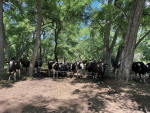
Thirty years ago, as a young sharemilker, former Waikato farmer Snow Chubb realised he was bucking a trend when he started planting trees to provide shade for his cows, but he knew the animals would appreciate what he was doing.
With the advent of climate change, dairy farmers could expect to be dealing with more days where their cows are suffering from heat stress.
As temperatures rise, our cows face the challenge of maintaining production and health while battling the heat.
New research from the University of Queensland and the Queensland Alliance for Agriculture and Food Innovation (QAAFI) has revealed that changing the diets of pregnant sows could be key to improving animal welfare by easing heat stress.


New Zealand farmers have been told they all have amazing people on their farms and have been urged to be “that one person” that can make a huge difference to those going through tough times.
OPINION: For thousands of Southland farmers, this week would have tipped them into the non-compliant category when it comes to following regional freshwater plan rules. But the Government has stepped in to give them the clarity they deserve.
The stark realities of the world trade that New Zealand is having to face have been revealed by Trade Minister Todd McClay.
New Zealand and the European Union are closer than ever.
The latest data from the Real Estate Institute of New Zealand (REINZ) reveals a mixed rural property market due to consistent inflation concerns.
Animal welfare improvements as well as reduced costs for dairy farmers are at the heart of a new move which could help cut back on the waste of unused vet drugs.