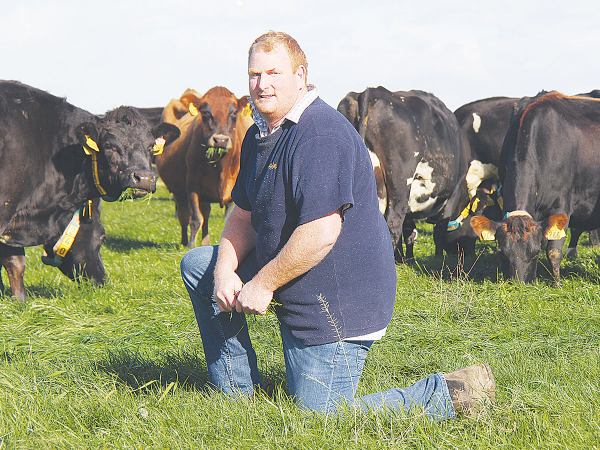
Sharemilker Mark Shefford believes he struck a deal with himself the day cow collars were fitted to his 1,240-cow herd near Waimate, South Canterbury.
The 39-year-old and his wife Vanessa were former lowerorder sharemilkers for Geoff Hay. They ran two herds on two farms: 840 cows through a 60-bail rotary and 400 cows through a 30-a-side herringbone dairy at Morven.
The two operations covered 212 hectares and 100 hectares, respectively – 3.5km apart (supported by a 98-hectare run-off block within 500 metres of the properties).
The logistics alone made mating manic and unrelenting.
“I went through calving, and then I had to go through mating, and it wasn’t until Christmas time that we sort of had a break,” Mark says.
“I was always in the cowshed milking the cows, every day for the first six weeks. I think heat detection is the one job farmers think they can’t let go of. I would hate to add up the hours I spent watching cows for heat.”
Three years ago, farm owner Geoff Hay made the move to engage with technology to ease the pressure. His solution was to fit both herds with heat and health monitoring collars.
“Geoff is very tech savvy and enjoyed that stuff,” Mark says.
“He could see things were coming to a head for me, and it came at a time that things were just starting to take off with the collars. To be honest, I was intrigued simply because I was so tired.”
He says they did their homework and chose the GEA CowScout collars because the battery’s lifespan was up to three years better than the competition and the software was effective and user-friendly. Together with excellent reliability, this is what Nedap technology – which powers CowScout – has been known for over the past decades.
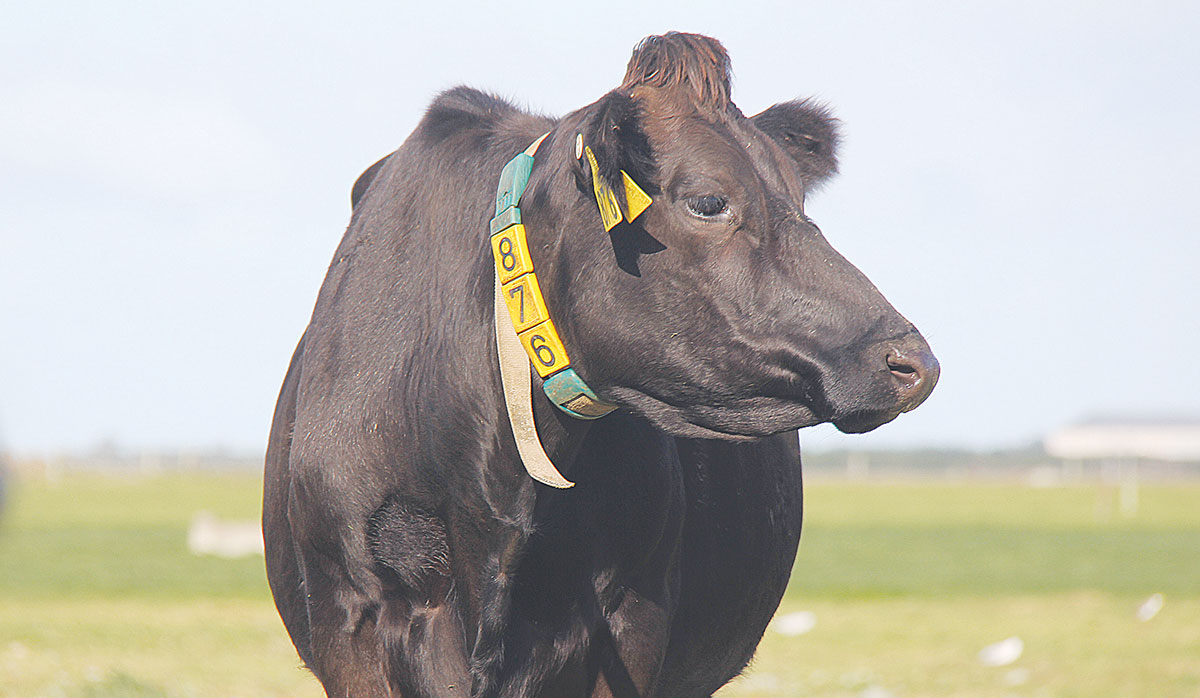
CowScout monitors cow neck movement 24/7. Showing each cow’s activity and in turn alerting farmers to heats and potential health problems.
“We have had some discussion groups around the collars locally and I’ve seen how the data from different collars look,” Mark says.
“I’m a pretty simple dude, and our graphs looked way simpler. I could interpret the data pretty easily, and so could my staff.”
Mark and Geoff also wanted to work with Waitaki Dairy Solutions, who had installed their GEA dairy and worked closely with GEA, making their transition seamless.
“I made a deal with myself that the day we put those collars on I was not going to buy another bucket of tail paint. I’ve kept that deal.”
He did acknowledge that trusting the technology was still a process, regardless of his solid intentions.
“I was invested for sure, but early on, if I saw a cow bulling, I thought the collars must have missed her. So, I’d go and check and sure enough, she would have been mated the day before, or if I decided to override it and mate her today, she’d be on heat the following day.
“I did that until I got sick of it – which didn’t take long – and the technology was always bang on.”
 |
|---|
|
CowScout monitors the cow's neck movement.
|
Their goal was to improve their six-week incalf rates from 68% (done solely on visual heat detection).
They added 250 straws of sexed semen on their last season to make the challenge more interesting: their six-week in-calf rate lifted by 8%, to 76%.
“The idea of using sexed semen was to get all our heifer calves on the ground within the first four weeks of calving,” Mark says.
“Normally [on a human visual assessment], we expect sexed semen conception to be about 10-15% lower than it is using conventional semen. Our conception rate for the sexed semen this season was only 0.5% behind our normal semen, which I thought was pretty, bloody good.