The Power of Refugia
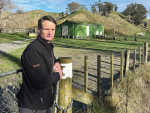
Worms are present on every farm; it’s ensuring there are enough worms that are susceptible to drench within your farm system, through the use of refugia, that is a key tool in slowing the rise of drench resistance.




 increase font size
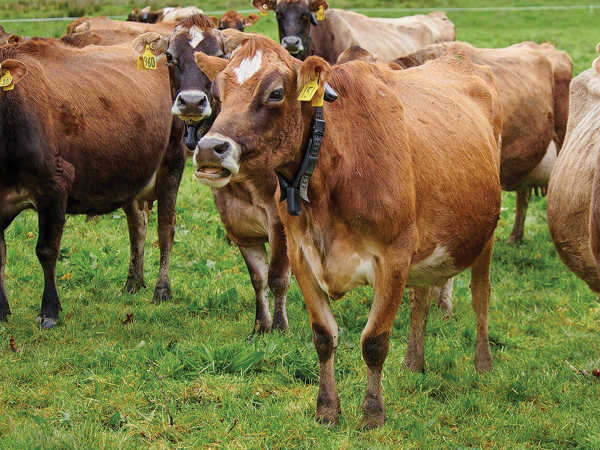 Outstanding fertility results rarely happen by chance, says Matias Cassiner.
Having spent more than 23 years in the New Zealand dairy industry as a dairy farmer, technical adviser, and dairy farm consultant, including seven years working directly with farmers to improve herd performance and profitability, I have learned that outstanding fertility results rarely happen by chance.
They are built on sound transition cow management and nutritional decisions made well before mating begins.
While farmers rightly focus on heat detection, genetics, and mating management, one of the most overlooked drivers of reproductive success is transition cow nutrition. In this article I would like to highlight two nutrients that deserve greater attention: methionine and choline.
The three weeks before and after calving are among the most demanding periods in a cow’s life. As milk production rapidly increases, cows often cannot consume enough feed to meet their energy requirements. To compensate, they mobilise body fat reserves, placing significant pressure on the liver.
When the liver becomes overloaded, cows are more susceptible to metabolic disorders such as ketosis and fatty liver, both of which can negatively affect fertility, delay cycling, and increase the risk of empty cows at the end of mating.
Methionine and choline help cows cope with these challenges.
Methionine is an essential amino acid that supports protein synthesis, immune function, embryo development, and reproductive processes. Choline plays a critical role in liver function by helping transport fat out of the liver, improving energy utilisation during early lactation.
Simply put:
Methionine helps build and maintain the cow’s metabolic and reproductive systems.
Choline helps keep the liver functioning efficiently during periods of high metabolic stress.
During my years as a dairy consultant, I was one of the first advocates for applying amino acid balancing principles, particularly methionine nutrition, in New Zealand’s pasture-based dairy systems. Several of my former consultancy clients were among the early adopters of balanced methionine programs and continue to use these strategies today. Some have also incorporated rumen-protected choline into their transition cow programs to support metabolic health and fertility.
Seeing positive on-farm results reinforced my confidence in the science. Today, through my role with Kemin, and in collaboration with Lincoln University, we are generating New Zealand-specific data to validate the extensive international research on methionine and choline under our unique pasture-based conditions.
Research published in the Journal of Dairy Science has shown that supplementing transition cows with rumen-protected methionine and choline can improve liver function, metabolic health, nutrient utilisation, and production performance. Studies have also reported improvements in embryo quality, reproductive performance, and overall transition success.
Good fertility begins long before the mating season. By supporting cow’s transition period with balanced supplies of methionine and choline, farmers can improve cow health, reproductive performance, and farm profitability.
After more than two decades working alongside New Zealand dairy farmers, one thing remains clear: fertility is rarely the result of a single intervention.
It is the outcome of doing many small things exceptionally well, and getting transition nutrition right is one of the most profitable places to start.
New Zealand dairy systems are among the most efficient in the world, but pasture-based cows can still face shortages of key nutrients during early lactation.
Traditionally, nutrition programmes focused heavily on crude protein. However, modern dairy nutrition recognises that cows do not require crude protein itself. They require specific amino acids and nutrients delivered in the right balance.
Providing balanced supplies of methionine and choline can help cows use nutrients more efficiently while supporting both production and fertility.
Fertility is a major profit driver. According to the DairyNZ In-Calf Calculator, the 2.7 percentage-point increase in New Zealand’s 6-week in-calf rate during the 2023-24 season was estimated to generate an additional NZ$130.7 million in milk revenue nationally. Based on the national dairy herd, this equates to approximately NZ$27 per cow, suggesting that a 3 to 5 percentage-point improvement in reproductive performance could be worth roughly NZ$30 to NZ$50 per cow annually in additional milk revenue alone. The total economic benefit may be considerably greater when accounting for fewer empty cows, improved herd efficiency, lower replacement costs, and greater lifetime productivity.
For a 500-cow herd, this equates to approximately NZ$15,000 to NZ$25,000 annually in milk-revenue benefits alone, before considering the additional fertility and health-related gains.
Worms are present on every farm; it’s ensuring there are enough worms that are susceptible to drench within your farm system, through the use of refugia, that is a key tool in slowing the rise of drench resistance.
In dairy nutrition, methionine usually comes up in terms of milk protein and production, but this misses a lot of what this essential amino acid is doing behind the scenes.
A dairy industry leader believes eradicating the common and costly disease, Bovine Viral Diarrhoea (BVD) is within reach.
Farmers with high-quality feed available in late spring could consider weaning at least a proportion of their lamb crop early to benefit both lambs and ewes.
The first major update to the Dairy Cattle Code of Welfare in more than a decade has been released, marking what DairyNZ describes as an important step in ensuring animal welfare standards continue to evolve alongside scientific evidence and on-farm realities.


OPINION: It seems Canterbury processor Synlait is still in the doldrums.
OPINION: Get offside with New Zealand First leader Winston Peters at your own peril.
Rural Contractors NZ says proposed changes to land transport rules for agricultural vehicles are a welcome response by the Government…
Fonterra Co-operative Group chief financial officer Andrew Murray has resigned to take up a role outside the dairy giant.
Global dairy giant Lactalis has integrated its Australian operations with the Mainland Dairy consumer business it acquired from Fonterra earlier…
