Ah Tatua, You've Done It Again!
Waikato milk processor Tatua has again declared a record milk payout to farmer shareholders, leaving other processors in the dust.
 increase font size
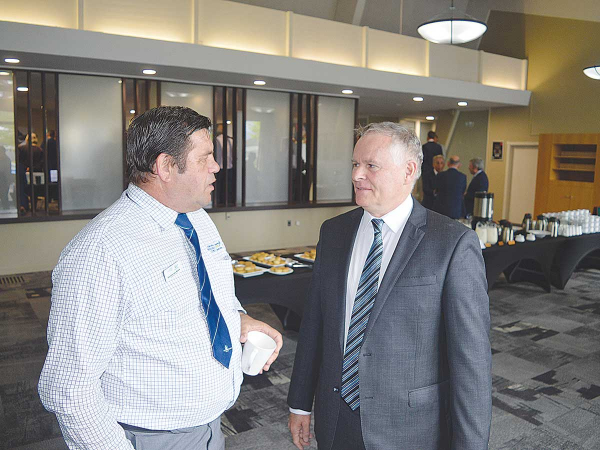 Fonterra chairman Peter McBride with Whakatane farmer Gerard van Beek at the co-op's annual meeting in November.
Nearly ten years after Fonterra’s last capital structure review, farmer shareholders have again started deliberating on the future shape of their co-operative.
An online survey, sent out last week by new chairman Peter McBride, signalled the start of the farmer consultation process.
The survey, with nine main questions, is to gauge the mood of farmers. The first question is how farmers feel about a potential change to the co-op’s capital structure.
Last week’s email, with the online survey, to farmer shareholders from McBride is the first opportunity for the 10,000 Fonterra shareholders to engage in the process.
The co-op’s board and management have been discussing potential capital structure changes behind closed doors for the past few months.
McBride says the board has been leading a review of its capital structure “to ensure it best supports our strategy and long-term vision for our co-op”.
“We have spent the past few months reviewing potential options, including staying with our current structure.
“Every option has its own merits, but also involves some form of trade-off.”
He says the board is seeking feedback on “the structural principles” that are most important to farmers.
After the farmer survey, the board will further develop options and continue consultations. A preferred option will then emerge and put before shareholders for further consultation before a vote.
Fonterra’s last capital structure review ran into trouble when a plan for a partial public listing was rejected by farmers, who feared they would lose control.
Following another round of consultations, Fonterra farmers agreed in 2012 to set up Trading Among Farmers (TAF), which allows outside investors to buy units and qualify for dividends. But these investors have no ownership or voting rights in the co-op.
Meanwhile McBride has also outlined the board’s other priorities for 2021. These include continuing to navigate the challenges presented by Covid-19 and delivering a strong milk price and forecast earnings.
“We are also focused on implementing our strategy, while clearly defining our longer-term strategic aspirations, and completing our portfolio review work through the asset divestment processes we have previously announced,” he says.
Fonterra is forecasting a milk payout of $6.70 to $7.30/kgMS following a strong rise in products sold by the co-op on Global Dairy Trade (GDT) platform.
Last month Fonterra chief executive Miles Hurrell said New Zealand dairy farmers deserve credit for premium prices fetched around the world for their milk.
He says New Zealand butter and skim milk powder are attracting premiums of $500/tonne more than European products right now and it’s all down to the sustainability credential of NZ milk.
“Our pasture-based systems, our high standards on animal welfare and our sustainability stories are starting to be recognised around the world,” Hurrell said.
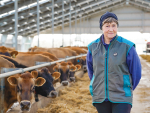
Waikato milk processor Tatua has again declared a record milk payout to farmer shareholders, leaving other processors in the dust.
Fonterra has unveiled its annual results for the 2026 financial year, posting $27 billion in revenue and close to $20 billion returned to New Zealand farmer owners and unit holders.
Fonterra Co-operative Group has confirmed the independently assessed candidates standing for election to its board in 2026.
Fonterra has revised its Farmgate Milk Price forecast for the 2026/27 season, lifting the midpoint and narrowing the range on the back of improving global dairy commodity prices.
Outgoing Fonterra Co-operative Council chair John Stevenson says that it has been a privilege to represent the co-op's farmer shareholders.


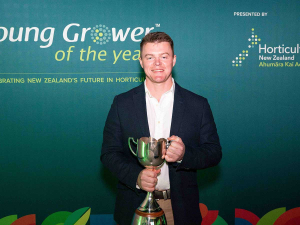
The potato industry is celebrating the success of two rising stars - James Blair, the 2026 Young Grower of the Year and runner-up and innovation award winner, Amber Davy.
Twenty-eight emerging leaders from across the horticulture sector spent two days last month learning valuable skills and connecting with industry experts.
There are five entrants in this year’s Young Horticulturist of the Year, competing in a series of technical, practical, business and leadership challenges.
A seasoned horticulturist has been appointed to deliver the Apple Action Plan, a key initiative of the India-New Zealand Free Trade Agreement.
New Zealand's citrus growers have been told to compete on the value built into their fruit rather than the volume they grow.
Hawke's Bay fruit growers are being reminded of the need to prepare for whatever the El Niño weather system may bring in the coming months.