Westpac Urges Farmers to Prepare Now for El Niño Drought
Westpac NZ is calling on farmers and growers to start preparing now for the possibility of a dry summer, as likely El Niño conditions raise the risk of drought across parts of the country.
 increase font size
 Chinese consumers are buying more dairy products despite an economic slowdown in the country.
Slowing economic activity in China isn’t affecting that nation’s appetite for dairy products.
Westpac dairy analyst Anne Boniface says the strength of Chinese demand for dairy in recent months is notable. This will be good news for New Zealand exporters relying heavily on Chinese consumers.
Global dairy prices rose for a ninth consecutive time on Global Dairy Trade (GDT) last week with supply concerns in major milk producing regions.
However, Boniface notes in her Dairy Diary report that supply concerns aren’t the only factor supporting the lift in dairy prices in recent months.
“The strength of Chinese demand has also been notable,” she says. “Chinese dairy imports were up 14% over January and February combined.”
In last week’s auction, buyers from the north Asian region (dominated by China) snapped up over 50% of product on offer, a touch ahead of the same time a year ago.
“This demand for dairy stands in stark contrast to concerns about the downside risk to growth in China,” notes Boniface.
“Our own view is that while GDP growth in China is set to slow noticeably this year, this slowdown won’t be centred in the household sector. This should be a silver lining for NZ agricultural exporters who are heavily reliant on Chinese consumers.”
Last week also saw a slight drop in whole milk powder prices, down 1.3% to US$3287/tonne.
Boniface says the market had been wary of at least some retracement in WMP prices as local weather normalised and concerns about the negative impact of recent dry weather on milk production eased.
“With DCANZ data showing NZ milk production in February was broadly flat on a year earlier (much weaker growth than we saw through the first half of the season, but perhaps not as low as some were anticipating) and decent rainfall in parts of the North Island in recent weeks, those supply concerns may have ameliorated somewhat.
“While milk collections for the remainder of the season are likely to be well down on the same time last year, we still expect nationwide milk production to end up about 2% higher. That’s stronger growth than the 0.3% lift Fonterra is currently forecasting for its own collections.”
Boniface says while last week’s pullback in WMP prices was broadly in line with our expectations, the higher fat prices of late mean the bank sees upside risks to its $6.40/kgMS milk price this season.
Global milk yield dips
The milk production outlook for the rest of the globe is mixed, says Westpac dairy analyst Anne Boniface.
Australian milk production was down 11% in January 2019 compared to a year earlier, with national production 5.8% lower for the season to date.
Boniface notes that Australian farmers have struggled with a combination of high costs, shrinking herds and reduced supplementary feeding.
“That said, export volumes haven’t been as weak with total Australian dairy export volumes down 0.7% for the season to date (led by a 40% fall in WMP export volumes).
“While production this season will clearly be well down, looking ahead to the 2019-20 season, improving prices and weather mean Australian milk production is unlikely to continue to contract at the same pace as this year.”
In the US, exports have also held up better than milk production, at least until recently. US milk production was up an estimated 0.6% in February on a year earlier.
European milk collections were down 1.5% in January.
Westpac NZ is calling on farmers and growers to start preparing now for the possibility of a dry summer, as likely El Niño conditions raise the risk of drought across parts of the country.

China remains New Zealand’s biggest market, taking $23 billion of our exports, but it’s no longer a commodity story, says Prime Minister Christopher Luxon.
Fonterra is strengthening its foodservice presence in China with the launch of a new cream for professional bakeries at Bakery China 2026 in Shanghai.
A new Westpac NZ community banking van begins making visits around Northland this week.
OPINION: What does the birth rate in China have to do with stock trading? Just ask a2 Milk Company.


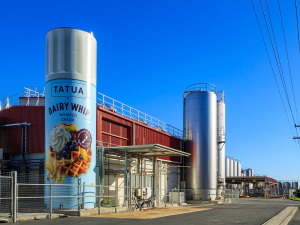
Waikato milk processor Tatua has again declared a record milk payout to farmer shareholders, leaving other processors in the dust.

A Labour-led Government won’t be bringing back the controversial freshwater rules of 2020.
National’s much-touted free trade deal with India featured in the Rural Issues Debate at Mystery Creek, Hamilton on Wednesday night.
New Zealand's 2026-27 freshwater fishing season has opened, with anglers encouraged to head to rivers and lakes over the coming days as conditions look favourable across much of the country.
Central Otago District Council (CODC) has voted against a plan to spread treated sewage sludge from Cromwell and Alexandra on farmland near Lauder, a decision Federated Farmers says reflects strong opposition from rural residents.
Pāmu has released its FY26 Integrated Annual Report, reporting a Net Operating Profit of $113 million, more than double the $49 million recorded in FY25.