Fonterra FY26 Results: $9.69 Milk Price, $3.4bn Profit
Fonterra has unveiled its annual results for the 2026 financial year, posting $27 billion in revenue and close to $20 billion returned to New Zealand farmer owners and unit holders.
 increase font size
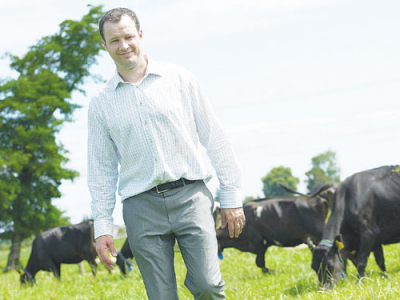 Tim Mackle.
DairyNZ chief executive Dr Tim Mackle says the new Dairy Action for Climate Change combines raising the dairy sector’s awareness of the issue and taking positive steps to mitigate the problem.
Mackle says New Zealand does have high greenhouse gas (GHG) emissions, about a quarter of these attributable to the dairy industry.
A plan to deal with dairy’s GHG emissions was unveiled at Fieldays by the Minister for Climate Change, Paula Bennett. The plan is for DairyNZ, Fonterra, the Ministries for Primary Industries and the Ministry of Environment to research ways of mitigating GHGs and passing this knowledge on to dairy farmers to deal with in practical ways onfarm.
Ten farms nationwide, with different systems, will model what is possible in different environments to mitigate GHGs. Fonterra will also run a farm GHG-recording pilot scheme in which up to 100 of their suppliers will report GHG emissions on their farms.
There are also plans to host eight rural professional climate change workshops to boost awareness of the issue and to have 12 climate-change dairy farmers champion the awareness campaign.
Starting immediately is a Massey University GHG course to train 60 rural professionals.
The programme is intended to raise awareness of climate change and to get the rural community ready to support farmers. It will also raise rural professionals’ capability to deal with GHG issues.
Mackle says the industry must show leadership and that science is a key component in resolving the issue.
“Dairy farmers and the scientists working alongside them must show they are serious about improving the environment. This plan lays the foundation for dairy’s sustained, strategic approach to a lower carbon future.
“We’re taking the first steps in understanding what dairy can do – with the wider agricultural sector, industry and urban communities – to help meet NZ’s Paris Agreement emissions reduction target.
“Our farmers are already working on lowering emissions; they are used to rising to challenges and they’re dedicated stewards of their land who want to do the right thing by the environment.”
Mackle says addressing onfarm emissions is among the most challenging issues facing the dairy and food producing sectors, globally and in NZ. The two most critical issues are methane, formed when ruminant animals burp, and nitrous oxide, formed when nitrogen escapes into the atmosphere.
He says reducing onfarm emissions will not be easy. “It requires our Government and the agricultural sector to work together; the plan is an important part of a broader work programme underway.”
Fonterra’s chief operating officer Farm Source, Miles Hurrell, says it is crucial to take an integrated approach to all the challenges facing dairy, e.g. climate change, animal welfare and protecting waterways, while maintaining dairy’s productivity and profitability.
Fonterra has unveiled its annual results for the 2026 financial year, posting $27 billion in revenue and close to $20 billion returned to New Zealand farmer owners and unit holders.
The first major update to the Dairy Cattle Code of Welfare in more than a decade has been released, marking what DairyNZ describes as an important step in ensuring animal welfare standards continue to evolve alongside scientific evidence and on-farm realities.
Fonterra Co-operative Group has confirmed the independently assessed candidates standing for election to its board in 2026.
Fonterra has revised its Farmgate Milk Price forecast for the 2026/27 season, lifting the midpoint and narrowing the range on the back of improving global dairy commodity prices.
Outgoing Fonterra Co-operative Council chair John Stevenson says that it has been a privilege to represent the co-op's farmer shareholders.



Federated Farmers says it welcomes Labour's commitment to reviewing the Sharemilking Agreements Act, calling on other major parties to do the same.
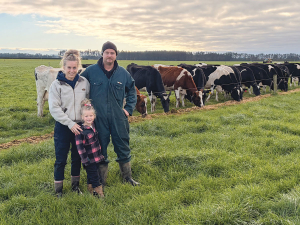
For Canterbury dairy farmers Sian Meijer and Rick Wobben, wearable technology has become one of their most valuable on-farm tools - helping manage 1850 cows across an expansive, high-performing dairy operation while improving efficiency, mating outcomes and day-to-day decision making.
Fonterra has unveiled its annual results for the 2026 financial year, posting $27 billion in revenue and close to $20 billion returned to New Zealand farmer owners and unit holders.
The first major update to the Dairy Cattle Code of Welfare in more than a decade has been released, marking what DairyNZ describes as an important step in ensuring animal welfare standards continue to evolve alongside scientific evidence and on-farm realities.
Ravensdown shareholders have elected Jane Montgomery and Kate Acland to the Ravensdown Board for three-year terms, following a closely contested director election.
Federated Farmers says new legislation replacing the Resource Management Act will cut red tape, unlock investment and help grow New Zealand's export-led economy, after the Planning Bill and Natural Environment Bill passed their third reading in Parliament yesterday.