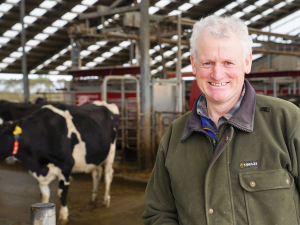
Economists are predicting less milk arriving on the global market next year. But industry leaders are reluctant to say whether the squeeze on supply will lift dairy prices and ultimately drive up farmgate prices at home.
Renewed scarcity stems from extreme feed costs and pockets of unfavourable weather, including a crippling drought in the US. Fonterra chairman Henry van der Heyden agrees milk supply in the US is being affected. But he’s not saying how the payout will fare if supply dips as expected.
“It’s a bit too early to say,” van der Heyden told Dairy News. “There are a lot of scenarios we can think of. Only time will tell. It’s all about supply and demand and how they play out will determine prices.” He believes volatility seen in the dairy market during the last five years will continue.
Tatua chairman Steve Allen agrees it’s hard to take the pulse of dairy prices. While Allen expects prices to firm next year, he says Tatua takes a long-term view. “For us, it’s a good thing to be involved as a food producer in New Zealand long-term.”
One thing standing between New Zealand dairy farmers and a good payout is the strong dollar. In the latest issue of its quarterly ‘Agribiz’ report Westpac says dairy prices are firming and should continue to do so.
The downside is the New Zealand dollar’s strength will “temper” gains in the domestic market, in the short-term at least. “As is often the case, the dollar has followed dairy prices higher,” notes Westpac senior economist, Felix Delbrück.
Westpac continues to forecast a dairy payout of $5.70 for the current season but in 2013/14 and beyond “prospects are firmer,” says Delbrück. “With a recovery in global growth and ongoing income growth in emerging markets, particularly China, we expect increased demand to underpin prices.”
Spikes in grain prices, driven by drought in the US and reduced harvests in Europe, have driven the recent lift in markets with Global Dairy Trade prices up about 20% since late July, he notes.
The US national dairy herd is contracting and while US milk supply is still growing – just – it is expected to start contracting before the end of the year. “This means less milk is likely to find its way onto global markets putting upward pressure on prices. Compare this to the last 12 months where a tsunami of milk was being produced in a number of key exporting regions.”
Rabobank senior analyst Hayley Moynihan says it fears that much of the market has been lulled into a false sense of security by the phenomenal growth seasons late in 2011 and early 2012.
Expect the next 12 months to bring a rude awakening, Moynihan says. “The slowdown in milk production growth in export regions will be sufficient to undershoot even the modest growth in consumption that we expect in advanced economies, given the sobering economic outlook in the EU and US.”
Moynihan says this will reduce the exportable surplus available from the ‘big seven’ export regions of the world (EU, US, New Zealand, Australia, Argentina and Brazil) in the closing months of 2012 and the first half of 2013, the first such reductions in more than four years.
“With little excess inventory in the market, the equation then becomes simple: any increase in import demand from deficit regions will create supply shortages, with the extent of the shortage fuelling an appetite for imports.”
Factoring in a modest planned increase in imports over the next 12 months from key buying regions, Rabobank expects prices to rise substantially in the international market. This will bring about the demand rationing needed to balance the market and move prices into alignment with rallies already evident in US and EU wholesale pricing.