Federated Farmers Welcomes ACT’s New Farming Policies
Federated Farmers has welcomed new rural policies released by ACT, saying they align closely with its own election priorities.
 increase font size
 While the wider group is co-ordinating a range of activities, each organisation is developing its own initiatives relevant to their part of the supply chain.
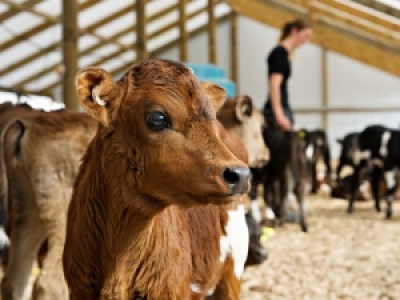
The eight organisations that formed a Bobby Calf Action Group at the end of 2015 are well advanced on a range of initiatives ensuring best practice handling and management of bobby calves.
The group compromises DairyNZ, Dairy Companies Association of New Zealand, Meat Industry Association, Federated Farmers, New Zealand Petfood Manufacturers Association, Road Transport Forum, New Zealand Veterinary Association and the Ministry for Primary Industries.
Scott Gallacher, MPI deputy director general regulation and assurance, says a number of the initiatives being worked on were new, other initiatives were already underway but were being accelerated.
"There has been a significant body of work underway for some time on bobby calves through a range of industry and government activities and groups," Gallacher said.
"What the Action Group is about is ensuring leadership and co-ordination in order to make sure best practice in bobby calf management is developed and implemented, and that the public can be confident that everybody involved with bobby calves takes the right level of care.
"We saw some appalling video last year and while that was not representative of the industry as a whole, all the groups involved are committed to stamping out bad practice and implementing best practice."
While the wider group is co-ordinating a range of activities, each organisation is developing its own initiatives relevant to their part of the supply chain.
Activities underway include:
• DairyNZ has worked with dairy companies to make sure autumn calving farmers are aware of good practice and have access to guidelines on the welfare of bobby calves and humane slaughter
• In association with veterinarians, DairyNZ also has a Welfare Matters – Calf Care workshop on bobby calf supply chain awareness, responsibilities and good practice advice under development for roll-out in May and June. It is also developing a CalvingSmart programme of training for junior staff and farm managers. DairyNZ is also working with farmers and trucking operators to develop and agree practical advice and guidelines on how to ensure calves are fit for transport and loading
• The Ministry for Primary Industries is developing proposals for new regulations on the care and handling of bobby calves. The proposals have been discussed at two workshops with industry and animal welfare interest groups and are likely to be available for public consultation in April 2016
• In 2016 MPI will visit 1200 farms as part of its On-Farm Verification programme to familiarise farmers with their legal responsibilities
• MPI has invested $250,000 on a comprehensive, scientific assessment of bobby calf welfare to help understand the state of bobby calf welfare, examine data over two seasons, including the upcoming 2016 season, to help provide evidence based decisions about bobby calf management
• The Road Transport Forum is developing and updating its guidelines for bobby calf handling and transport
• The Meat Industry Association is working with processors to ensure that responsibilities regarding animal welfare are clearly understood across the value chain, and
• The Petfood Manufacturers Association is reviewing its code of practice.
In addition, MPI has initiated an animal welfare awareness campaign which encourages everyone who sees mis-treatment of stock to report it to the MPI hotline – 0800 00 83 33.
Federated Farmers has welcomed new rural policies released by ACT, saying they align closely with its own election priorities.

New Zealand’s red meat sector has welcomed the India-New Zealand Free Trade Agreement taking effect, which removes India’s 33% tariff on New Zealand sheepmeat.
Federated Farmers is backing Feilding High School’s call to keep Agriculture and Horticultural Science as a standalone subject in Year 11.
Farmers with high-quality feed available in late spring could consider weaning at least a proportion of their lamb crop early to benefit both lambs and ewes.
National’s pledge to introduce 19 new national standards shows the party is serious about getting Wellington out of farming, Federated Farmers says.



Federated Farmers has welcomed new rural policies released by ACT, saying they align closely with its own election priorities.

Rural Contractors NZ says proposed changes to land transport rules for agricultural vehicles are a welcome response by the Government to out of date regulations which have seen members hit with huge fines.
Alliance is calling for final applications for its 2027 Graduate Programme, with applications closing on Sunday 25 October.
Decades piloting planes has ensured vet and farmer David Hayes is focused on safety. So, after a serious accident while welding on farm, he is sharing his experience so others can learn from it.
Canterbury milk processor, Synlait Milk has confirmed Leon Fung as its chief executive officer.
OPINION: Making it easier to collect rainwater and use it to grow crops and livestock is a no brainer.