Inside the Southland Dairy Farm Where Robots and Pasture Work Together
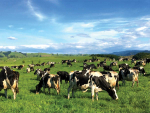
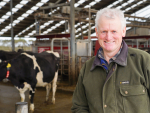
In Dacre, near Invercargill in New Zealand’s South Island, Bruce Dinnington is running a dairy operation unlike any other.
 increase font size
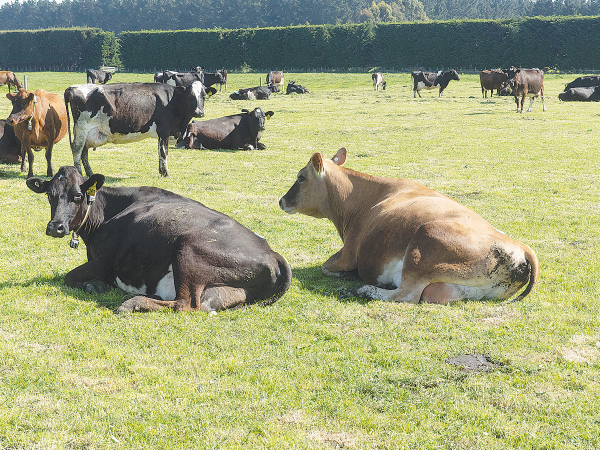 Lincoln University Dairy Farm will tweak some of its management practices following an animal welfare complaint.
Lincoln University Dairy Farm will be tweaking some management practices after an animal welfare complaint laid in mid-August, despite the Ministry for Primary Industries (MPI) investigation into the complaint finding no cause for action.
SAFE (Save Animals from Exploitation) claimed that it had seen animals standing in mud, calves piled on top of each other in a trailer, and a cow being chased aggressively by a worker on a quad bike.
However, a visit by an MPI inspector the day the complaint was received, August 15, found no significant concerns.
Lincoln University Professor of Farm Management Alison Bailey read a statement on the incident at the LUDF spring Focus Day this month, saying the university had worked closely with MPI and also commenced its own investigation.
“Following the visit of MPI they have confirmed both verbally and in writing that there were no significant concerns and that no action is required,” she said.
The complaint related to animals on the farm’s secondary East Block across Ellesmere Junction Road from the milking platform.
“For my own investigation, we agreed and noted the following:
“First, to improve the movement of recently calved cows, all cows that were yet to calf were moved onto the milking platform. This required us to provide extra feed, which we did.
“For the 26-27 season we will make sure that all our cows are on this platform here, nearer to the feed and handling facilities.
“We will continue to ensure compliance with Dairy NZ guidance and animal welfare requirements in relation to calves in trailers, and we continue to review our policies and procedures and associated staff training, basically, to make sure that we minimise stress to our animals and handle them with care.”
Bailey said that as a specialist land-based University with a portfolio of farms, Lincoln was dedicated to establishing, maintaining and monitoring the highest standards of animal welfare.
“We prioritise the well-being of every animal in our care. And we’re committed to upholding the standards of the New Zealand Animal Welfare act 1999.
“And we have to be, as a demonstration farm, at the forefront of animal welfare.”
In Dacre, near Invercargill in New Zealand’s South Island, Bruce Dinnington is running a dairy operation unlike any other.

Rural leader Mark Hooper has been appointed as an independent director to the NZPork board, bringing extensive farming, governance and advocacy experience to the role.
Climate, nature and animal wellbeing make up Fonterra's refreshed sustainability roadmap released last week.
B+LNZ's Wormwise veterinarian Mary Bowron has won the Best Sheep and Beef Vet of the Year Award in recognition of her outstanding contribution to New Zealand’s sheep and beef sector.
With lambing underway in many regions, Beef + Lamb New Zealand is encouraging farmers to put together a wellequipped lambing kit to help minimise lamb losses, particularly in bad weather.


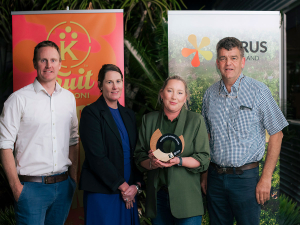
New Zealand's citrus growers were challenged to build their future on the value embedded in their fruit rather than the volume they produce, at Citrus New Zealand's annual gathering in Gisborne on 17 September.
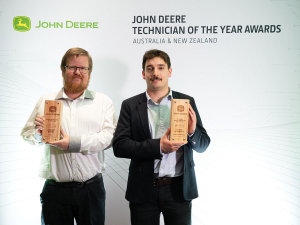
Leading John Deere technicians and apprentices from New Zealand and Australians were recognised at the recent sixth annual JD Technician of the Year Awards, held in Brisbane.
In Dacre, near Invercargill in New Zealand’s South Island, Bruce Dinnington is running a dairy operation unlike any other.
A free online platform aggregating governance vacancies across rural and regional New Zealand has been launched.
Environment Minister Nicola Grigg has announced details of a new rural plastics recycling scheme.
Agricultural drone operators say that a government decision to allow lower-risk drone work without certification won’t lower standards but drive innovation and efficiency.