Milk Powder Prices Prop Up Farmgate Milk Price
Milk powder prices are keeping farmgate prices up, helping processors offset the dip in milk fat prices.
 increase font size
 Skim milk powder prices have reached a five-year high.
ASB bumped up its this season milk price forecast by 50c to $7.50/kgMS after last week’s 1.7% rise in the Global Dairy Trade.
And its senior rural economist Nathan Penny says most importantly the bank now believes we are likely to see less milk price volatility in the future.
“We believe that the fall in milk price volatility is structural in nature. In that sense, the farmgate milk price is moving to a higher plateau,” he said.
While BNZ has not moved yet from $7.10/kgMS, senior economic Doug Steel told Dairy News current market conditions suggest towards the top end of Fonterra’s $6.55 to $7.55/kgMS range.
Westpac has more conservatively revised upwards for the current season to $7.10/kgMS. Westpac head of NZ strategy, Imre Speizer, says they are cautious about Chinese demand and allow for a modest pullback in world dairy prices over the first half of 2020.
Steel says last week’s GDT gain was slightly lower than expected but still the fifth consecutive price increase.
“This takes the cumulative rise since early September through to 8.3%. Prices are now 26.4% higher than a year ago and heading towards the top of a range that has contained them since 2014.”
Milk powder prices drove the increase with skim milk powder (SMP) up 3.3% and whole milk powder (WMP) up 2.2% (average prices now US$3321/tonne). But fat prices eased with butter and AMF down 1.3% and 1.5% respectively.
“Dairy market fundamentals still look healthy to us, with demand seemingly firm (unsatisfied bidders remain high, at 53) and supply is subdued (volumes sold at this event were 11.6% lower than a year ago),” he said.
Obvious offshore risks require monitoring.
“On supply, latest data shows NZ October milk production was down 1.5% on a year ago. Admittedly last spring was strong but signs that NZ production is now not keeping pace with last year are supporting prices.”
Speizer, from Westpac, says WMP momentum remains clearly upwards, having risen a total of 12% since this sequence of auction price gains started in early July. It is up 28% from the low in November 2018.
Despite a slight pullback in participation, demand from China has remained solid so far this year, and has been almost the sole source of growth for New Zealand’s dairy exports, he says.
For the season to date, total New Zealand collections are just 0.5% above the 2018 equivalent.
“This update is unsurprising, given spring has been cooler than average in many regions. October is the largest milk production month, closely followed by November and December, which means there’s little chance of domestic supply rising significantly in the near term given lagged weather impacts.
“Global supply remains constrained, with the US and EU flat over the past year. The implication from a supply perspective is that prices should remain firm.”
Meanwhile ASB’s Penny has a next season forecast range of $6.50 to $7.50/kgMS.
Northern Hemisphere growth is soft with annual production growth only marginally above flat in both the European Union and the US.
Milk powder prices are keeping farmgate prices up, helping processors offset the dip in milk fat prices.

OPINION: With 10,500 dairy farms, New Zealand continues to punch above its weight around the world.
A milk glut around the world shows no sign of easing, putting downward pressure on farmgate milk prices for the next few months.
Fonterra has reduced its forecast 2026/27 Farmgate Milk Price.
New Zealand dairy farmers are set to be the first in the world to receive access to a new digital physical milk pricing tool that enables them to fix the price for their physical milk.


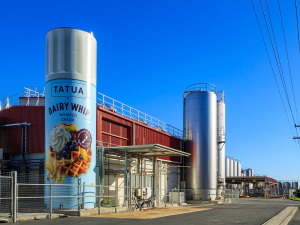
Waikato milk processor Tatua has again declared a record milk payout to farmer shareholders, leaving other processors in the dust.

A Labour-led Government won’t be bringing back the controversial freshwater rules of 2020.
National’s much-touted free trade deal with India featured in the Rural Issues Debate at Mystery Creek, Hamilton on Wednesday night.
New Zealand's 2026-27 freshwater fishing season has opened, with anglers encouraged to head to rivers and lakes over the coming days as conditions look favourable across much of the country.
Central Otago District Council (CODC) has voted against a plan to spread treated sewage sludge from Cromwell and Alexandra on farmland near Lauder, a decision Federated Farmers says reflects strong opposition from rural residents.
Pāmu has released its FY26 Integrated Annual Report, reporting a Net Operating Profit of $113 million, more than double the $49 million recorded in FY25.