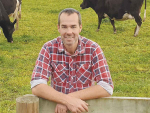
Cameron Henderson Reappointed Unopposed as DairyNZ Deputy Chair
DairyNZ deputy chair Cameron Henderson has been re-appointed unopposed for another term.
 increase font size
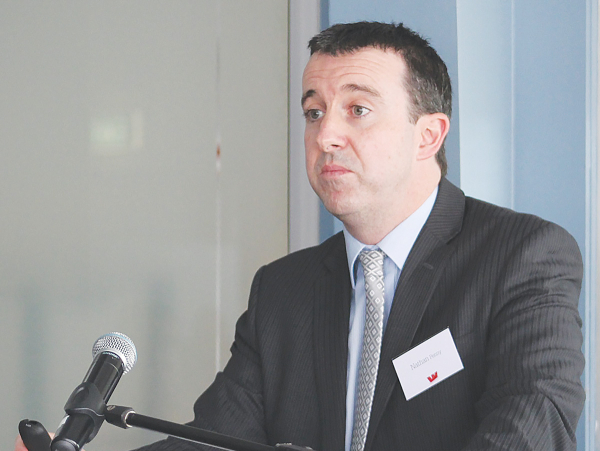 For this season, it means that for many farmers the focus is likely to be on loss minimisation, says Nathan Penny, Westpac.
Farmers must wait until the next season to see a lift in farm profit margins, says Westpac senior agricultural economist Nathan Penny.
While farm input inflation is receding, the lower milk price remains the dominating factor on many farms.
Penny says for many farmers, this season's milk price is likely to be below their break-even point.
"Indeed, even after taking account of the cost-cutting measures that farmers are likely to take, DairyNZ's updated milk price estimate is around $7.50/kg," he says.
Break-even estimates vary widely by farm - and in the calculation method - so that some farms may have larger deficits, while some may still even be in surplus.
However, there are some offsets in play, notes Penny.
"The recent payout from the sale of Fonterra's sale of its Chilean business has added $0.50/kgMS back into Fonterra farmers' cashflows, at least, if not their farm profits.
"Also, Fonterra is set to pay a relatively healthy dividend in October of circa 40c/share.
"The other potential source of relief is falling on-farm inflation. Annual dairy farm input inflation was running as hot as 17% in the middle of last year. Now as at the June 2023, annual input inflation has fallen to 7% - by the end of the year, we expect to fall to the 3% to 4% range.
"If anything, given the pace of declines to date and subsequent feed and fertiliser price reductions, input inflation could be close to flat by the end of 2023. Those factors aside, the lower milk price is still the dominating factor. Indeed, improvements in farm profit margins are likely to need to wait until the 2024/25 season. For this season, it means that for many farmers the focus is likely to be on loss minimisation."
ANZ agri economist Susan Kilsby agrees that the breakeven point varies from farm to farm, but achieving a profit will require careful cost management and efficient expenditure relative to production, and for many farmers, will be beyond reach even then.
She points out that dairy markets typically go through these cycles, but focusing on what can be done, asking for assistance from advisors and keeping cashflow forecasts updated will be imperative.
Dairy farmers across the globe will be finding the current environment challenging, she says.
"New Zealand does have greater volatility in farmgate milk prices than most other countries due to its higher exposure to global markets.
"Domestic prices tend to be more stable, and in countries with large domestic markets such as the US, Europe and to a lesser extent Australia, domestic sales buffer exporters to some degree against fluctuations in farmgate prices.
"But New Zealand farmers can generally produce milk more cheaply than in those countries. The low prices will mean global milk production eases, which will help rebalance the market, although not quickly."
DairyNZ deputy chair Cameron Henderson has been re-appointed unopposed for another term.
Farms across the upper North Island are trialling different pasture mixes as part of a research programme that aims to build greater resilience into farming systems.
Election years are always a concerning time for farmers, according to DairyNZ chair Tracy Brown.
Most dairy regions around the country have had a pretty good season so far says Tracy Brown.


New Zealand's citrus growers were challenged to build their future on the value embedded in their fruit rather than the volume they produce, at Citrus New Zealand's annual gathering in Gisborne on 17 September.
Leading John Deere technicians and apprentices from New Zealand and Australians were recognised at the recent sixth annual JD Technician of the Year Awards, held in Brisbane.
In Dacre, near Invercargill in New Zealand’s South Island, Bruce Dinnington is running a dairy operation unlike any other.
A free online platform aggregating governance vacancies across rural and regional New Zealand has been launched.
Environment Minister Nicola Grigg has announced details of a new rural plastics recycling scheme.
Agricultural drone operators say that a government decision to allow lower-risk drone work without certification won’t lower standards but drive innovation and efficiency.