'Zero protection for local cheesemakers'
Local cheesemakers are facing competition from subsidised frozen EU imports flooding the NZ market, tariff-free, says Whitestone Cheese managing director Stephen Berry.
 increase font size
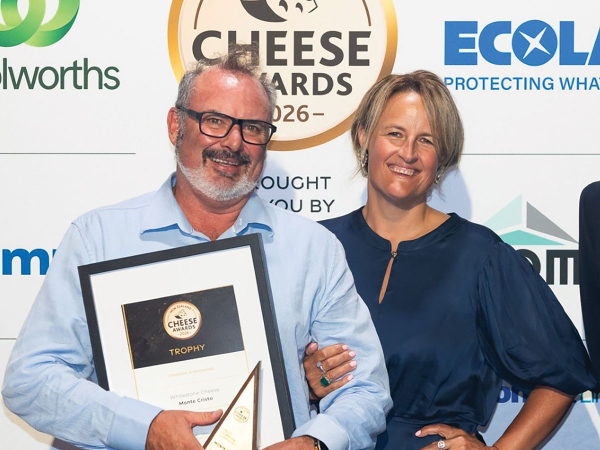 Simon and Annabel Berry, Whitestone Cheese with the top award.
Local cheesemakers are being urged to embrace competition from imports but also ensure their products are never invisible in the country.
Speaking at the annual New Zealand Specialist Cheesemakers Association (NZSCA) awards night in Auckland, chair Simon Berry paid tribute to local cheesemakers.
Berry, managing director of Oamaru-based Whitestone Cheese, says local cheesemakers constantly punch above their weight.
"We're a small country, and when it comes to cheese, we consistently prove that even in small places, we create huge flavours," says Berry.
He points out that cheesemakers operate in one of the most open food markets in the world.
And primary manufacturing across the entire nation is under real pressure, he adds.
"We see across multiple categories: walk into any supermarket today, and you'll find cheese from every corner of the globe.
"And that's not something we should complain about. Imports are now a big part of New Zealand food culture.
"They bring diversity, inspiration, and at times, a healthy motivation to lift our own game.
"But there's one thing we must insist on, and that's New Zealand cheese should never be invisible in New Zealand."
Berry says cheeses produced in NZ stand comfortably along the rest of the world.
NZ milk is exceptional and landscapes are extraordinary, he says.
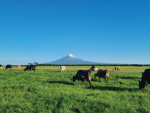
"Our cows graze freely on some of the finest pastures anywhere in the world.
"And our cheesemakers bring together craft, innovation, and a uniquely Kiwi determination to create something genuinely special."
Berry also paid tribute to the people who, he says ultimately shape whether local cheeses are seen, tasted and remembered - retailers, restauranteurs and chefs.
They decide what people see in the cabinets and what appears on the menu.
"And you decide which cheeses are introduced to a customer for the very first time and which ones they go back looking for.
"The great cheese doesn't become great in isolation. It becomes great when it's seen, recommended, plated, cared for, and proudly served."
Berry says the cheese awards are not about moaning about imports.
"It's not about the imports and about them coming on and fighting over shelf space.
"It's about partnerships - partnership on visibility, partnership on storyteling and partnership on backing what is made right here at home.
"Because when New Zealand cheese is given a place on the shelf and a place on the menu, something powerful happens.
"Customers connect with it. They talk about it. They remember it. They discover that cheese made down the road, over the next valley, or on the other side of the South Island, is not just comparable, but it's exceptional."
Berry's company won the most prestigious honour, the Hall's Group Limited - Champion Commercial Cheese for its Monte Cristo.
For the second year in a row, the sheep milk cheddar bagged this award.
In the Puhoi Valley Champion Boutique Cheese category, Craggy Range's Pecorino took the coveted top spot.
Local cheesemakers are facing competition from subsidised frozen EU imports flooding the NZ market, tariff-free, says Whitestone Cheese managing director Stephen Berry.
New Zealand cheesemakers celebrated their annual awards last night in Hamilton but woke up this morning facing the potential loss of key cheese names.


Farmer-owned fertiliser company, Ballance Agri Nutrients is welcoming National’s plan to negotiate security agreements with key supplier countries to protect New Zealand-bound products from export restrictions and greater supply chain certainty.

Carrfields has announced the appointment of Stu Hall to the newly created role of chief operating officer, Carrfields Ltd, reflecting the continued growth of their agribusinesses and the need to ensure the company has the leadership capacity and support in place as it pursues the emerging opportunities ahead.
New Zealand's role is not to compete with Indian growers, according to NZ Apples and Pears.
The potato industry is celebrating the success of two rising stars - James Blair, the 2026 Young Grower of the Year and runner-up and innovation award winner, Amber Davy.
Twenty-eight emerging leaders from across the horticulture sector spent two days last month learning valuable skills and connecting with industry experts.
There are five entrants in this year’s Young Horticulturist of the Year, competing in a series of technical, practical, business and leadership challenges.