PGG Wrightson Revenue Tops $1.1b as Profit Jumps 46%
After delivering a strong financial year, rural trader PGG Wrightson says the coming months will depend on customer confidence and weather.
 increase font size
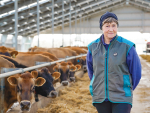
 Stephen Guerin says that the results reflect the ongoing pressures felt by those on-farm.
The second half of 2023 gave rural retailer PGG Wrightson a challenging result, but there’s still room for positivity on the horizon, according to chief executive Stephen Guerin.
The company released its half-year results last week, marking yet another softening in profit and revenue. Operating earnings before interest, taxes, depreciation, and amortisation (EBITDA) was $36.6 million, down 24%, and its net profit after tax (NPAT) slumped 40% to $12.7 million. Also down was the company’s revenue, at $560.9 million.
Guerin says that the results are a reflection of the ongoing pressures felt by those on-farm.
“It’s been a tough environment and, in that context, we’ve produced a result that’s softer than in prior years, but having said that, our team have worked hard and I think they’ve done well in the context of what’s going on in the market,” Guerin told Dairy News.
He says one of the biggest factors in this softer result are softer commodity returns across all parts of the primary sector.
“If we look across the sector… there’s been a bit of positive news in the dairy sector but that’s only been in recent times, all sectors are showing returns to customers below or at the cost of function,” Guerin says.
Also impacting the company is the flow-on effects of Cyclone Gabrielle for many of its North Island customers.
The storm hit New Zealand in February 2023 and Guerin says many of the retailer’s customers across the North Island are still focused on “recovery and remediation of properties”.
“That has cashflow impacts for them,” he explains.
Guerin says the third factor is the cost of funding operations. He says that high interest rates, plus the taking on of additional debt due to the impacts of the cyclone and lower commodity returns have meant farmers are taking on more costs.
However, there have still been some highlights for the company.
“For us, we’re pleased about our improvements around our cashflow. We are still seeing customers paying their bills… and our market shares still continue to increase in our retail business,” Guerin says.
“So, they tell you we’re doing something right for the customer.”
“Of course, that doesn’t always flow through to the bottom line,” he adds.
Looking to the future, PGG Wrightson has softened its forecast from $52 million to approximately $50 million, so Guerin says that the next six months.
He says retail is likely to have a better six months than the previous half-year, and there is some optimism for the dairy and wool sectors and likely some stability for the red meat sector.
However, the real estate business looks to be challenged, says Guerin. He says this is the bi-product of higher interest rates and lower farmer confidence.
“There is some interest out there, but interest is not sales,” he says.
“If we think in the medium-to-long term, we are more confident in that space because of the improving commodities and good harvests,” Guerin concludes.
After delivering a strong financial year, rural trader PGG Wrightson says the coming months will depend on customer confidence and weather.
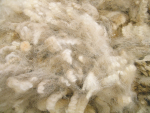
Strong competition and tightening supply have seen wool reach its highest prices paid at auction since 2011.
A firm belief in the agricultural sector has kept the PGG Wrightson business going for 175 years, says chief executive Stephen Guerin.
Strong farmgate milk price is helping boost investment on farms, says PGG Wrightson chief executive Stephen Guerin.
Booming primary sector exports are helping lift earnings for farm service providers.



LIC shareholders have elected a new North Island representative to the co-operative's Board, along with five representatives to its Shareholder Reference Group (SRG), following the company's Annual Meeting held in Invercargill.
Farmers across parts of Southland and South Otago are continuing to deal with difficult conditions after a prolonged run of wet weather, with pressure building around feed supply, stock management, pasture damage, farm infrastructure and everyday workloads.
Federated Farmers says it welcomes Labour's commitment to reviewing the Sharemilking Agreements Act, calling on other major parties to do the same.
For Canterbury dairy farmers Sian Meijer and Rick Wobben, wearable technology has become one of their most valuable on-farm tools - helping manage 1850 cows across an expansive, high-performing dairy operation while improving efficiency, mating outcomes and day-to-day decision making.
Fonterra has unveiled its annual results for the 2026 financial year, posting $27 billion in revenue and close to $20 billion returned to New Zealand farmer owners and unit holders.
The first major update to the Dairy Cattle Code of Welfare in more than a decade has been released, marking what DairyNZ describes as an important step in ensuring animal welfare standards continue to evolve alongside scientific evidence and on-farm realities.