Westpac Urges Farmers to Prepare Now for El Niño Drought
Westpac NZ is calling on farmers and growers to start preparing now for the possibility of a dry summer, as likely El Niño conditions raise the risk of drought across parts of the country.
 increase font size
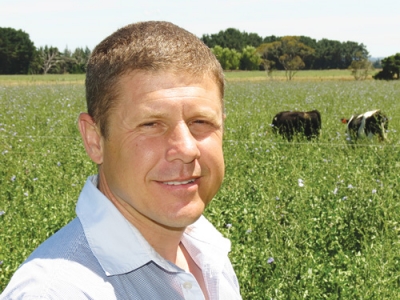 Massey’s Prof Paul Kenyon says with the likelihood of a dry summer, sheep farmers need to prepare now!
With the likelihood of a dry summer for many parts of New Zealand sheep farmers need to prepare now, says Professor Paul Kenyon, Massey University.
Two things stand out: first, act quickly; secondly, think long term.
"When thinking long term they need to remember that nutrition of the ewe and replacement ewe lambs/hoggets this summer will affect next year's lamb crop and the longevity of these animals within the flock.
"At weaning, mature ewes should be condition scored and ewes in poor condition (BCS 2.5 or less) put in a priority mob and offered enough feed over summer to gain condition (it takes 7-8kg to gain one unit on body condition for most breeds)."
These sheep could be managed in front of the remainder of a ewe flock, which can be held at maintenance, Kenyon says. This split flock approach saves feed.
"Farmers should weigh a sample of replacement ewe lambs at weaning. Using this data they should map out monthly liveweight targets for the next five months at least.
"Monthly, a sub sample should then be reweighed and their performance compared with target. If they are falling behind, action plans should be put in place to remedy the situation."
Meanwhile, Kenyon stresses that regardless of whether or not they are to be bred as a hogget, ewe lamb replacements need to be a priority stock class over summer.
"Ideally, if fed on pasture only they should be offered grazing in which pasture covers do not fall below 1200kg DM/ha – that is, high in green content (i.e. no reproductive material or dead plant matter) and as much clover as possible. If summer crops are available, permanent or annual, these should be the class of stock that utilise these."
Kenyon says that by acting early farmers should be able to save feed for priority stock classes and sell livestock prior to the drop in prices or prior to when it becomes difficult to get cull ewes and lambs into the abattoir. A number of options present.
"Skim weaning can be used to remove heavy lambs then sell them directly for slaughter prior to the normal weaning date. This will allow these lambs to be sold at a premium, and it saves feed for other lambs.
"If pasture covers are decreasing farmers should reconsider weaning date. In late lactation if the ewe is not gaining liveweight herself she can stop lactating. Further, under poor feeding conditions the ewe and her lamb(s) can become grazing competitors."
Ewes that could be weaned early are the older ones destined to be culled, based on age or singleton bearing, whose lambs tend to be heavier and best able to cope with early weaning.
"Weaning culled-for-age ewes early should help ensure these can be sold before it gets difficult to gain access to the abattoir, and it will save precious feed.
"If weaning is done early, lambs should be a minimum of 20kg and should be offered a high quality feed. This could include pasture with a high percentage of clover, herb-clover mixes, lucerne or a quality annual crop."
Sheep researchers at Massey, with funding from Beef + and Lamb NZ, are examining early- and post weaning options using alternative herbages.
In dry years farmers should reconsider their finishing policy, Kenyon says. While it might be tempting to finish extra lambs, it may be more sensible to sell these store lambs at weaning, saving excess feed for replacements, or to have a clear minimum weight and sell all lambs below this store at weaning.
"Under dry conditions too many months can have negative consequences – for these lambs and for future lamb crops – if replacements are not well grown or mature ewes fail to regain body condition by mating."
Westpac NZ is calling on farmers and growers to start preparing now for the possibility of a dry summer, as likely El Niño conditions raise the risk of drought across parts of the country.
Drench Options are become increasingly limited for sheep farmers, highlighting the importance of proactive parasite management planning within the wider farm system to stretch the longevity of drench as a tool.
If you're thinking about investing in ways to push feed forward, this is the year to do it.
Kiwifruit growers are watchful but remain optimistic as concerns around the potential effects of the El Niño weather pattern this season.


Converting a longstanding cropping farm to dairy was the only way to ensure the land stayed in the family long term, says new dairy farmer Rod May.

As the election heats up, Organics Aotearoa New Zealand (OANZ) has launched its election scorecard designed to help voters wanting to support policies that grow organic and New Zealand's organic sector.
A 'tsunami' of milk from key exporting countries is winding down and this may be good news for New Zealand dairy farmers.
Will the good times last? That's one of the key issues to come out of the latest Federated Farmers confidence survey.
Outgoing Fonterra Co-operative Council chair John Stevenson says that it has been a privilege to represent the co-op's farmer shareholders.
Have a plan in place for your cows and staff.