Ravensdown Elects Montgomery, Acland to Board
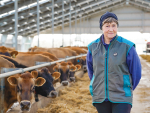
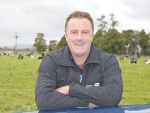
Ravensdown shareholders have elected Jane Montgomery and Kate Acland to the Ravensdown Board for three-year terms, following a closely contested director election.
 increase font size
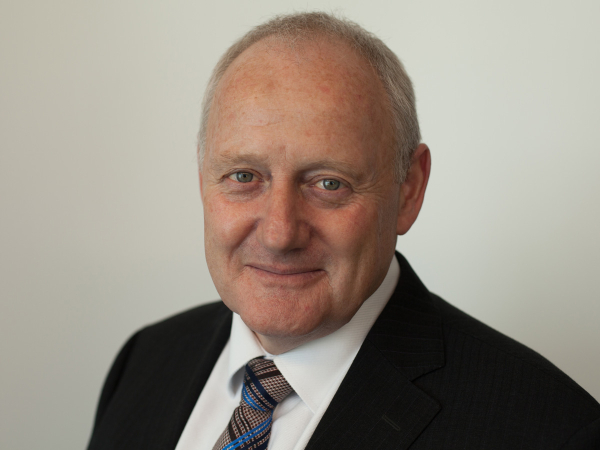 Garry Diack, Ravensdown
When it comes to annual rebates, it's been a long time between drinks for Ravensdown shareholders.
Since paying shareholders a rebate of $20/tonne for the year ending May 31, 2022, the co-operative had been facing financial headwinds - caused mostly by plunging volumes.
But that's set to change. For the financial year ending May 31, 2026, Ravensdown is reporting a $50 million profit before tax, backed by a solid lift in fertiliser demand.
Fully paid shareholders will receive a cash rebate totalling $14 million or $15/tonne. Partly paid shareholders will this year receive their full rebate in the form of shares.
Revenue for the year topped $971m, 20% up on the previous year.
After several years of subdued fertiliser demand, improving agricultural returns, particularly for sheep and beef farmers, have supported a recovery in nutrient applications and sales volumes.
Overall fertiliser sales volumes were up 8% with over 1 million tonnes sold, compared to 962,000 tonnes sold in the previous financial year.
Ravensdown chief executive Garry Diack says the co-op last broke the 1m tonne sales mark in the 21/22 financial year.
He told Dairy News that it was great to pay a rebate to shareholders after three years.
Diack says Ravensdown "operates inside the farmgate" of shareholders.
"We are part of their cost structure. If they do well, then we do well."
He says the jump in sales volumes was matched with better efficiency within the business, enabling the conditions to pay a rebate.
Over the past year, the co-op delivered a number of targeted projects to drive performance including significant investment in manufacturing commitment, freight optimisation, improved data decision support, and automation supported by AI.
"This result reflects the discipline we've applied across the business to become a more efficient, resilient co-operative," Diack says.
"By improving our operations, we've strengthened our financial performance while continuing to invest in the products, services and expertise our shareholders rely on."
Like other importers, Ravensdown continues to face shipping disruptions and be impacted by global oil price fluctuations.
But this financial performance demonstrated the value of the co-operative to deliver on its purpose in an increasingly uncertain global environment, according to Diack.
"International fertiliser markets remain heavily influenced by geopolitical events. Conflict in the Middle East, the ongoing war in Ukraine and broader supply chain disruptions continue to create volatility in both product availability and pricing."
Ravensdown's longstanding relationships with global suppliers and joint venture partnership with Ravensdown Shipping Services are valuable strategic assets that have proven their worth to the business and shareholders over the last year.
"Our supplier partnerships have been built over decades," he says.
Ravensdown shareholders have elected Jane Montgomery and Kate Acland to the Ravensdown Board for three-year terms, following a closely contested director election.
As farmers begin thinking about establishing next year’s winter forage crops, Beef + Lamb NZ is encouraging farmers to carefully consider what crops they are planting and where.
Surprised, humbled and quite thrilled. That’s the reaction of James Allen, one of the founding partners and now chief executive of AgFirst, on being made a life member of the Institute of Rural Professionals.
OPINION: Succession and long-term planning are perennial topics because it is perpetually sidelined on busy farms.
More signs of a booming kiwifruit sector.


Farmers across parts of Southland and South Otago are continuing to deal with difficult conditions after a prolonged run of wet weather, with pressure building around feed supply, stock management, pasture damage, farm infrastructure and everyday workloads.
Federated Farmers says it welcomes Labour's commitment to reviewing the Sharemilking Agreements Act, calling on other major parties to do the same.
For Canterbury dairy farmers Sian Meijer and Rick Wobben, wearable technology has become one of their most valuable on-farm tools - helping manage 1850 cows across an expansive, high-performing dairy operation while improving efficiency, mating outcomes and day-to-day decision making.
Fonterra has unveiled its annual results for the 2026 financial year, posting $27 billion in revenue and close to $20 billion returned to New Zealand farmer owners and unit holders.
The first major update to the Dairy Cattle Code of Welfare in more than a decade has been released, marking what DairyNZ describes as an important step in ensuring animal welfare standards continue to evolve alongside scientific evidence and on-farm realities.
Ravensdown shareholders have elected Jane Montgomery and Kate Acland to the Ravensdown Board for three-year terms, following a closely contested director election.