Fonterra Elections 2026: Voting Opens Tuesday 20 October
Fonterra shareholders can begin voting on Tuesday 20 October in the 2026 Board of Directors’ election, a Co-operative Council election in one Ward, and seven Annual Meeting resolutions.
 increase font size
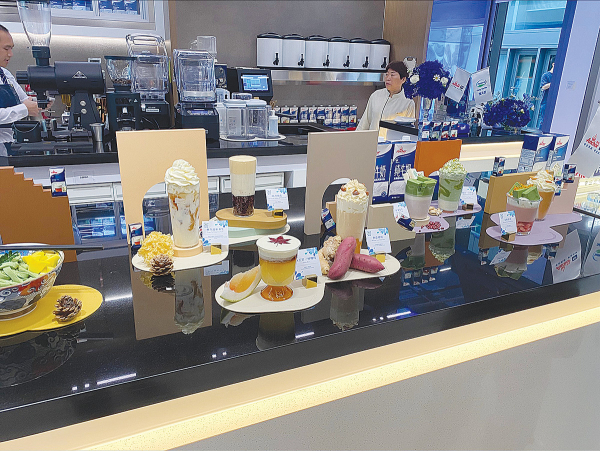 Fonterra expects demand from China to rise as the country recovers from Covid-19.
Reduced short-term demand from China is impacting farmgate milk price, says Fonterra.
Last week, the co-perative reduced its price range for the 2022-23 season, which ends May 31. The forecast range narrowed from $8 to $8.60/kgMS to $8.10 - $8.30/kgMS with a 10c drop in the midpoint to $8.20/kgMS.
For the new season, Fonterra has announced an opening forecast farmgate milk price of $7.25 to $8.75/kgMS, with a midpoint of $8/kgMS.
Fonterra chief executive Miles Hurrell says the reduced short-term demand, particularly from China, has had an impact.
"We're well through the season now, with almost all of our milk contracted, giving us more certainty on where we'll end the season," says Hurrell.
"Global Dairy Trade prices have not recovered to the levels required to hold the previous midpoint for this season."
Hurrell expects that China's demand for whole milk powder will lift over the medium-term.
"We expect demand to gradually strengthen over the course of FY24 as China's economy continues to recover from Covid-19.
"However, the timing and extent of this remains uncertain, with China's in-market whole milk powder stocks estimated to be above normal levels following increased domestic production and this is reflected in our opening forecast range for the season."
Farmers are under pressure due to rising input costs and interest rates.
Hurrell says Fonterra is aware of this and has designed a new advance rate guidance to get cash to farmers earlier in the season.
"Our strong balance sheet allows us to make these changes and we will be using this new Advance Rate guideline going forward, starting with the season about to commence," says Hurrell.
Rabobank's senior agricultural analyst Emma Higgins is also forecasting $8.20/kgMS milk price for the new season.
Higgins notes that global milk supply is returning to growth in key production regions and Chinese dairy demand is expected to remain subdued until the latter part of the year.
She says global dairy markets look completely different than they did 12 months ago.
"At this stage last year, market fundamentals were very tight with limited supplies in export regions, aggressive import demand by Chinese buyers and supply chain issues exacerbating buyers' urgency to procure raw materials," she says.
"Since then, we've seen a return to growth in milk supply across most of the export regions, sluggish Chinese import volumes as the country rebalances its internal market, and widespread demand rationing in many other dairy markets across retail, foodservice and ingredient channels in response to food price inflation and higher sticker prices."
As a result, dairy commodity prices for whole milk powder (WMP) and skim milk powder (SMP) have fallen between 30% and 40% since peak commodity prices in 2022 and are now at, or below, the average price over the previous five years.
Higgins says farmgate milk prices are feeling the pressure in most export regions.
"Milk prices in export regions have followed the commodity cycle, none more so than in the dairy sector, which is often the first mover in price cycles," she says.
Fonterra shareholders can begin voting on Tuesday 20 October in the 2026 Board of Directors’ election, a Co-operative Council election in one Ward, and seven Annual Meeting resolutions.

Fonterra Co-operative Group chief financial officer Andrew Murray has resigned to take up a role outside the dairy giant.
Four candidates have been confirmed for two director positions on Fonterra’s board.
A record farmgate milk price and strong global demand is laying the foundation for continued growth of organic dairy farming in New Zealand.
Waikato milk processor Tatua has again declared a record milk payout to farmer shareholders, leaving other processors in the dust.



Federated Farmers has welcomed new rural policies released by ACT, saying they align closely with its own election priorities.

Rural Contractors NZ says proposed changes to land transport rules for agricultural vehicles are a welcome response by the Government to out of date regulations which have seen members hit with huge fines.
Alliance is calling for final applications for its 2027 Graduate Programme, with applications closing on Sunday 25 October.
Decades piloting planes has ensured vet and farmer David Hayes is focused on safety. So, after a serious accident while welding on farm, he is sharing his experience so others can learn from it.
Canterbury milk processor, Synlait Milk has confirmed Leon Fung as its chief executive officer.
OPINION: Making it easier to collect rainwater and use it to grow crops and livestock is a no brainer.