Record final milk price for Miraka suppliers
Farmers supplying milk to Taupo-based processor Miraka are getting a 2024-25 season base milk price of $10.16/kgMS.
 increase font size
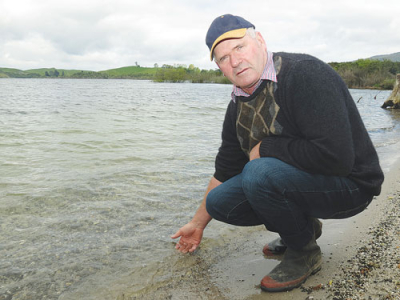 Trevor Hamilton says Te Ara Miraka encourages best farm practice.
Corporate farmer Trevor Hamilton is full of praise for the incentive scheme Te Ara Miraka run by the Taupo dairy processor Miraka.
Hamilton, who owns eight dairy farms in various regions and supplies Fonterra, Westland, Synlait and Miraka, says the Miraka incentive scheme is great because it encourages best farm practice and rewards farmers who farm well.
Te Ara Miraka financially rewards its suppliers for meeting five criteria: people, environment, animal welfare, milk quality and prosperity. Within these are 31 criteria, 13 of which farmers meet. These in turn are extrapolated out into a points system – all told 100. A supplier who passes the mandatory ones gets some sort of incentive, and achieving 100 points will get the supplier an extra 20c/kgMS at the end of the season.
Hamilton says the good thing about Te Ara Miraka is that it’s possible to get part of the incentive payment in any year, provided you meet all the mandatory criteria.
He says this system allows a farmer to ‘stage’ development projects and still be rewarded.
“For example on the one farm we have that supplies Miraka, we put in a lined effluent pond on the basis that we would get an extra 3c/kgMS. The cost of the pond was going to be $80,000 but the 3 cents would amount to a 12.75% return. So it encourages one to move forward in terms of environment and sustainability,” he says.
Hamilton says the other dairy companies don’t offer anything like this, which he describes as a “well thought out scheme”.
He says the problems with both Westland Milk Products and Fonterra is because they are cooperatives, they believe every supplier should get the same price for their milk.
Hamilton says he also likes the overall Maori culture of Miraka, similar to the culture of his own company: not just what’s good for today, but looking after the needs of future generations.
Miraka’s strong payout
Taupo Miraka Dairy company has approved its final milk price for the 2017-18 season and has updated the current season’s milk price forecast.
The company says the final Miraka base price for the 2017-18 season will be $6.67/kgMS.
It says with the addition of the average Te Ara Miraka premium of $0.13/kgMS, that accumulates to a final Miraka milk price of $6.80/kgMS, which is at the top of the forecast range. Te Ara Miraka is an incentive scheme run by the company whereby suppliers can earn up to an additional 20c/kgMS if they meet all the scheme’s criteria.
The company says with recent declines in the global dairy markets it has reviewed the forecast base price for the 2018-19 season to a range of $6.30 - S6.60/kgMS. When added to an estimated weighted mean Te Ara Miraka premium of $0.15/kgMS, this accumulates to a forecast Miraka milk price of $6.45 - $6.75/kgMS.
The company says it has performed well over the past year, achieving a positive net profit while maintaining a strong balance sheet. It is focused on value creation which is providing tangible returns to the business; the net result will be less reliance on the core commodity business in the future.
Farmers supplying milk to Taupo-based processor Miraka are getting a 2024-25 season base milk price of $10.16/kgMS.

Open Country Dairy has finalised a deal to acquire 100% of Miraka.
Milk processors are either matching or beating Fonterra's record $10/kgMS opening forecast milk price as the 2025-26 season gets underway.
Māori-owned milk processor Miraka is looking for a new chief executive following the resignation of Karl Gradon last week.
The chief executive of Taupo-based dairy company, Miraka – Karl Gradon - has stepped down from the role for personal and family reasons.


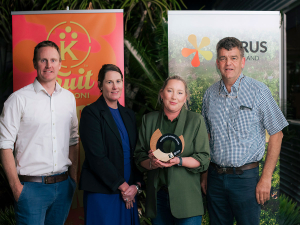
New Zealand's citrus growers were challenged to build their future on the value embedded in their fruit rather than the volume they produce, at Citrus New Zealand's annual gathering in Gisborne on 17 September.
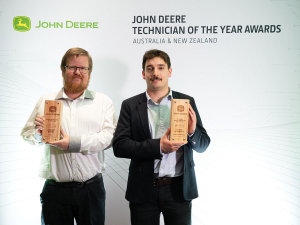
Leading John Deere technicians and apprentices from New Zealand and Australians were recognised at the recent sixth annual JD Technician of the Year Awards, held in Brisbane.
In Dacre, near Invercargill in New Zealand’s South Island, Bruce Dinnington is running a dairy operation unlike any other.
A free online platform aggregating governance vacancies across rural and regional New Zealand has been launched.
Environment Minister Nicola Grigg has announced details of a new rural plastics recycling scheme.
Agricultural drone operators say that a government decision to allow lower-risk drone work without certification won’t lower standards but drive innovation and efficiency.