
Federated Farmers Welcomes ACT’s New Farming Policies
Federated Farmers has welcomed new rural policies released by ACT, saying they align closely with its own election priorities.
 increase font size
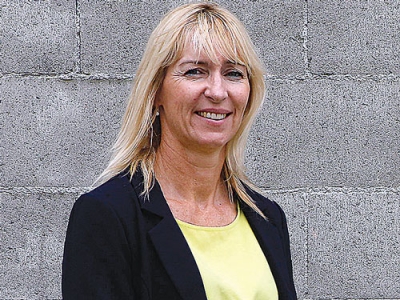 Sally Blackler wants young farmers to break down the walls and challenge themselves.
A social worker talking to young farmers isn't what you would call a traditional event at a young farmers conference, but Sally Blackler isn't your average social worker.
She works on the front lines with some of New Zealand's most at-risk citizens for the Christchurch City Mission. Every day she deals with situations that would have most people heading out the door.
She isn't one to back away from a challenge either; in 2012 she walked 1000km from Auckland to Christchurch in 39 days.
The walk partly was a fundraiser but was also in memory of her late husband, army sergeant Nathan Blackler who had done the walk in 2004 to raise $65,000 for the child cancer foundation. Unbeknown to Nathan he had done the walk with a tumour in his chest, discovered three months later; he died on March 23 2007 aged 33.
The Tasman Young Farmers approached Blackler to lead one of 12 workshops at the inaugural Tasman Young farmer's three-day conference starting February 26.
Nearly half the Tasman young farmers members – a region which includes Canterbury, Nelson Marlborough, and the entire West Coast – have taken a weekend off and signed up to attend the conference; Blackler's is the most popular with 75 of the 90 attending signing up to her 'Pushing the Boundaries' workshop.
Blacker will be giving young farmers the tools, strategies and behaviours to change and move forward. She will teach them the meaning of her acronym FARMER: focus, achievement, resilience, motivation, enthusiasm, respect for yourself and others.
She will also challenge the attendees to come up with their own words for the acronym, and will look at motivation, goal setting, self-esteem and self-belief.
Farmers have traditionally been seen as silent sufferers and the suicide levels amongst farmers are higher than any other industry.
The situation is now more pertinent as young farmers joining the industry face an arduous time with low dairy prices, drought in many areas and high debt levels.
The young farmers have identified that farmers in the 18-25 year age bracket struggle to get off the farm and develop themselves so are working with the likes of Blackler to help members see a future in farming.
Not wanting cost as a barrier the conference has been funded largely by sponsors, principally ANZ Bank, which has kept the attendance fees down to $75 for members for the entire weekend including staying at Rydges Hotel.
After an initial survey of members whittled 30 possible topics down to 12 workshops, an attendee can chose four of these hour-long events to attend.
The other topics are managing staff, diversification and business expansion, succession planning, climbing the ladder, how to start a business, healthy farming, mental wellbeing, feed budgeting and nutrition, pressures of auctions, tenders and purchasing, rural banking, rural technology and employment law.
The Sunday session will be questions and answers with industry leaders Rod Quin, chief executive of Westland Milk Products; Traci Houpapa, chair of Landcorp; Dr William Rolleston, Federated Farmers; and Phil Smith, Beef + Lamb NZ director.
Federated Farmers has welcomed new rural policies released by ACT, saying they align closely with its own election priorities.

Federated Farmers is backing Feilding High School’s call to keep Agriculture and Horticultural Science as a standalone subject in Year 11.
National’s pledge to introduce 19 new national standards shows the party is serious about getting Wellington out of farming, Federated Farmers says.
Mobile phone coverage and reliability are deteriorating in rural areas, and farming families are bearing the cost, according to a Federated Farmers survey.
Central Otago District Council (CODC) has voted against a plan to spread treated sewage sludge from Cromwell and Alexandra on farmland near Lauder, a decision Federated Farmers says reflects strong opposition from rural residents.


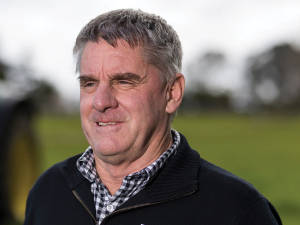
Federated Farmers has welcomed new rural policies released by ACT, saying they align closely with its own election priorities.

Rural Contractors NZ says proposed changes to land transport rules for agricultural vehicles are a welcome response by the Government to out of date regulations which have seen members hit with huge fines.
Alliance is calling for final applications for its 2027 Graduate Programme, with applications closing on Sunday 25 October.
Decades piloting planes has ensured vet and farmer David Hayes is focused on safety. So, after a serious accident while welding on farm, he is sharing his experience so others can learn from it.
Canterbury milk processor, Synlait Milk has confirmed Leon Fung as its chief executive officer.
OPINION: Making it easier to collect rainwater and use it to grow crops and livestock is a no brainer.