Europe’s largest dairy co-operative to launch in 2026 as Arla Foods and DMK merge
The creation of Europe's largest dairy co-operative should be complete by early 2026.
 increase font size
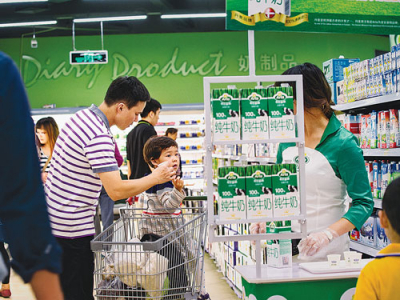 Arla says sales are booming in China.
European co-op Arla Foods says its half-year revenue is up 3%.
It has also achieved a 19% lift in ‘performance price’, which measures the value Arla has generated from each kilo of milk supplied by the farmer-owners.
In its report on the half-year ending June 30, 2017, Arla says the improved results follow a much-needed recovery in the global milk prices after nearly three years of low prices.
“This was a direct result of lower-to-unchanged milk production versus the prior year in most dairy-producing markets, combined with improved demand for milk and dairy products in Europe, US and emerging markets.”
Despite reduced total milk volumes from farms and adverse currency moves, group revenue grew 3.4% to Eur 5 billion (from Eur 4.85b in first-half 2016). The underlying revenue growth, excluding currency effects and divestments, was 6.6%.
Arla’s performance price jumped 19% over the period to 35.8 Eur-cent/kg, versus 30 Eur-cent/kg during the first half of 2016.
Arla Foods chief executive Peder Tuborgh says the global dairy market has improved, responding to the sustained rally in global dairy prices while continually improving product mix across key markets.
“As a result, in the last 12 months, we have increased by 42% the prepaid milk price to the farmers who own our company. They needed that, as the past two and a half years have been tough for most dairy farmers around the world.”
Strong sales growth is reported by Arla Foods Ingredients, a fully-owned subsidiary and a global leader in whey based ingredients for many food categories; it reported a 24% revenue growth in the first half of 2017 to Eur 313m versus Eur 252m in first-half 2016.
The natural whey ingredients business remains the most profitable part of the Arla Group.
Tuborgh says the co-op continues to take lead and invest in technology that sets the industry standard for quality, innovation and food safety.
“I expect this business to continue its high growth rates for the rest of the year via strong performance in value-added protein ingredients for the child nutrition and medical nutrition markets.”
Europe is Arla’s core commercial zone with revenue of Eur 3.2 billion in the first half of 2017 (excluding European revenue from Arla Foods Ingredients and trading), equal to 63% of group revenue, and was unchanged from Eur 3.2b in first-half 2016.
Higher sales prices and improved share of branded sales had a positive impact on Arla’s revenue in Europe, however these were offset by lower milk volumes and adverse currency moves, primarily in the Great Britain pound, which impacted revenue negatively by Eur 135m.
The creation of Europe's largest dairy co-operative should be complete by early 2026.
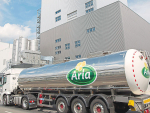
Global Dairy Trade (GDT) and Arla Foods have announced that Arla will begin offering European-sourced skim milk powder (SMP) on GDT Pulse from May 2025 as part of an extension to the GDT Pulse pilot.
European dairy co-operative Arla Foods is forecasting a total revenue of nearly $25 billion this year.
Danish co-op Arla is now paying a monthly incentive to its farmer shareholders for sustainability efforts.
European dairy co-operative Arla Foods is eyeing a fibre-based cap for its milk cartons.

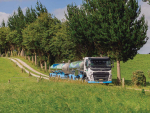
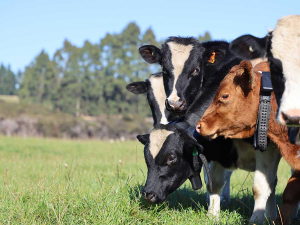
High country stations, mixed sheep and beef farms, Māori-owned farms, corporates and family operations are among the nine commercial farms taking part in the Livestock Innovation Farming Transformation programme, known as LIFT.
OPINION: New health and safety guidance unveiled by the Government recently provides farmers greater certainty about what is expected of them when managing risks on farm.
The National Animal Welfare Advisory Committee (NAWAC) is seeking public feedback on proposed changes to the Code of Welfare for Rodeos.
A New Zealand initiative supporting farmers to restore the health of grazing landscapes has received international backing through the Regenerative Fund for Nature, a global collaborative fund supporting regenerative agriculture and the communities that produce natural fibres for the fashion industry.
Combine premium New Zealand products, blend in a family ritual and what do you get? A world-class functional drink.
Entries are now open across eleven regions for the 2027 New Zealand Dairy Industry Awards (NZDIA).