Red Meat Farmers Welcome Labour's Emissions Pricing Pledge
Red meat farmers are welcoming Labour’s plan to review the Emissions Trading Scheme and not to campaign on pricing agricultural emissions.
 increase font size
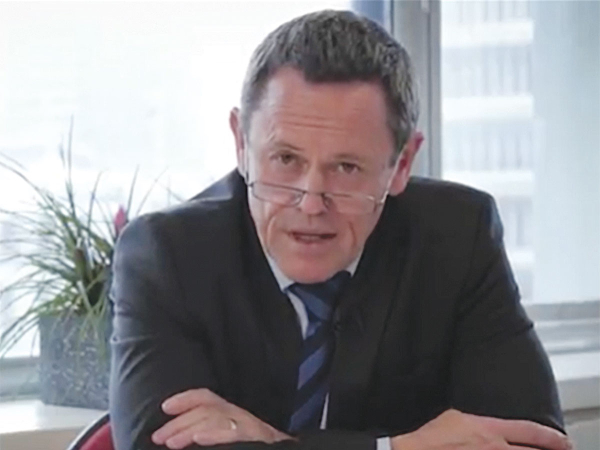 Simon Upton
For too long the issue of land-use change has been relegated to the 'too-hard' basket and it's now time to confront some of the difficult questions regarding this.
That's the view of Simon Upton, the Parliamentary Commissioner for the Environment, in a document he's just released called Going with the Grain - changing land uses to fit a changing landscape. He adds there is a need to weigh up the trade-offs and act.
He says that right now the Emissions Trading Scheme (ETS) is the main commercial driver of land-use change in NZ through afforestation. Upton says afforestation should continue, but in a way that is better suited to the landscape. He adds that the ETS should be retained as a tool for reducing gross emissions, but the right to use forestry as an offset should be progressively phased out.
He says the purpose of the report is to clarify the multiple environmental challenges rural NZ faces and, in the end, hopefully give a sense of the direction of travel to respond to the issues of climate change, water quality and biodiversity loss.
He says the response needs to be sensitive to the economic, social and cultural needs of the regions.
Upton says the outcomes that most New Zealanders want are simple and uncontroversial, such as healthy waterways, rich biodiversity, improvements to the country's environmntal footprint and resilient landscapes that can be passed on to future generations.
His starting point in the report is that land use is in a constant state of change and that this is unavoidable. Upton notes that some changes can be made within farm systems, but in other cases wholesale change will be required.
"One of the main barriers to sorting out the issue of land change is the fragmented policy landscape, with multiple policies that impact on land and water use. The amount of regulation and the pace at which it changes causes confusion for land users and those who oversee their implementation. This fragmented approach is particularly at odds with the holistic approach that tangata whenua must land," says Simon Upton.
He says the catchment or sub-catchment is the appropriate scale for achieving an integrated approach to land use change. On top of this he says national-level regulations that impact on land-use change do not consider the differences of NZ landscapes.
Upton says land-use change needs to be appropriate to specific landscapes and that communities and mana whenua should make decisions on the implementation of policies. He says at present landowners are the main decision makers when it comes to land-use change but argues that catchment groups provide a way for willing land users to learn from each other.
The Data Issue
According to Simon Upton the quality of environmental information in NZ is often not fit for purpose and the environmental reporting framework is at best fragmented and at worst inaccessible. He says this is sometimes hidden behind a prohibitive paywall and this must change.
"Central government should make high-quality, affordable environmental information accessible and underwrite this as a public good," he says.
Along with this, Upton says multiple commercial barriers to land-use change exist and there is a need to find alternative ways to fund this.
He also notes that some regulations set up protect the environment have become barriers to land-use change - a key example of this he says is water rights and greater regulatory flexibility is needed.
Finally, Upton says no government will have ready answers to the problems posed in the report, but equally they should not avoid asking the hard questions or grappling with the challenge of land use.
Red meat farmers are welcoming Labour’s plan to review the Emissions Trading Scheme and not to campaign on pricing agricultural emissions.
The New Zealand Institute of Forestry (NZIF) says unnecessary changes to New Zealand’s Emissions Trading Scheme (NZ ETS) will seriously erode investor confidence and result in significant reductions in forest planting rates.
New Zealand's Emissions Trading Scheme (NZ ETS) encourages afforestation while not achieving climate goals, says a new report released by the Parliamentary Commissioner for the Environment, Simon Upton.
Conversions of sheep and beef farms to forestry have slowed, however new research from Beef + Lamb New Zealand (B+LNZ) suggests land of value for food production remains at risk.
The Parliamentary Commissioner for the Environment, Simon Upton, wants environmental information to be treated as critical national infrastructure.


Farmer-owned fertiliser company, Ballance Agri Nutrients is welcoming National’s plan to negotiate security agreements with key supplier countries to protect New Zealand-bound products from export restrictions and greater supply chain certainty.

Carrfields has announced the appointment of Stu Hall to the newly created role of chief operating officer, Carrfields Ltd, reflecting the continued growth of their agribusinesses and the need to ensure the company has the leadership capacity and support in place as it pursues the emerging opportunities ahead.
New Zealand's role is not to compete with Indian growers, according to NZ Apples and Pears.
The potato industry is celebrating the success of two rising stars - James Blair, the 2026 Young Grower of the Year and runner-up and innovation award winner, Amber Davy.
Twenty-eight emerging leaders from across the horticulture sector spent two days last month learning valuable skills and connecting with industry experts.
There are five entrants in this year’s Young Horticulturist of the Year, competing in a series of technical, practical, business and leadership challenges.