Ballance Farm Environment Awards Launch on West Coast
The Ballance Farm Environment Awards are coming to the West Coast of the South Island.
 increase font size
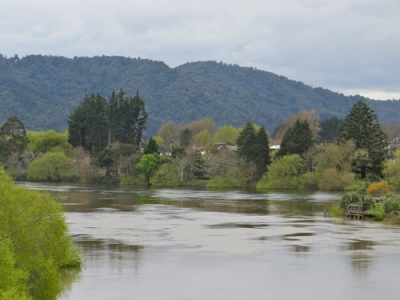 Farmers in Waipa River catchment are being offered free consultancy.
Diary farmers in the Waipa River catchment are being offered free consultancy to develop environmental plans as part of a project to improve the health of the Waikato River.
The joint effort by DairyNZ and the Waikato River Authority is intended to improve nutrient and sediment loads in the Waipa catchment and encourage more efficient water use.
The Sustainable Milk Plan (SMP) project will be in stages, beginning in spring in the Mangaotama, Mangopiko and Kaniwhaniwha catchments. It is supported by Waikato Regional Council, Waipa District Council, Federated Famers, local iwi, milk supply companies, the fertiliser industry and the New Zealand Institute of Primary Industry Management.
DairyNZ is managing the project, under which a free environmental plan will be handed to farmers to help them assess their businesses for environmental risks and opportunities and help them plan for the future.
The plan outlines specific achievable activities agreed with farmers, developed by DairyNZ consultants who then support the farmers in implementing the plan.
DairyNZ spokesman Adrian Brocksopp says a similar project in the Upper Waikato catchment saw 640 farmers develop sustainable milk plans.
“Our Upper Waikato project was… a good example of farmers caring for water. It was a finalist in the Ministry for Environment and Department of Conservation’s Green Ribbon Awards. Farmer involvement in the project wasn’t compulsory but those in the upper Waikato realised that taking part paid dividends for their own farms, the river and for the wider catchment.
“It’s all about good practice and becoming more efficient in the use of resources which can bring environmental benefits and save money by making operations more efficient.
“They also know that having a sustainable milk plan will give them a head start in coping with changing regulations.”
Project manager Nicola McHaffie says SMPs are not to tell farmers what to do, but to help them identify risks and find practical solutions.
“We’ve created a model that supports farmers to make changes through advice and customised plans. We talk to them about their farm… to set out a plan farmers can see will work for their farms and for the local environment.”
The project is demonstrating to policy makers and the wider community that farmers are committed to sustainable dairying and improved water quality, says McHaffie.
More funding
Another $6 million is available for clean-up projects in Waikato.
The Waikato River Authority last week opened its fifth funding round for river clean-up projects, inviting applications online via its website (below). Applications will close August 14.
As part of the funding process the authority has also reviewed and published its ‘Funding Strategy 2015’, also available online.
Authority co-chairs John Luxton and Tukoroirangi Morgan say funding priorities include the Waipa and lower Waikato River catchment, wetland restoration and projects to improve water quality.
“Our funding strategy is relatively unchanged from the previous year,” says Luxton. “We know many projects require multi-year planning and delivery, so we know we must be consistent in our approach to signal what is important. This will ultimately give the best outcome long-term for the river,”
This year’s funding strategy statement also sets out the river authority’s fencing standards for funded restoration planting. It includes sheep and cattle and electric and standard fencing.
Where project money is spent on land improvement a covenant may be required. This is more likely when project funding exceeds $100,000.
To date the river authority has given $22 million to 141 projects over four funding rounds from 2011.
The Ballance Farm Environment Awards are coming to the West Coast of the South Island.
There's been widespread support from the primary sector for the Government's announcement on changes to freshwater farm plans that come under the Natural Environment Bill, which is now set to replace the existing RMA.
The chair of the country's environmental regulator, the Environmental Protection Authority (EPA), says changes are already under way to improve the performance of the agency to better meet the needs of those who interface with them.
New Zealand's Emissions Trading Scheme (NZ ETS) encourages afforestation while not achieving climate goals, says a new report released by the Parliamentary Commissioner for the Environment, Simon Upton.
Retiring MP and dairy farmer Mark Cameron is blasting the Green Party for proposing to ban the use of synthetic fertiliser and cutting cow numbers.


Minister of Conservation Hon Tama Potaka has appointed Susan O'Regan as Chair of the Queen Elizabeth II National Trust (QEII) for a three-year term.
Red meat farmers are welcoming Labour’s plan to review the Emissions Trading Scheme and not to campaign on pricing agricultural emissions.
Where any worker in the kiwifruit industry is mistreated, we expect the authorities to take action.
Mid Canterbury Federated Farmers arable chair, Bevan Lill, said Beef + Lamb NZ data indicated that for the last six years, the average arable return on investment was about 0.8% while inflation ran about 4% - so the average arable farm was going backwards at about 3% a year.
Seed and grain companies share the concerns of arable farmers about the viability of their sector, says Seed and Grain New Zealand chief executive Dr Sarah Clark.
The New Zealand Institute of Forestry (NZIF) says unnecessary changes to New Zealand’s Emissions Trading Scheme (NZ ETS) will seriously erode investor confidence and result in significant reductions in forest planting rates.