Research shows farm ownership a viable goal
Buying a farm is challenging but still achievable according to research recently carried out by Smaller Milk and Supply Herds (SMASH).
 increase font size
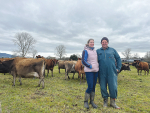
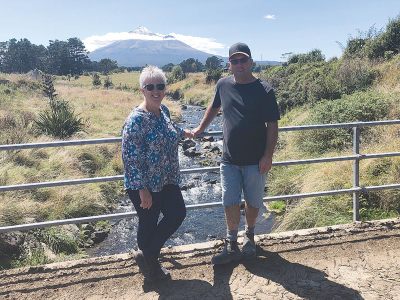 Keith and Tracey Crawford.
Keith and Tracey Crawford began their dairy careers with big dreams of farm ownership, then still a highly achievable goal for a determined young couple.
“Keith went dairy farming when he left school” says Tracey Crawford. “I left school and worked as a microbiologist at the dairy company.
“When we got married in 1986 we decided to go on the path of 29%, 39%, 50:50. We were pretty fortunate that we got to do all those stepping stones to set us up 50:50.”
They worked their way up through the industry, and finally bought a 90ha farm near Opunake, Taranaki, in 2006, where they now milk 190 cows.
This property was meant to be another step on the path to owning a larger farm, but in the intervening years their focus has shifted to making the most out of their current farm, in tandem with off-farm investments and maximising the opportunities for spending time with family and friends off-farm.
Putting the systems in place to simplify and streamline processes is another focus for the couple.
“Keith broke his back in 2011 in a trail bike accident and he had three months off work,” says Tracey.
“We realised that you need a shed that runs with one person. If you are a husband-and-wife team and something goes wrong you are very vulnerable. I always say it is great to have a one-man shed and Keith says it is really great to have a one-woman shed.
“That is also why we DNA profiled our herd. When we were farming by ourselves we wondered how we would cope if one of us couldn’t be there and we needed to get someone in to help us with the spring. With the herd profiled it doesn’t matter who steps in, all the heifer calves can come straight into the calf shed, we will know who’s calved and the calf’s DNA will tell us later who they belong to. It’s insurance for us and it means it doesn’t have to be a hassle for anyone.”
Time off farm is important to the couple.
“Our goal is to keep things simple,” says Crawford. “We are in our second season of having a permanent staff member and we have every second weekend off, apart from the four months when we do calving and mating. We know we are going to have that time on the farm and do things right.
“We can get a relief milker in for the weekends our worker is off. And as the farm is easy to run Keith doesn’t do nights, which means he can do other farm work and not be tied to the shed twice a day.
“We have always had good relief milkers. Different every year, but as we have the system set up, instructions on the wall, people can walk in and run the farm and we know it is going to work. There is no way we are not going to have family time. You can buy whatever you like, but memories are made through going away on holiday with kids.
“If you don’t get out and do something every day, and have things in place to enjoy your family and friends, you will be old and they will all be gone. All our adult children still holiday with us. We are lucky.
“We have a compulsory holiday in January at the beach, with our children and grandchildren, and in March we have a caravan holiday with our friends. We fish and swim, run and bike, sit and reflect, and relax and talk about the year. Once we decided we were staying smaller herd we were able to purchase a 1966 Chevy Impala and a 1978 caravan and start to do a lot more caravanning and cycling around New Zealand.”
Positive vibe off-farm
Keith and Tracey Crawford are happy with their choice to stay smaller herd farming.
“With a small farm we have still been able to support our children,” says Tracey Crawford. “Maybe through lending them a bit of money to buy their first house. That’s been awesome.
“Bigger farms have their place in the community too, but I still think a small farm has a lot to offer. Sometimes when you talk to staff on a large farm they are only doing one type of farming. They might be doing a lot of tractor driving, or just milking, whereas the smaller farmers are doing everything.
“Other smaller farmers have told us that they’ve had workers come who don’t know how to fence, or how to manage grass, because in the big job they have come from they have just been working in the cowshed.
“With smaller farms the overall learning of farming practices is huge. You are doing all the financials, grass management, maintenance, milkings, your cows. We have that love, you know who’s your good cows and you’re testing all the time.”
Making the most of their advisory team of accountant, bank manager and farm adviser is a critical part of making their system work.
“We have meetings with our advisers and discuss our plans for the future, they make sure it is all recorded, and then we have regular meetings to check we are on track or to discuss anything that has cropped up.”
Crawford also believes that getting off the farm to learn new information and network is an important part of running a successful farm business.
• Louise Hanlon is an executive member of Smaller Milking and Supply Herd.
Buying a farm is challenging but still achievable according to research recently carried out by Smaller Milk and Supply Herds (SMASH).
Anna Kalma is Smaller Milk and Supply Herds (SMASH’s) national coordinator and has seen it all in her time on the national committee.
Smaller Milk and Supply Herds (SMASH) needs your help.
A top farm accountant says in the present downturn, it's vital that farmers take heed of all the good advice on offer.
Michael Kiernan's lucerne crop was a godsend in the dry Southland summer this season.


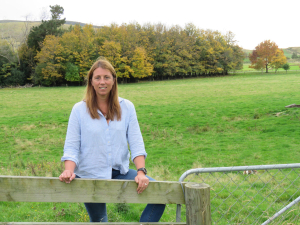
Farmgate lamb prices are down by 8%, beef cattle by 4.5% and farm expenditure up by 4.2%.
Kiwifruit growers are watchful but remain optimistic as concerns around the potential effects of the El Niño weather pattern this season.
Almond hulls sourced from Australian orchards may have the potential to help New Zealand cows reduce emissions, boost milk yield and lower input costs.
Striking a balance between meeting the needs of industry to speed up approval time for products but on the other hand ensuring that risks are properly assessed.
Surprised, humbled and quite thrilled. That’s the reaction of James Allen, one of the founding partners and now chief executive of AgFirst, on being made a life member of the Institute of Rural Professionals.