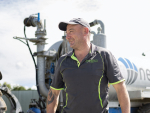
Boosting Crop Production by Spreading Effluent
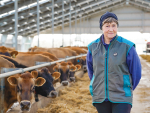
Tararua district farmer Jamie Harris milks around 400 cows using a split calving system on his farm, Crossdale Dairies.
 increase font size
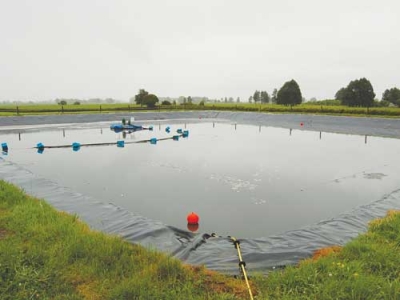
The purpose of measuring and monitoring effluent is to provide information to assist with system management and tracking of performance, and as the basis for reporting for regulatory compliance.
The system specification must describe how performance can be measured, and must ensure suitable sites and equipment are specified to facilitate the collection of the data required.
Install a marker or water level measuring device in the effluent storage that clearly indicates stored volume and/or storage capacity remaining.
A marker or other measuring device should be installed to indicate the level of solids accumulation on the bottom of the storage. This should be visible after the liquid has been removed so the need for solids to be removed may be determined.
Flow rate measurements are required by the system operator to calculate how much nutrient has been applied to specific land areas.
Most systems should include a flow measuring device on the delivery side of the effluent irrigation pump to measure the volume and flow rate of liquid effluent being applied to land. If no flow measuring device is specified, some other way of determining the flow rate must be prescribed.
The method for determining flow rate must be described in the system’s operation manual and training.
Always include the provision for a flow measuring device to be installed at a future date, even if it is deemed unnecessary to include a device in the original design.
Typically, this will mean installing a length of straight pipe on the outlet side of the pump. Also consider installing a flow measuring device to monitor water usage during washdown. Always consider the nature of the particular fluid being pumped when selecting any flow measuring device. Some devices will not be compatible with FDE.
Install a pressure gauge or pressure test point at the pump outlet and at the applicator to enable regular checking of performance.
For accurate reading, the distance from a pressure gauge or pressure test point to any valves must be at least three times the diameter of the pipe.
Know your soil moisture
Knowledge of soil moisture is necessary for the effluent irrigation manager to determine the timing and quantity of effluent to be applied.
A good design will describe how soil moisture is to be monitored.
Separate monitoring may be required for each FDE application management zone if soil types or application depths vary.
Some common forms of soil moisture monitoring include:
Permanent sensors
These provide a continuous measurement of soil moisture at a particular site. Because the sensor is stationary, soil moisture at other parts of the property needs to be estimated.
Hand-held sensors
These provide a single measurement of soil moisture at any location. These require some owner initiative to work correctly, but soil moisture may be checked at any number of locations, and on any desired schedule.
Contractors
Engage a third-party irrigation scheduling service to measure soil moisture. These contractors usually provide soil moisture measurements at fixed locations, on a fixed schedule (ie once per week), and can prescribe areas of the property that are fit for application.
Tararua district farmer Jamie Harris milks around 400 cows using a split calving system on his farm, Crossdale Dairies.
Water management is an integral component of sustainable farming practices, according to Watermetrics.
Two farmers and two farming companies were recently convicted and fined a total of $108,000 for environmental offending.
A Taupiri farming company has been convicted and fined $52,500 in the Hamilton District Court for the unlawful discharge of dairy effluent into the environment.
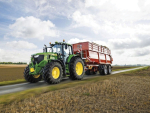
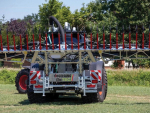
Founded in Germany as recently as 1977, today, the Fliegl Group employs more than 1100 workers, offering an expansive range of transport solutions, from their base in Bavaria.


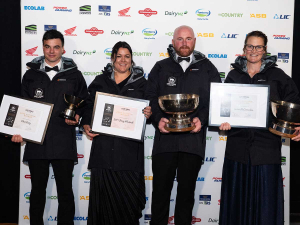
Entries opened on Monday, 5 October 2026 for the 2027 New Zealand Dairy Industry Awards (NZDIA), which organisers describe as the nation's biggest celebration of excellence in the dairy sector.
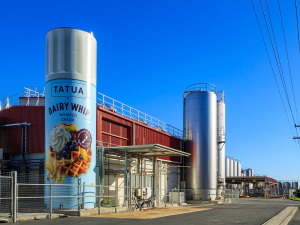
Waikato milk processor Tatua has again declared a record milk payout to farmer shareholders, leaving other processors in the dust.
A Labour-led Government won’t be bringing back the controversial freshwater rules of 2020.
National’s much-touted free trade deal with India featured in the Rural Issues Debate at Mystery Creek, Hamilton on Wednesday night.
New Zealand's 2026-27 freshwater fishing season has opened, with anglers encouraged to head to rivers and lakes over the coming days as conditions look favourable across much of the country.
Central Otago District Council (CODC) has voted against a plan to spread treated sewage sludge from Cromwell and Alexandra on farmland near Lauder, a decision Federated Farmers says reflects strong opposition from rural residents.