Fall Armyworm in NZ Maize: Four Years of Research
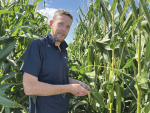
Four years since it was first detected in New Zealand, researchers and growers now know much more about management of maize pest fall armyworm (FAW).
 increase font size
 Wade Bell
Many farmers are experiencing lower stored feed reserves on hand and some are considering growing or increasing their on-farm maize crop grown.
It's not uncommon for farmers to be able to grow maize silage that yields 18-24 tDM/ha for around 25-35c/kgDM in the stack on paddocks that need renewing. Growing costs can be reduced even further by growing maize in an effluent paddock, which can significantly reduce (or in some cases eliminate) fertiliser input requirements.
This drops the cost of maize to 18-25 c/kgDM. That looks pretty attractive compared to buying in alternative feed sources that can range from 50-100 c/kgDM. However, this analysis only tells part of the story when growing maize on farm, and there are other considerations that can influence the return from your maize crop.
First, you need to ask whether the area you want to grow your crop on really needs renovating. The reason for this is that if the paddock is already high producing, the difference in the total extra drymatter production gained by growing maize will be less, increasing the cost per kgDM (Table 1).
Table 1: Value of maize grown on low vs high pasture producing paddocks
| Poor Performing paddock | High performing paddock | ||
| Maize yield | tDM/ha | 20 | 20 |
| Less: Pasture production during maize cropping period | tDM/ha | 4 | 7 |
| Equals: Total extra feed produced | tDM/ha | 16 | 13 |
| Cost to grow and harvest maize silage1 | $/ha | 16 | 13 |
| Cost of additional feed supplied |
Furthermore, you will have missed the long-term opportunity to increase pasture production by renovating the poorest performing paddocks on the farm.
Second, maize growing costs can be reduced significantly if you can grow it on highly fertile effluent paddocks.
Dairy effluent typically has higher concentrations of nitrogen and potassium, which maize can utilise to achieve maximum yields (12kg of N and 10kg of K per 1 tDM maize silage yield). With maize being a deep-rooted crop, it is perfectly suited to utilise this free source of nutrients and reduce the growing costs per kgDM (Table 2).
Table 2: Cost of maize grown on low v high fertility paddocks
| Maize silage yield (tDM/ha in the stack) | |||||||
| Yield | 16 | 18 | 20 | 22 | 24 | 26 | 28 |
| Cost on low fertility paddocks ($kgDM)2 | $0.40 | $0.34 | $0.30 | $0.27 | $0.24 | $0.22 | $0.20 |
| Cost on high fertility paddocks ($kgDM)2 | $0.29 | $0.25 | $0.22 | $0.20 | $0.18 | $0.16 | $0.15 |
Finally, while maize yield and costs are very important, so too is having flexibility around the timing of when you sow and harvest your maize crop.
Consider maize hybrids that suit your environment and the nature of your seasonal feed supply and demand requirements.
For example, being able to sow your crop three weeks later when pasture is growing at 64kg DM/ha/d, equates to 20 tDM of additional pasture silage from 15ha. Alternatively, being able to harvest three weeks earlier could help you to bridge any autumn shortfall of feed you might have normally expected. Talking to your local Pioneer representative will help you establish the best hybrid option for your location and on-farm requirements on farm.
Wade Bell is Genetic Technologies farm systems manager. Contact him at This email address is being protected from spambots. You need JavaScript enabled to view it.
Four years since it was first detected in New Zealand, researchers and growers now know much more about management of maize pest fall armyworm (FAW).
The transition period (typically defined as the three weeks prior to and the three weeks immediately after calving) sets the biological and productive trajectory for the entire lactation by determining how well the cow adapts from pregnancy to peak milk production.
As spring calving cows head into dry-off, the priority shifts to one thing: setting cows up to calve at the target body condition score (BCS).
Early December marks a key transition for many dairy farmers, as weaned replacement heifers head off-farm to grazing.
With spring underway, maize growers across New Zealand are preparing for planting.



Fonterra Co-operative Group chief financial officer Andrew Murray has resigned to take up a role outside the dairy giant.
A major move is about to get underway to improve the quality and viability of dairy beef and cattle in NZ.
Veterinarians say changes to the code of welfare for dairy cattle provides a positive foundation for improved cattle welfare across the country.
Today, 15 October, is the International Day of Rural Women, which recognises rural women’s contribution to farming, communities and the environment.
Global dairy giant Lactalis has integrated its Australian operations with the Mainland Dairy consumer business it acquired from Fonterra earlier this year.
High country stations, mixed sheep and beef farms, Māori-owned farms, corporates and family operations are among the nine commercial farms taking part in the Livestock Innovation Farming Transformation programme, known as LIFT.