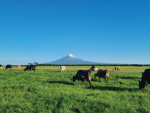
Southerly Winds Hit Taranaki Dairy Pasture Growth
A spate of southerly winds bringing cold temperatures has presented challenges for Taranaki dairy farmers.
 increase font size
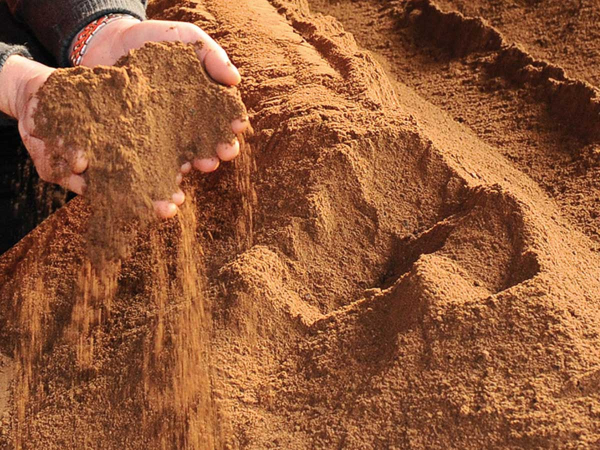 About 15 to 20% of what New Zealand dairy cows eat isn’t pasture, but supplementary feed, including PKE.
Dairy farmers' reliance on imported palm kernel expeller (PKE) as a supplementary feed faces headwinds amid shifting consumer preferences and environmental obligations to reduce greenhouse gas emissions, says AgFirst Waikato consultant Raewyn Densley.
This will drive farmers to look for supplementary feed options closer to home, providing opportunities for domestic maize silage and feed grain growers.
"From a crop perspective and for the New Zealand arable industry this is exciting because crops like maize have much lower GHG emissions than PKE," Densley told the Foundation for Arable Research's maize conference in Hamilton.
Significant expansion in the dairy industry between 1990 and 2020 grew the national herd by 2.6 million cows to 5 million and production by 132 kgMS/cow. An extra 730,000 hectares was converted into dairying, much of this arable land in Canterbury.
This led to a massive increase in feed demand on dairy farms, from 9.3 to 23.6 million tonnes of drymatter eaten a year, driven by more cows, more hectares and more production per cow, said Densley.
"Over time, we have gone from a pasture-based dairy farm system to one that is still pasture-based, but is also quite reliant on other feed."
About 15 to 20% of what New Zealand dairy cows eat isn't pasture, but supplementary feed, including PKE (a byproduct of the palm oil extraction process), fodder beet and maize silage.
Use of harvested crops like maize silage and feed barley, as well as grown supplements like fodder beet, kale and swedes, is increasing by 5.6% a year. Imported feed, particularly PKE, is increasing even more, by 9% each year.
"We think we are a pastoral dairy system and relatively self-contained, but 11 per cent of feed used to feed our cows is produced internationally."
Globally, New Zealand is the biggest importer of PKE at 21.3%, with most coming from Indonesia and Malaysia.
This brings sustainability issues, Densley said.
Globally there is a western consumer trend away from palm oil, with a lot of big companies backing research into alternatives. She said some consumers are turning away from dairy products made from cow fed PKE, with Fonterra placing limits on PKE use by its milk suppliers.
Consumers want milk products with a low GHG footprint but PKE has issues with deforestation, methane production from palm oil extraction and higher carbon losses than pasture, maize silage and grain.
"While New Zealand farmers are just getting their head around their GHG obligations from a government perspective, the reality is that the world has moved on. Consumers are not just interested in on-farm losses they are also interested in embedded losses associated with farm inputs," Raewyn Densley says.
Climate change means farmers will continue to need more than just pasture to sustain their herds but there is likely to be a move away from internationally-produced feeds.
While buying in locally-produced crops will be the preferred option for some farmers, others may investigate dropping their stocking rate and cropping on farm.
Modelling for an AgFirst study Densley was involved with, funded by Our Land and Water, showed that a North Island dairy farm system using homegrown feed was generally more profitable than one with imported feed.
A spate of southerly winds bringing cold temperatures has presented challenges for Taranaki dairy farmers.
Surprised, humbled and quite thrilled. That’s the reaction of James Allen, one of the founding partners and now chief executive of AgFirst, on being made a life member of the Institute of Rural Professionals.
Walking around the Fieldays this year, expected most of the conversations to be about machinery purchases and farm infrastructure upgrades. Instead, one topic seemed to keep cropping up more frequently with farmers – the price of PKE.
A warning to dairy farmers not to expect the same good conditions that they experienced last season, has been issued by a leading farm consultant.
As fuel and fertiliser prices rise and with uncertainty in the future, farmers are being urged to go over their budgets with a fine-tooth comb.

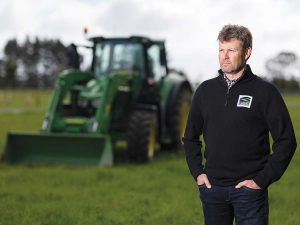
Mobile phone coverage and reliability are deteriorating in rural areas, and farming families are bearing the cost, according to a Federated Farmers survey.
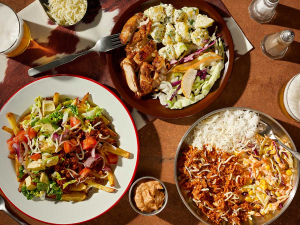
HelloFresh New Zealand has launched a limited-edition Country Cookout Box of Southern-inspired meals, arriving as the 2026/27 rodeo season gets underway.
Beef + Lamb New Zealand Incorporated (BLNZ Inc) is marking 40 years of promoting red meat to New Zealand consumers, citing its taste, family meals and nutritional benefits.
Pāmu has welcomed Taranaki student Paige Burston as its newest First Foundation Scholar, supporting her journey towards a career in agriculture and animal science.
Farmer-owned fertiliser company, Ballance Agri Nutrients is welcoming National’s plan to negotiate security agreements with key supplier countries to protect New Zealand-bound products from export restrictions and greater supply chain certainty.
Carrfields has announced the appointment of Stu Hall to the newly created role of chief operating officer, Carrfields Ltd, reflecting the continued growth of their agribusinesses and the need to ensure the company has the leadership capacity and support in place as it pursues the emerging opportunities ahead.



