Fall Armyworm in NZ Maize: Four Years of Research
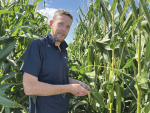
Four years since it was first detected in New Zealand, researchers and growers now know much more about management of maize pest fall armyworm (FAW).
 increase font size

GETTING RID of weeds can be a tough business: it may take years to clean up a single site. How long should a landholder keep checking for seeds that may be in the soil waiting for the right conditions to sprout?
It differs for every weed and site, so new research in Australia is seeking to develop simple tests to let land managers find answers for their circumstances.
The Seed Persistence Tool Kit is funded by the National Weeds and Productivity Research Program and managed by the Rural Industries Research and Development Corporation (RIRDC) for the Australian Government.
A recent workshop for researchers from across Australia and overseas discussed factors affecting seed longevity and dormancy, and what is needed in the new tool kit.
Lead researcher Rowena Long, University of Western Australia, says many things have to be considered.
“Research may suggest ‘weed X’ can last for so many years in the soil and still have the ability to germinate. While it’s a starting point, it doesn’t take into account climatic conditions, soil type or other factors that influence a particular site.
“Even simple things can have an impact, such as microbes decaying the seeds, or rain rejuvenating seeds that are almost dead. This is vital information if you’re a government agency wanting to know how long funding is needed to control a weed of national significance. You don’t want to spend time and money searching sites long after it’s necessary or leave before the job is done.”
Project participant Michael Renton, University of Western Australia, says computer modelling can help synthesise current knowledge about seed persistence. “Modelling can also help identify gaps in our knowledge and help prioritise further research.”
Researchers see the study allowing land managers to collect seed and soil samples, send them to a laboratory with climatic and other data, and run tests to determine how long those weed seeds are likely to persist.
The RIRDC weeds program also supports other research on seed persistence, such as continued development of the Harrington seed destructor (HSD).
Originally tested in Western Australia, the HSD destroys weed seeds such as annual ryegrass and wild oats present in chaff during harvest. It will be used in the eastern states soon.
In total, the RIRDC weeds program is paying about $A12.4 m to 50 research projects, due to report back next May.
www.rirdc.gov.au/weeds.
Four years since it was first detected in New Zealand, researchers and growers now know much more about management of maize pest fall armyworm (FAW).
Generative AI in the workplace, trials in the field, and industry-relevant research took centre stage at this year’s Grape Days events in Central Otago, Hawke’s Bay and Marlborough.
Scientists from the Ministry for Primary Industries (MPI) are part of an international team working to develop a low-cost diagnostic tool that could significantly improve food crop production in developing countries.
Scion is running experimental research burns near Christchurch from March 3-14, to test new theories on how wildfires spread under various conditions.
Writing a practical guide on non-chemical weed management had an unexpected result for Dr Charles Merfield, as he delved into the interconnected nature of the vines, groun cover and soils, and the damage done to all three by cultivating.


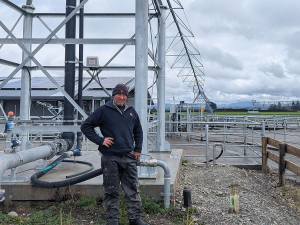
Converting a longstanding cropping farm to dairy was the only way to ensure the land stayed in the family long term, says new dairy farmer Rod May.

As the election heats up, Organics Aotearoa New Zealand (OANZ) has launched its election scorecard designed to help voters wanting to support policies that grow organic and New Zealand's organic sector.
A 'tsunami' of milk from key exporting countries is winding down and this may be good news for New Zealand dairy farmers.
Will the good times last? That's one of the key issues to come out of the latest Federated Farmers confidence survey.
Outgoing Fonterra Co-operative Council chair John Stevenson says that it has been a privilege to represent the co-op's farmer shareholders.
Have a plan in place for your cows and staff.