How to Improve Milking Efficiency in Swing-Over Herringbone Sheds
The swing-over herringbone is the most common dairy type in New Zealand, used on 69% of dairy farms. Simple changes save seconds per cow, and that quickly adds up.
 increase font size

OTAKI SHAREMILKER Allen Cottle has reduced milking to once a day (OAD) because of a ‘green drought’ in the area.
Cottle and his wife Janet farm on the Hautere Plains south of Otaki. Though still commercially farmed in places, for 20 years it has become a place for lifestylers, with many large farms subdivided into smaller blocks. This is prompted by the area’s proximity to Wellington, where Janet works three days a week.
Cottle is a 50/50 sharemilker on his parents’ farm, running 300 cows plus replacements. The season has been somewhat tough, he says.
“We had an early dry spell and it’s been punctuated by further dry spells, then just as things get dire you get a bit of rain. For the first time ever I’m on once-a-day milking because of the dry conditions. There has been quite a lot of rain in the rain gauge but there has also been a lot of wind – and it’s driving me crazy. It’s a season that’s annoyed everyone, holidaymakers especially, because it’s gloomy, windy, so you can’t go fishing and we’re not growing grass.”
Though tempted in the past to go OAD, Cottle could see it now as correct from a strategic point of view, but he wouldn’t do it permanently, he says. With not much grass, going now to OAD will take the pressure off the animals and allow skinny cows to build body condition, he adds.
Cottle was born on this farm, bought by his grandfather and now owned by his parents who also owned a contracting business in the area. His parents now live at Kerikeri, where they now an orchard, while retaining ownership of the Otaki farm. For economic and family reasons they have always had sharemilkers on the farm.
Cottle completed a horticultural science degree at Massey University, worked in horticulture then went overseas for six years – to the UK and later Melbourne where he worked for Nike at its headquarters. He later transferred to New Zealand.
“I didn’t enjoy being indoors so I went farming. My first job was on a Landcorp property at Kapiro in Northland. It was a new conversion and we milked 900 cows – baptism by fire. It was a good learning environment and you saw a lot of things, for example I saw two prolapsed uterus in one season, whereas I’ve seen two here in the last 10 years. The experience and the training courses were excellent. A lot of it was covering what I already knew having grown up on a farm. My father taught me well but it was good to have that formal training. Dad still has input into the farm and I’m often on the phone bouncing ideas off him.”
But the time with Landcorp was cut short by an offer to take over sharemilking the family farm. “It was always my intention to go sharemilking – if I enjoyed it.” He started on the farm the year after the big Manawatu floods of 2004. This was the best production year the farm has seen – 128,000kgMS – mainly due to extra cows.
When he took it over it was a bit run down, especially the fences, but then the Hautere Plain is river stone and digging post holes is no easy task. Only a crowbar enables you to dig a hole. Upgrading the fences is taking time.
Currently he runs 300 cows through the 30–aside, reasonably modern, herringbone shed.
“I have tried to milk a few more cows and the year when the payout was $7.90 we went to 320 cows but produced no more milk. I have done more milk with 295 cows. We winter milk about 130 cows and have always had a winter milk contract. The three year average for milk solids is 124,000 and for us about 120,000 is a good year.”
All the cows are grazed on the 150ha property; only the young ones are grazed off.
This year Cottle hasn’t grown maize, unlike past seasons. “We had such a good winter last year we didn’t use all our supplement so we started in quite a strong position and didn’t need to grow any. I am buying in about 70 tonnes of maize silage this year,” he says.
The swing-over herringbone is the most common dairy type in New Zealand, used on 69% of dairy farms. Simple changes save seconds per cow, and that quickly adds up.
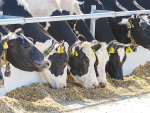
This season's dry conditions have made one thing clear: not having enough feed on hand can bring your season to an early close.
Waikato Milking Systems’ latest innovation, ErgoPOD is now commercially available within New Zealand and Australia.
"Ask me in about three weeks’ time."
DairyNZ's Kirsty Verhoek ‘walks the talk’, balancing her interests in animal welfare, agricultural science and innovative dairy farming.


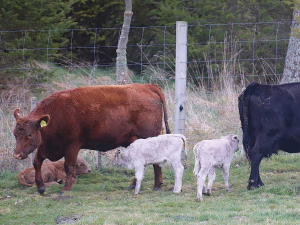
A major move is about to get underway to improve the quality and viability of dairy beef and cattle in NZ.
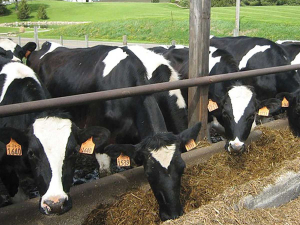
Veterinarians say changes to the code of welfare for dairy cattle provides a positive foundation for improved cattle welfare across the country.
Today, 15 October, is the International Day of Rural Women, which recognises rural women’s contribution to farming, communities and the environment.
Global dairy giant Lactalis has integrated its Australian operations with the Mainland Dairy consumer business it acquired from Fonterra earlier this year.
After almost two decades of sharemilking, saving and building equity, Aaron and Marcia Flay this year realised their long-held dream of settling on their first dairy farm.
Good medium to long term prospects for NZ beef, especially in the US, has heighted the focus on various initiatives to capitalise on this situation.