Massey VC Says University Best Placed to Support Dairy
Massey University is best placed to solve the “problems” facing the dairy industry, says vice chancellor, Pierre Venter.




 increase font size
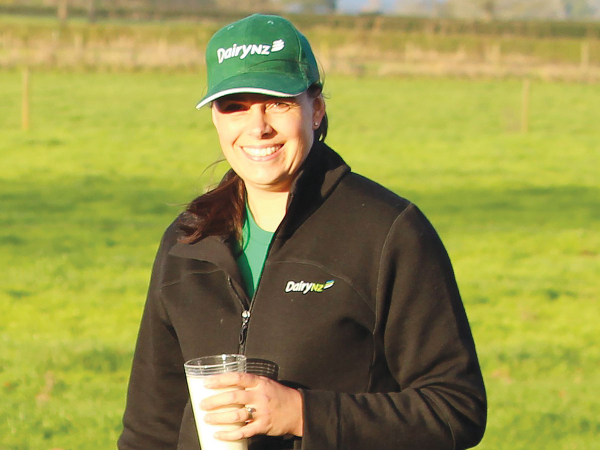 Kirsty Verhoek, DairyNZ
DairyNZ's Kirsty Verhoek ‘walks the talk’, balancing her interests in animal welfare, agricultural science and innovative dairy farming.
Kirsty and her husband Nic are 50/50 sharemilkers just north of Morrinsville in the Waikato region. With a PhD in ruminant nutrition, Kirsty has a passion for dairy farming, because of the variety and because “there’s not just one way” to run a successful dairy operation.
As 50/50 sharemilkers, Kirsty and Nic don’t own the land they farm but are responsible for operating it on behalf of the owner. Their arrangement involves sharing both the costs and profits with the farm owner.
This means that Kirsty and Nic own and manage around 750 dairy cows. Alongside the dairy operation, they also lease a 120-hectare block where they rear beef cattle and graze young stock.
Kirsty is a senior science manager at DairyNZ near Hamilton and a mother of three young kids. She has a research background in ruminant nutrition and methane emissions and has recently expanded her areas of interest to include animal wellbeing and cow comfort (in particular, mitigating thermal – or heat – stress).
Wearable cow devices such as collars, tags, and rumen sensors – think Fitbit or Gamin watches in the human context – play a role in informing both her and Nic’s farm management, as well as research.
While these devices are just one aspect of farming, the technology provides valuable insights that help guide decision-making and contribute to her research into more sustainable and efficient farming practices.
With farms producing more data than ever, the challenge lies in figuring out how to harness it effectively and unlock its full potential. Kirsty has recently been involved in research alongside DairyNZ partners, AgResearch, and Fonterra through the New Zealand Bioeconomy in a Digital Age (NZBIDA) programme.
This research focussed on how farmers can leverage digital technologies and data to improve farm management and enhance animal care, providing practical insights into the future of farming in a more connected and data-driven world.
Throughout her research career Kirsty has contributed to projects both nationally and internationally that aim at enhancing ruminant production efficiency and sustainability.
In the future, she aims is to continue to publish research that has been through a robust process, so it can be used by others to continue moving science forward and towards solutions and tools that help farmers make solid decisions on farm.
Massey University is best placed to solve the “problems” facing the dairy industry, says vice chancellor, Pierre Venter.
Today, 15 October, is the International Day of Rural Women, which recognises rural women’s contribution to farming, communities and the environment.
The first major update to the Dairy Cattle Code of Welfare in more than a decade has been released, marking what DairyNZ describes as an important step in ensuring animal welfare standards continue to evolve alongside scientific evidence and on-farm realities.
Have a plan in place for your cows and staff.
DairyNZ deputy chair Cameron Henderson has been re-appointed unopposed for another term.


Dairy processors are ready to further boost New Zealand’s export earnings but want the incoming government to match their ambition with good policy.
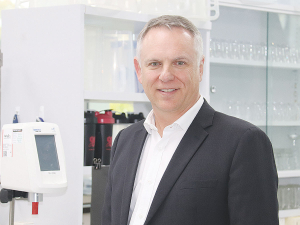
Massey University is best placed to solve the “problems” facing the dairy industry, says vice chancellor, Pierre Venter.
Synlait's longest serving employee – a man who joined the Canterbury-based milk processor even before it began processing milk – is now its newest executive.
A dairy industry leader believes eradicating the common and costly disease, Bovine Viral Diarrhoea (BVD) is within reach.
A farmgate milk price of $10/kgMS this season is firming up as milk powder prices soar and the New Zealand dollar weakens.
Federated Farmers has welcomed new rural policies released by ACT, saying they align closely with its own election priorities.
OPINION: It seems Canterbury processor Synlait is still in the doldrums.
OPINION: Get offside with New Zealand First leader Winston Peters at your own peril.




