Climate-friendly cows closer
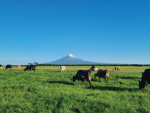
Dairy farmers are one step closer to breeding cow with lower methane emissions, offering an innovative way to reduce the nation's agricultural carbon footprint without compromising farm productivity.
 increase font size
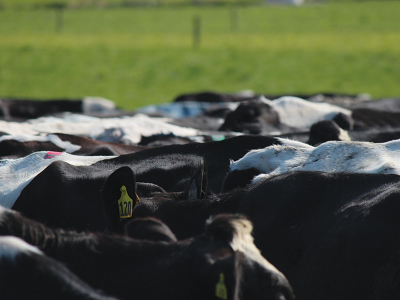 Farmers have various tools available to optimise heat detection in herds.
Various tools and technologies are now available to help dairy farmers optimise heat detection, says CRV Ambreed.
Boyd Dingus, general manager of Estrotect, distributed by CRV Ambreed, says deciding on a combination of heat detection aids requires weighing up each tool’s effectiveness, its cost versus its benefit, and its ease of use.
Tail Paint
Tail paint is inexpensive and has been used as a heat detection aid for decades. The effectiveness of tail paint can be hit and miss because it is never applied in a consistent way.
“Two people could go out and apply tail paint, and you’d likely get two completely different results,” he said.
“One person could apply a short strip, the other long one. One person could do a very thick strip, while the other does skinny. Cow to cow and person to person, every strip will look different.”
This inconsistency can become a big problem when the person reading the tail paint must make a breeding decision, says Dingus. Especially this will be so if they weren’t the person who applied the paint. How much paint was there initially? How much has been rubbed off? Should the cow be bred or not?
“Some cows will be bred that shouldn’t be, causing you to overspend on semen,” he says. “And some cows that should be bred won’t be, causing a missed pregnancy opportunity.”
Electronic heat detectors
The electronic heat detectors available are either cameras or meters that measure activity.
The cameras or RFID (radio frequency identification) pick up heat from heat mount detectors and work together with a drafting system in the cow shed to draft out cows for insemination.
Activity monitors attach to the cow’s neck or leg where they detect movement. Cows on heat tend to walk more because they are restless, are mounting other cows or are themselves being mounted. Day-to-day comparisons of cows’ activity can be made to detect any significant increases and therefore heat.
“Before investing in this type of technology, do your research and talk to other farmers about the pros and cons,” said Dingus. “It would be sensible to use another form of heat detection as a back-up in case of a system failure.”
Heat mount detectors
Heat mount detectors are either pouches activated by the pressure of the cow riding, or scratch off pads.
Dingus says using a heat detector, which measures the intensity of the cow’s estrus (heat) activity, is essential.
“The higher the estrus activity the higher are your chances of a successful pregnancy.
“Without a measure of estrus activity it’s like blindly throwing darts at a dartboard. Sure, some ‘darts will hit the board’, ie cows will get pregnant, but many won’t. Using a tool that measures estrus activity will increase your chances of pregnancy success.”
There are proven tools on the market to increase pregnancy rates. Use of simple technology, like a breeding indicator, helps overcome some of the key pitfalls of heat detection aids like tail paint.
A breeding indicator is a self adhesive patch that you apply halfway between the hip and tailhead of a cow’s back. As mounting activity occurs, the indicator’s surface ink is rubbed off by the friction of the mounting and will reveal the indicator colour.
“There’s no inconsistency,” said Dingus.” The sticker is always the same size and shape, so there’s no guessing what was there to start with. There’s no variation by cow or person applying.
“Importantly, do your homework and find a combination of heat detection aids that allows you and your farm staff to make a ‘yes’ or ‘no’ decision quickly.”
CRV was the first to distribute Estrotect in New Zealand.
Dairy farmers are one step closer to breeding cow with lower methane emissions, offering an innovative way to reduce the nation's agricultural carbon footprint without compromising farm productivity.
CRV has produced the first homozygous polled bull to make New Zealand’s prestigious Ranking of Active Sires (RAS) list, demonstrating the strides the company is making in breeding top-quality polled bulls.
As Mycoplasma bovis (M. bovis) resurfaces in Canterbury, CRV is reassuring dairy farmers it has rigorous production processes and health testing programmes in place within its supply chain.
A Canterbury Hereford stud specialising in providing beef genetics for the dairy industry is claiming a major breakthrough in breeding for more environmentally friendly animals, with reduced urinary nitrogen emissions.
Some dairy farmers could be missing out on up to 160 kgMS of production because they are not herd testing.


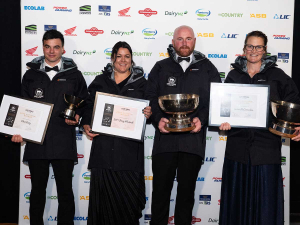
Entries opened on Monday, 5 October 2026 for the 2027 New Zealand Dairy Industry Awards (NZDIA), which organisers describe as the nation's biggest celebration of excellence in the dairy sector.
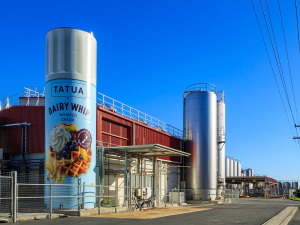
Waikato milk processor Tatua has again declared a record milk payout to farmer shareholders, leaving other processors in the dust.
A Labour-led Government won’t be bringing back the controversial freshwater rules of 2020.
National’s much-touted free trade deal with India featured in the Rural Issues Debate at Mystery Creek, Hamilton on Wednesday night.
New Zealand's 2026-27 freshwater fishing season has opened, with anglers encouraged to head to rivers and lakes over the coming days as conditions look favourable across much of the country.
Central Otago District Council (CODC) has voted against a plan to spread treated sewage sludge from Cromwell and Alexandra on farmland near Lauder, a decision Federated Farmers says reflects strong opposition from rural residents.