Couper back in co-op governance role
Former Fonterra Co-operative Council chair Simon Couper is making a comeback to a governance role within the co-operative.
 increase font size
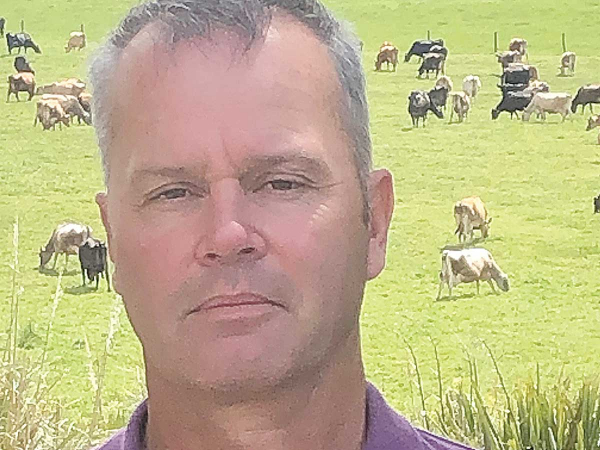 Simon Couper
Former Fonterra Shareholders Council chair and Waipu farmer Simon Couper explores the international strategies of New Zealand dairy firms.
This is the third of five articles aiming to demonstrate dairy industry strategies in New Zealand and provide a perspective for viewing Fonterra’s strategy.
In the last two articles we have looked at the observable strategies of three firms within the NZ dairy market and compared their strategic positions. To recap: Open Country Dairy (OCD) is a cost leader and Tatua leads in customer intimacy, while a2 is a differentiated product leader.
We have seen how a disciplined focus in a strategic position has allowed them to improve their position as measured by Return on Capital Employed (ROCE), market share and/or capitalisation.
So other things being equal, within a commercial struggle for existence it is the ability of those who can adapt to the opportunities that are strategically efficient which determines who will earn the best return on capital*. It follows that over time, capital will flow to the best return. Greater returns and available capital will in turn be able to capture more of the NZ milk supply.
The aim of this article is to further explore the international strategies dairy firms employ to maintain their competitive advantage.
There are three basic strategic options for firms operating at a global level. They are Arbitrage, Aggregation or Adaptation.
Arbitrage is when a company takes advantage of the resources or specific opportunities within another country. A good example of this is the cheap labour garment sweat shops in Bangladesh. Another example is the Fonterra milk pools which seek to provide the ability of sourcing milk from other regions for our customers and a return for our NZ shareholders.
Aggregation is where products are standardised across all markets with very few product variations to capture production efficiencies and economies of scale. OCD is a good example of aggregation as it only offers a few products – take it or leave it. The Global Dairy Trade auction (GDT) is another example of aggregation.
Adaptation is where a firm adapts its offerings to best suit the customer or consumers’ requirement as much as possible. Tatua is an example of adaptation as indicated by its values – where it seeks to exceed customer expectations by “going the extra mile” and “responding with agility and speed”. Fonterra’s “in market” sales teams and research and development facilities are another example of adaptation to make products suit customer and consumer requirements.
There are no examples of firms (at scale) that have successfully employed all three strategies of Arbitrage, Aggregation and Adaptation at the same time, for any length of time. The most likely reason is that to do all three requires different product focus and operational cultures. Combining them within the same firm leads to confusion, resulting in decreased performance or loss of market share.
The choice of international strategy a firm employs needs to fit with the core competitive advantage of cost leadership, customer intimacy or product leader.
For example, Tatua seeks to differentiate its offering by creating the best possible service to customers. Its focus is adaptation: it adapts its products and speed of delivery to suit its clients’ needs. Trying to aggregate its products with no variation would erode value quickly. Likewise, seeking to gain advantage sourcing milk from foreign geographies could easily weaken its claims of specialty ingredient leadership.
OCD, on the other hand, chooses to aggregate its offerings (fewer than 30 products). They have no in market (offshore) salesman. Adapting to different customers needs would lead to processing cost inefficiencies. Observing the challenges Fonterra has with milk pools, it is unlikely OCD would engage in arbitrage activity by investing in foreign geographies.
At this stage, a2 is a marketing and licensing company with patents. a2 does not currently collect or process milk in NZ and therefore its position within this strategic framework is not observable. a2’s pending purchase and future operation of Mataura Valley may indicate how it intends to position its self within the NZ supply market and how it intends to operate strategically when exporting to its customers.
Looking forward, what international strategic approaches should Fonterra take?
Next issue we will look at the core strategic advantages Fonterra has and ask again where is Fonterra’s best fit within the strategic framework we have outlined over the last three articles.
*or perceived future ROCE which is reflected in share price.
Former Fonterra Co-operative Council chair Simon Couper is making a comeback to a governance role within the co-operative.

A former Fonterra leader says the co-operative must finalise its strategy before reviewing capital structure.
This is the fifth of five articles by Simon Couper aiming to demonstrate dairy industry strategies in NZ and provide a perspective for viewing Fonterra's strategy.
Former Fonterra Shareholders Council chairman Simon Couper explores Fonterra's core advantage.
Former Fonterra Shareholders Council chairman and Waipu farmer Simon Couper looks at the strategies of Fonterra's competitors to see how the co-op can strengthen its own strategies.


New Zealand's citrus growers were challenged to build their future on the value embedded in their fruit rather than the volume they produce, at Citrus New Zealand's annual gathering in Gisborne on 17 September.
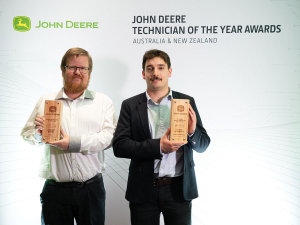
Leading John Deere technicians and apprentices from New Zealand and Australians were recognised at the recent sixth annual JD Technician of the Year Awards, held in Brisbane.
In Dacre, near Invercargill in New Zealand’s South Island, Bruce Dinnington is running a dairy operation unlike any other.
A free online platform aggregating governance vacancies across rural and regional New Zealand has been launched.
Environment Minister Nicola Grigg has announced details of a new rural plastics recycling scheme.
Agricultural drone operators say that a government decision to allow lower-risk drone work without certification won’t lower standards but drive innovation and efficiency.