Rural Mobile Coverage Worse After 3G Shutdown, Survey Finds
Mobile phone coverage and reliability are deteriorating in rural areas, and farming families are bearing the cost, according to a Federated Farmers survey.
 increase font size
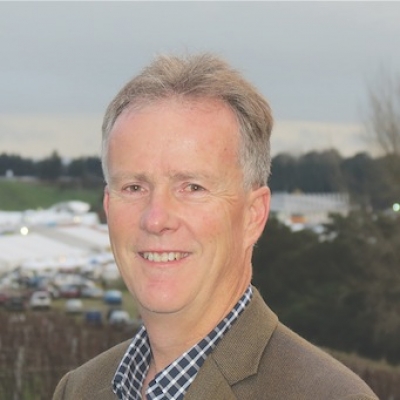
Federated Farmers chief executive Graham Smith last week spoke at the Future Farms Conference in Wellington. Here are excerpts from his speech.
IT IS an exciting time to be in the farming sector, as pastoral farming lies at the heart of our economy and how we see ourselves as a nation.
We are a primary superpower that ranks among the best on earth in production efficiency, environmental outcomes and emissions. We are on the world stage and everyone is watching.
Federated Farmers has been a part of NZ Farming Inc since 1899, delivering the farmers’ message from the back ends of the country to the decisionmakers and influencers in our capital city.
Federated Farmers plays its part in making farming in New Zealand profitable and sustainable, by representing the views of its members, the farmers, to central and local government. We give farmers a voice on the important policy issues facing farming.
We may be a small country by population and size, but we hold our own as a primary exporter: agribusiness is our one competitive advantage.
The key megatrends we are seeing today include the rise of the consumer, the environment, increased competition and volatility (including biosecurity and infectious diseases) and food security.
We now live in a world evolving at an unprecedented rate. China is a shining example: in 1978 it was among the poorest countries; now it is the world’s second-largest economy. Its middle class is growing rapidly, they have money to spend and their dietary tastes are changing, presenting us with lots of export opportunities.
For farming to remain competitive, we need more skilled people, we need farming to remain profitable and we need to spend more on science and innovation to develop more valuable products and services.
Farmers clearly understand that farming affects the environment and requires a balance with economic growth. Farmers are ‘stewards’ of their land and must ensure their properties continue to be improved for the next generation.
As Peter Kendall, president of the World Farmers Organisation (WFO), said, “Farmers have daily interaction with the environment. Thus farmers are key drivers of the development of sustainable agricultural practices that provide food and renewable materials to support livelihoods. We must reposition farmers at the centre of the agriculture sector to become more resilient to climate risks.”
It is essential that farmers and environmental groups talk and work together, because an adversarial approach will ultimately not help. For example, the Land and Water Forum has been a positive development and a well-recognised example of collaboration. But engagement and collaboration doesn’t just happen; it takes time and effort.
People are farming’s most precious resource. They deserve every opportunity to maximise their potential in the best possible working environment, but right now the industry demand for skilled labour exceeds the market.
If we don’t have the people we don’t have an industry.
Recently Federated Farmers received, under the Official Information Act, data comparing primary industry graduates at certificate, diploma and degree level with graduate numbers in other disciplines. Last year New Zealand graduated 20 more people with music degrees than with degrees in a primary industries discipline; the primary industries graduating 365 people at degree level (all disciplines) and 287 at certificate and diploma level.
Though the trend in the number of primary industry graduates is upward, we have a long way to go. Science disciplines are not easy but they are critical for our prosperity and to maintain our place in the world.
It is forecast that by 2025 two-thirds of primary industry roles will demand a tertiary qualification. The challenge these figures issue is, are we moving fast enough? Expert knowledge is vital to keep farmers competitive and we must attract more people into the industry.
Young people need to believe farming is an attractive career option in New Zealand. It’s why we need to encourage more schools like St Paul’s Collegiate, Hamilton, which has begun an elite agri-business course.
Mobile phone coverage and reliability are deteriorating in rural areas, and farming families are bearing the cost, according to a Federated Farmers survey.
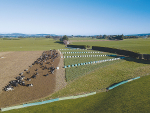
Central Otago District Council (CODC) has voted against a plan to spread treated sewage sludge from Cromwell and Alexandra on farmland near Lauder, a decision Federated Farmers says reflects strong opposition from rural residents.
Federated Farmers has called on Central Otago District Council (CODC) to drop or vote down a plan to truck sludge from Alexandra and Cromwell to farmland near Lauder, warning it would compound an "outrageous" situation created by a separate council's decision weeks earlier.
Federated Farmers says new legislation replacing the Resource Management Act will cut red tape, unlock investment and help grow New Zealand's export-led economy, after the Planning Bill and Natural Environment Bill passed their third reading in Parliament yesterday.
Leading figures from the major political parties will be questioned on their primary sector policies at the Rural Issues Debate at Mystery Creek Events Centre, Hamilton, on 30 September.


Safer Farms is urging farmers to make sure everyone working on farm has safe, suitable footwear for the job.
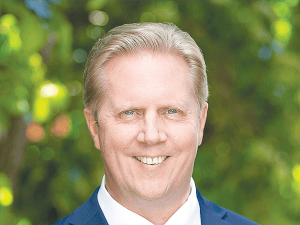
The Government is backing work on a community-led water storage scheme that could irrigate up to 11,000 more hectares of the Poverty Bay flats, Agriculture Minister Todd McClay says.
Agri-tech company Herd-i has become a new all-region sponsor of the New Zealand Dairy Industry Awards (NZDIA), the largest nationwide celebration of excellence in the dairy sector.
Four candidates have been confirmed for two director positions on Fonterra’s board.
Returning to the family dairy farm after playing 20 years of professional rugby around the world is no easy task.
After delivering another record farmgate milk price to 100 supplying farms, independent milk processor Tatua is entering thee new financial year with a positive outlook.