It's The Margins That Matter
OPINION: It appears to be difficult for people who haven’t tried to run a business to understand the difference between assets and cash.
 increase font size
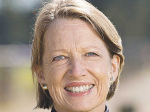
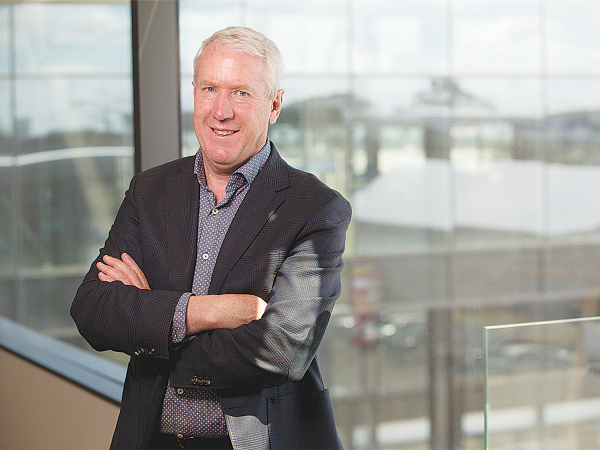 Mike Manning, Ravensdown says an impact on overall productivity looms as a potential threat.
OPINION: As a co-operative, Ravensdown has a responsibility to monitor market and industry trends for farmers and growers.
Today, it’s no secret that the predominant trend in the fertiliser industry currently is one of low levels of purchasing by farmers.
Looking at the previous spring and autumn periods, we’ve seen total fertiliser volumes across New Zealand decrease by around 20-30%, but farmers are spending about the same. When interest rates, fuel and labour are generally uncontrollable costs, fertiliser management can be one of the first levers farmers can pull to manage price pain on farm.
Looking more broadly, we’re all aware of an even more dominant trend affecting the wider agriindustry. And that’s the trend of softening farmgate profitability – especially in the dairy, and sheep and beef sectors. So, we have been thinking about where these trends might take the country.
It’s becoming clear that an impact on overall productivity (and, by definition, country-wide economic return) looms as a potential threat, if these trends were to continue over the next two to three years.
Ravensdown has collated information from a wide variety of studies to assess the immediate and medium-term impact of withholding fertiliser applications on New Zealand farms.
The studies all show that withholding fertiliser applications for a year will often have little impact on hill country and dairy farms. But when we move beyond that, there will be losses in pasture production and quality. If fertiliser application is withheld for extended periods, a cost management exercise has the potential to quickly impact farm profitability as productivity declines.
If withholding Superphosphate (i.e., withholding both P and S) continues after one year, then the average loss of pasture production and quality for low to medium fertility farms will be 5-10% by the second year and become progressively worse thereafter.
Unless there are farm management changes such as providing alternative feed or lowering overall feed demand, animal production will follow this decline in pasture supply and quality. When you’re looking at a potential productivity loss of 20-30% for three-four years of deferred fertiliser applications the potential consequences are significant.
To put things into perspective, on an average dairy farm with average Olsen P, 7% less pasture growth equates to a loss of around one tonne of dry matter per hectare, representing a loss of around 70 kgMS/ha.
On an average sheep and beef farm with medium fertility and Olsen P, a 15% loss in pasture production means you could be looking at around two fewer stock units per hectare.
More than a cost issue
Today it’s well understood that cost isn’t the only reason farmers might be holding back on fertiliser applications. The ramifications for fertiliser use are far broader than cost. Regulations, societal expectations, and global consumer and customer demand mean farmers are increasingly using fertiliser more accurately to improve the efficiency of nutrient use.
We appreciate the absolute requirement to meet expectations and stay within emissions boundaries, but it’s up to farmers to decide on their level of productivity risk.
Role of Ravensdown
Ravensdown has an important role to play in providing fertiliser to our shareholder customers at the best available price. But we have a strategy that goes beyond that.
Smarter farming for a better New Zealand means we want to help farmers with just that – smarter, more precise, and more productive farming.
Soil testing, precision spreading, environmental planning, agronomy advice and nutrient budgeting all have a significant impact on farm cost and productivity. Ravensdown has a team of dedicated farming experts, soil scientists and the environmental capability to help with all these things.
When thinking about long-term productivity, we believe this is the right time for farmers to be thinking about what the soil fertility on their farm is looking like.
Mike Manning is Ravensdown’s general manager innovation & strategy
OPINION: It appears to be difficult for people who haven’t tried to run a business to understand the difference between assets and cash.
OPINION: In the 1980s, concern was expressed in West Germany about the falling birth rate. Some simple analysis was performed by Professor Helmut Sies, physician and biochemist at Dusseldorf University. His letter ‘A new parameter for sex education’ was published in Nature in 1988:
When it comes to annual rebates, it's been a long time between drinks for Ravensdown shareholders.
Ravensdown has reported a net profit before tax and rebate of $50.1 million for the year ended 31 May 2026.
Farmer owned co-operative Ravensdown has signed a two-year naming rights sponsorship of the Canterbury A&P Show.

Farms across the upper North Island are trialling different pasture mixes as part of a research programme that aims to build greater resilience into farming systems.
Election years are always a concerning time for farmers, according to DairyNZ chair Tracy Brown.
The Ballance Farm Environment Awards are coming to the West Coast of the South Island.
Most dairy regions around the country have had a pretty good season so far says Tracy Brown.
Rural leader Mark Hooper has been appointed as an independent director to the NZPork board, bringing extensive farming, governance and advocacy experience to the role.