2024-25 season shaping up to be 'a cracker'
ANZ agricultural economist Susan Kilsby is describing the 2024-25 dairy season as ‘a cracker’.
 increase font size
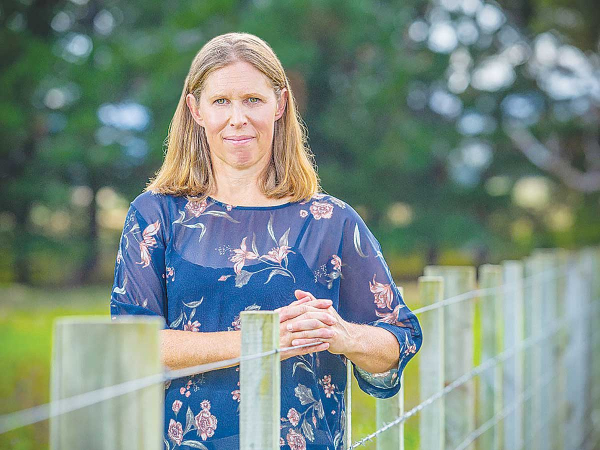 ANZ agricultural economist Susan Kilsby.
OPINION: Last week's proposal from the Government will not come as a surprise to those who have been following the topic.
The changes to recommendations initially put forward by He Waka Eke Noa are largely aligned with the Climate Change Commission (CCC) recommendations.
The Government proposal is less favourable to agriculture than the proposal initially put forward by He Waka Eke Noa as it provides less certainty for emissions price levels, it does not allow for the industry to be directly involved with the process to recommend emissions pricing to Government, and rewards less on-farm sequestration.
The methane price is very dependent on how quickly emissions can be collectively reduced by the agricultural industry.
Unfortunately, this does not provide individual agricultural businesses with much certainty as to what their future liabilities will be.
If emissions are quickly reduced, the price will not need to be ratcheted up.
It is clear the proposal is less favourable for our sheep and beef farms. This sector tends to generate greater methane emissions relative to the value of the production than the dairy industr and the level of profitability in this industry tends to be lower.
The sheep and beef sector stood to gain the most from the proposal to reward a wider range of on-farm vegetation as these farms tend to have unproductive areas, such as gullies, which could be planted in trees.
These factors, combined with the high carbon prices, will continue to incentivise land-use change towards planting trees that can generate carbon credits, particularly pine trees.
Unfortunately, we are yet to see any policies that encourage small areas of land to be planted in trees, which could help to keep the more productive parts of farms producing food and fibre.
The Government proposal for pricing is agricultural emissions is now due to be approved by Ministers in early 2023, rather than late 2022 as initially proposed. The Government has also put in place back-up measures should the systems to price emissions at the farm level not be ready by 2025.
This involves pricing emissions at the processor level, which again is likely to be less favourable for the sheep and beef sector.
A blanket reduction in farmgate prices is likely to occur, which would do little to incentivise changes in on-farm practices.
Pricing emissions at the processor level is expected to have a greater impact on both farm profitability and land-use change than pricing emissions at the farm level. Under a processor level levy there is expected to be a 20% decrease in land used for sheep and beef farming, and up to a 5.7% decrease in land used for dairying according to the modelling by MPI.
Government modelling indicates there will be significant decreases in agricultural production. Depending on the scenario, the decreases expected could be as great at 9.8% for milksolids, 23.6% for lamb and 65.4% for beef.
The arable, horticulture and forestry sectors are expected to benefit from the proposals due to land-use change.
In summary, the Government proposal was largely as expected. There will be significant change in our primary sectors as the impacts of pricing agricultural emissions are taken into consideration.
Dairy and meat production will decrease, but this will provide some opportunity to increase the average value of these goods. Production of horticultural goods and arable goods is expected to increase, but this will require significant additional investment.
Susan Kilsby is an ANZ agricultural economist.
Article first appeared in ANZ Agri Insight.
ANZ agricultural economist Susan Kilsby is describing the 2024-25 dairy season as ‘a cracker’.

Growing global demand for dairy products and a flat milk supply could be setting the stage for a near-record farm gate milk price this season.
Strong demand for milkfats - anhydrous milkfat (AMF) and butter - is helping boost the farmgate milk price, according to ANZ agriculture economist Susan Kilsby.
Dairy farmers struggling to breakeven can expect better prospects next season.
An improvement in global markets and a weak New Zealand dollar are behind the ANZ Bank's optimistic prediction of a $7.70/kgMS farmgate milk price for this season.



LIC shareholders have elected a new North Island representative to the co-operative's Board, along with five representatives to its Shareholder Reference Group (SRG), following the company's Annual Meeting held in Invercargill.
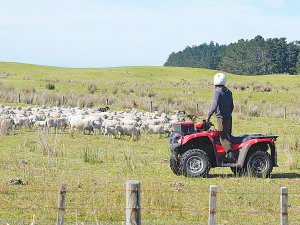
Farmers across parts of Southland and South Otago are continuing to deal with difficult conditions after a prolonged run of wet weather, with pressure building around feed supply, stock management, pasture damage, farm infrastructure and everyday workloads.
Federated Farmers says it welcomes Labour's commitment to reviewing the Sharemilking Agreements Act, calling on other major parties to do the same.
For Canterbury dairy farmers Sian Meijer and Rick Wobben, wearable technology has become one of their most valuable on-farm tools - helping manage 1850 cows across an expansive, high-performing dairy operation while improving efficiency, mating outcomes and day-to-day decision making.
Fonterra has unveiled its annual results for the 2026 financial year, posting $27 billion in revenue and close to $20 billion returned to New Zealand farmer owners and unit holders.
The first major update to the Dairy Cattle Code of Welfare in more than a decade has been released, marking what DairyNZ describes as an important step in ensuring animal welfare standards continue to evolve alongside scientific evidence and on-farm realities.