Diplomatic Incident
OPINION: Your old mate hears an international incident is threatening to blow up the long-standing Anzac alliance as Kiwis and Aussies argue over who wants new Australian resident and former NZ Prime Minister Jacinda Ardern.
 increase font size
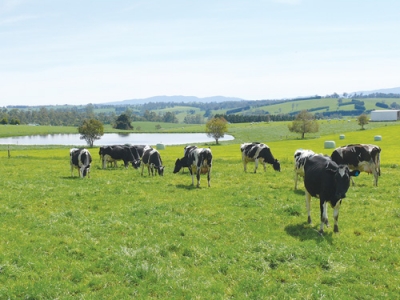 Dairy is worth about $3 billion to the Gippsland economy in Victoria, Australia.
The Australian dairy industry is worth about A$3 billion to the economy of Gippsland, Victoria, a regional business forum heard recently.
Growth opportunities were highlighted at Warragul on October 30, attracting the region's key decision-makers. 'Gippsland Dairy – Leveraging the Opportunities' highlighted dairying's huge contribution to the region.
The farming, manufacturing and export industry spans 1400 dairy farms producing 2 billion litres of milk a year – 20% of Australia's total. Around 6800 people work either on farms or in milk processing factories.
Speakers at the event included GippsDairy chairman Graeme Nicoll, United Dairyfarmers of Victoria (UDV) president Adam Jenkins and keynote speaker David Williams, an investment advisor with Kidder Williams.
Nicoll, who farms at Fish Creek, highlighted the potential for growth, the importance of dairy industry profitability and the spin-off benefits in investment, jobs and stronger communities.
"Dairy in Victoria has the potential to grow substantially to take advantage of the burgeoning demand for safe, high quality dairy products overseas," Nicoll said.
"This means more jobs and more economic activity which, in turn, helps maintain the towns and services that make this and other dairy regions attractive as investment and tourist destinations.
"But we have to work hard to attract investment to bring this prosperity to the regions. Investors, new and existing, have many choices on where to put their dollars. It is not inevitable that they will choose Gippsland or any other dairy region in Victoria."
Jenkins focussed on roads and transport, social licence to operate farms, water availability and communications as the key factors in the industry's success.
"We have the soils, climate and proximity to markets to grow profitably and sustainably, and take advantage of the global demand for safe, high quality dairy products," Jenkins said.
"This means more jobs locally in a skilled industry, more economic activity, vibrant towns and more of the services that underpin the region's liveability. But we can't do it alone. We need to work with local, state and federal governments, with other agricultural commodity groups, utilities and the community to leverage the opportunities."
Dairy Australia managing director Ian Halliday said the Warragul forum showed the industry's value and potential to the wider community.
"It's vital that decision-makers understand what dairying contributes to regional economies and the Australian economy as a whole," Halliday said.
"Having a chance to get people together and discuss our opportunities and concerns is the best way to promote understanding of how we can all help each other build a better dairy industry and a more prosperous Gippsland."
OPINION: Your old mate hears an international incident is threatening to blow up the long-standing Anzac alliance as Kiwis and Aussies argue over who wants new Australian resident and former NZ Prime Minister Jacinda Ardern.

OPINION: Your old mate hears that at a recent China Business Summit, PM Christopher Luxon delivered a none-too-subtle "could try harder" report card on the red meat industry regarding its exports to China - particularly when compared to Australia.
More Australian states are embracing virtual fencing technology, opening growth opportunities for Kiwi companies like Halter.
Fonterra says its ongoing legal battle with Australian processor Bega Cheese won’t change its divestment plans.
Farmers in the Australian state of New South Wales will soon be able to use virtual fencing and herding technology to boost farm productivity.


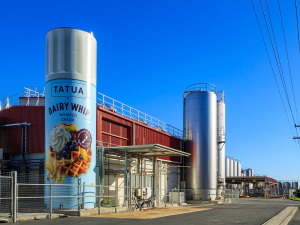
Waikato milk processor Tatua has again declared a record milk payout to farmer shareholders, leaving other processors in the dust.

A Labour-led Government won’t be bringing back the controversial freshwater rules of 2020.
National’s much-touted free trade deal with India featured in the Rural Issues Debate at Mystery Creek, Hamilton on Wednesday night.
New Zealand's 2026-27 freshwater fishing season has opened, with anglers encouraged to head to rivers and lakes over the coming days as conditions look favourable across much of the country.
Central Otago District Council (CODC) has voted against a plan to spread treated sewage sludge from Cromwell and Alexandra on farmland near Lauder, a decision Federated Farmers says reflects strong opposition from rural residents.
Pāmu has released its FY26 Integrated Annual Report, reporting a Net Operating Profit of $113 million, more than double the $49 million recorded in FY25.